REVIEW · BALLOCH
Balloch: Standing Stones, Castles & Highlands Tour
Book on GetYourGuide →Operated by Experience Scotland's Wild · Bookable on GetYourGuide
Stone circles and castles in one day can work.
This Balloch-based Highlands tour gives you 5,000-year-old standing stones and that slow, scenic feeling of the Loch Lomond shoreline all in one packed day. I love the way it balances ancient megaliths with real walking time and castle stops, so you’re not stuck staring out a window the whole trip. You also get a proper local guide, and that matters here because the stories behind the stones and forts are what turn the photos into context. The only real consideration: the day includes walking on uneven ground, and the tour is not suitable for wheelchair users or people with mobility impairments.
In This Review
- Key things to know before you go
- Balloch makes sense for a Highlands day
- Loch Lomond and Luss: the calm start that sets the tone
- Inveraray Castle: gardens, Jacobites, and a very specific kind of storytelling
- Loch Fyne and the seal-spotting stretch
- Dunadd Fort: Celtic kings and a site with real reach
- Standing stones and burial cairns: what 5,000 years feels like
- Kilchurn Castle ruins: the walk, the view, and the lightning rumor
- Price and value: what your $101 covers
- Timing, energy level, and how to prepare
- Guides matter: when Laura or Derek is on your day
- Should you book this Balloch Highlands day tour?
- FAQ
- Where does the tour start and end?
- How long is the tour?
- Is Inveraray Castle entry included?
- Is food included?
- What does the tour include for walking?
- What’s the group size?
- Is it suitable for wheelchair users or mobility impairments?
Key things to know before you go
- Small group size (max 8) helps you move at a human pace and hear your guide clearly.
- Inveraray Castle focus includes Jacobite-era details and time in the 16-acre gardens when open.
- Loch Lomond & the Trossachs views come with multiple viewing points after a stroll through Luss.
- Loch Fyne seal spotting is a fun add-on if conditions are right.
- Dunadd Fort stories connect Celtic kings to the wider story of Scotland’s early kingdom-building.
- Kilchurn Castle ruin walk gives you a dramatic finish with a short guided hike.
Balloch makes sense for a Highlands day
Starting in Balloch keeps this trip realistic. You’re not losing hours to complicated transfers just to reach the good parts of the Highlands. The meeting point is the VisitScotland Balloch iCentre, and you check in about 15 minutes before the tour start time. That small buffer is smart—on a day like this, missing the departure can throw off everything.
The tour runs about 9 hours, so it’s long enough to feel like you went somewhere, but not so long that you’ll be fried before the best stops. You’ll travel in an air-conditioned vehicle, which is a quiet comfort boost on warmer days (and also helps when you’re switching between sun and sudden Scottish weather).
Because this is a small group (limited to 8), you’ll likely get a more personal rhythm than you would on a huge coach. That’s useful when you’re trying to hear details about what you’re looking at—like the standing stones’ layout or the Jacobite-era references at Inveraray.
You can also read our reviews of more tours and experiences in Balloch.

Loch Lomond and Luss: the calm start that sets the tone
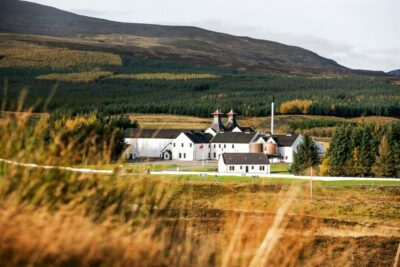
The day begins with a stroll around Luss, then you settle into a drive along the western shore of Loch Lomond. This is one of those routes where the scenery does a lot of work for you. You get viewing points where you can slow down and actually look—rather than just catching glimpses between stops.
What I like about this opening is that it gives you a mental breather. After the photos people take around the lake, you’re ready for the heavier history later: cairns, forts, Jacobite stories, and the ruins of Kilchurn Castle. Luss is also a helpful reset point. It’s an easy place to stretch your legs and understand the kind of landscape you’ll keep seeing in the background all day.
Practical note: plan on weather changes. Even if the morning looks fine, bring layers you can adjust quickly. Your best views will come when you can stand still, not when you’re wrestling with a too-light jacket.
Inveraray Castle: gardens, Jacobites, and a very specific kind of storytelling
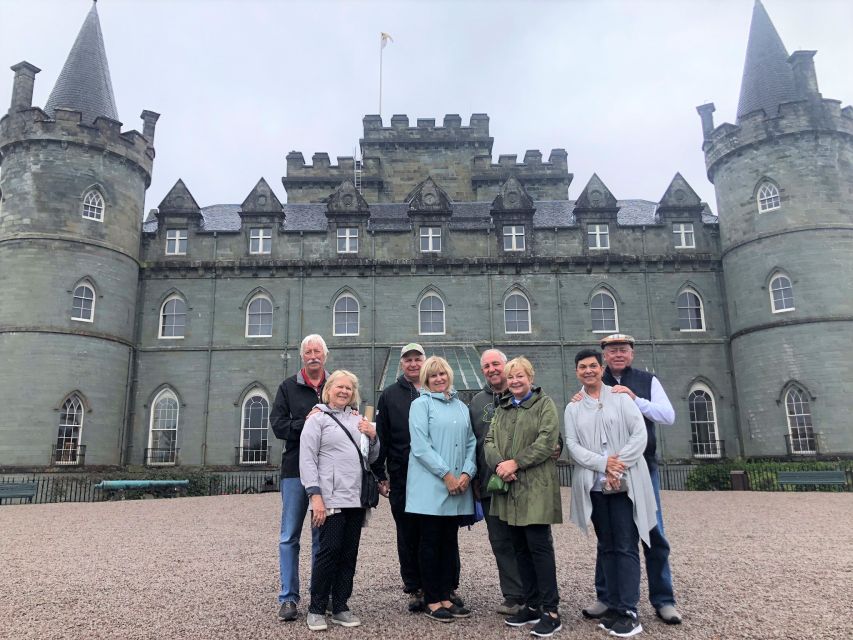
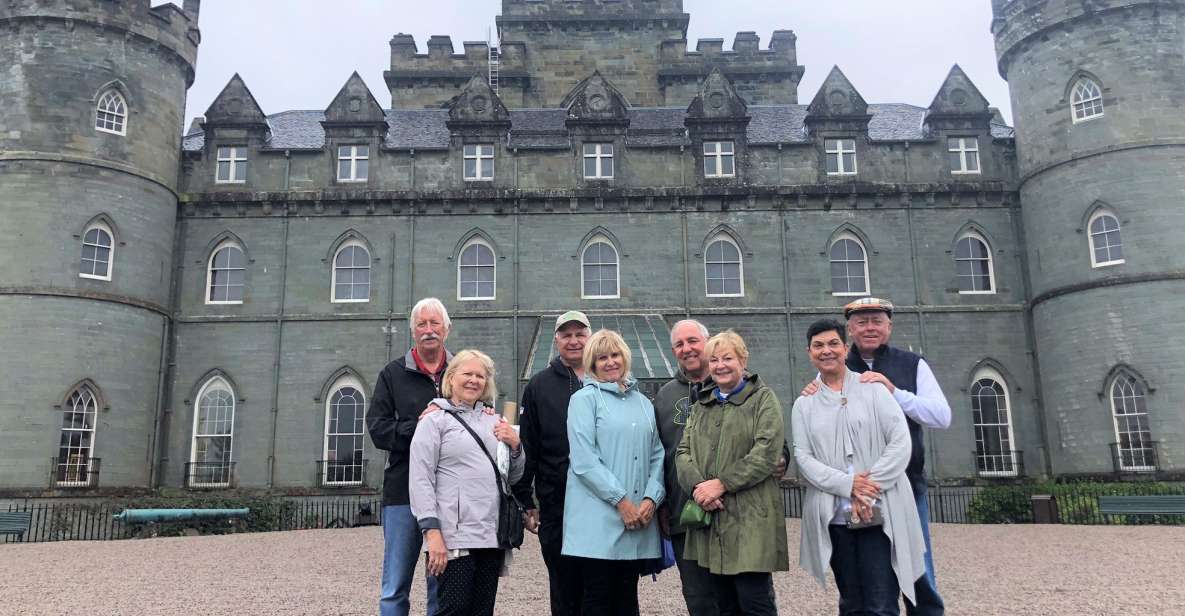
Inveraray is where the tour turns from scenery into history you can picture. You visit Inveraray Castle, described as Gothic in style, and you’ll learn about the Jacobite uprising. One detail that stands out is seeing rifles used against Jacobite soldiers—this isn’t just broad background. It’s the kind of tangible reference that helps you connect political conflict to real people and real weapons.
You also get time to roam the castle’s 16 acres of gardens. If the weather behaves, this is a great stretch of the day because it breaks up the more intense stop-and-listen moments. Walking through gardens after a lake drive feels like a reset button, and it’s also easier to take photos when you’re actually moving through the space.
There’s one big timing consideration: Inveraray Castle is closed from 1 November to 31 March. If you’re traveling in that window, you’ll spend time in the town of Inveraray instead, and you’ll get more time at the historical locations later. That shift matters for your expectations. You’re still getting the day, but the castle experience changes.
Loch Fyne and the seal-spotting stretch
After Inveraray, the route follows the shoreline of Loch Fyne, one of Scotland’s deep sea lochs. This part of the day is less about a specific monument and more about atmosphere. It’s a drive where you can look out the window at water color, cliffs, and shoreline shapes—and then step out if the guide stops at a viewpoint.
The fun detail is the chance to spot swimming seals. You shouldn’t plan your day around it like it’s guaranteed, but keeping your eyes on the water is genuinely worthwhile. Even when you don’t see seals, this section still helps you feel the scale of the loch.
This is also a good moment to grab a quick photo pass if you want one. Later stops include dark ruins and ancient stone forms, so capturing the water and sky early makes your photos tell a better story.
Dunadd Fort: Celtic kings and a site with real reach
Next comes Dunadd Fort, tied to the story of early Celtic kings who crossed the Irish Sea and helped form the kingdom of Scotland. You’ll hear that Dunadd was first recorded in AD 683 and that it’s believed to have been a powerful stronghold of Dál Riata.
What I appreciate about including Dunadd is that it connects multiple eras. You’re going from Jacobite conflict at Inveraray back toward the deeper roots—then forward again through the way Scotland’s political identity kept evolving. It’s not random history-pasting; it’s a theme.
Even if you don’t know much about Dál Riata going in, the guide’s job is to translate it into something you can understand on foot and from the view points. If you enjoy history that’s anchored to geography, you’ll likely feel more engaged here than at stops where you’re mostly looking at a plaque.
Standing stones and burial cairns: what 5,000 years feels like
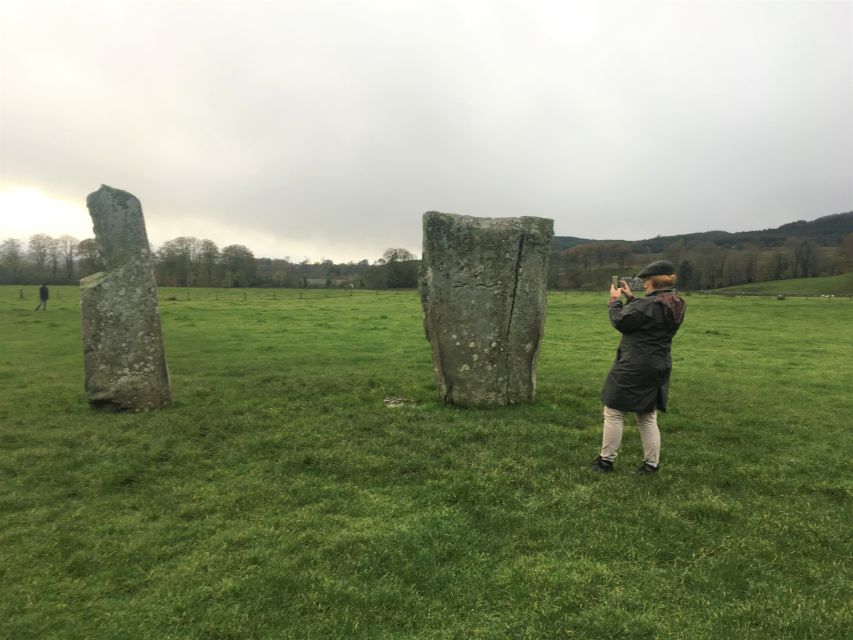
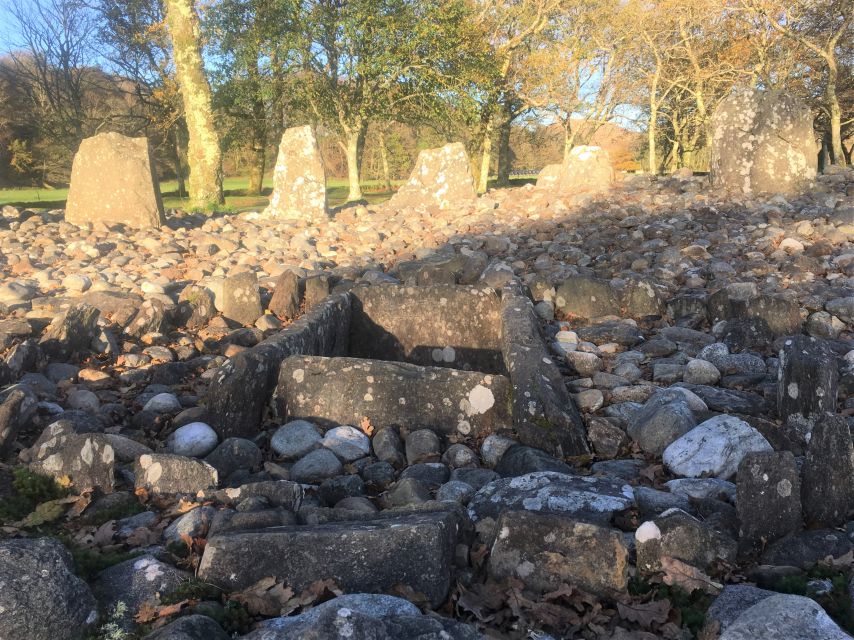
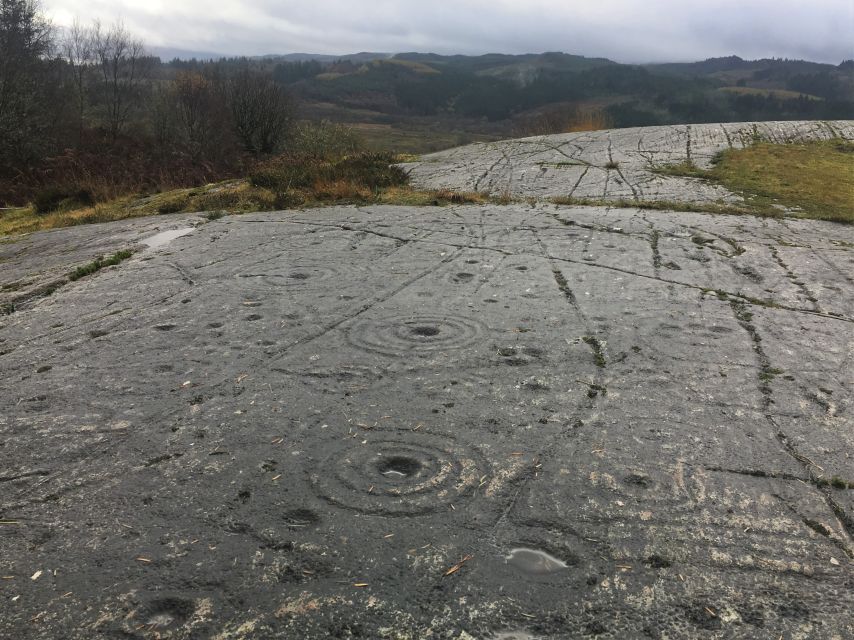
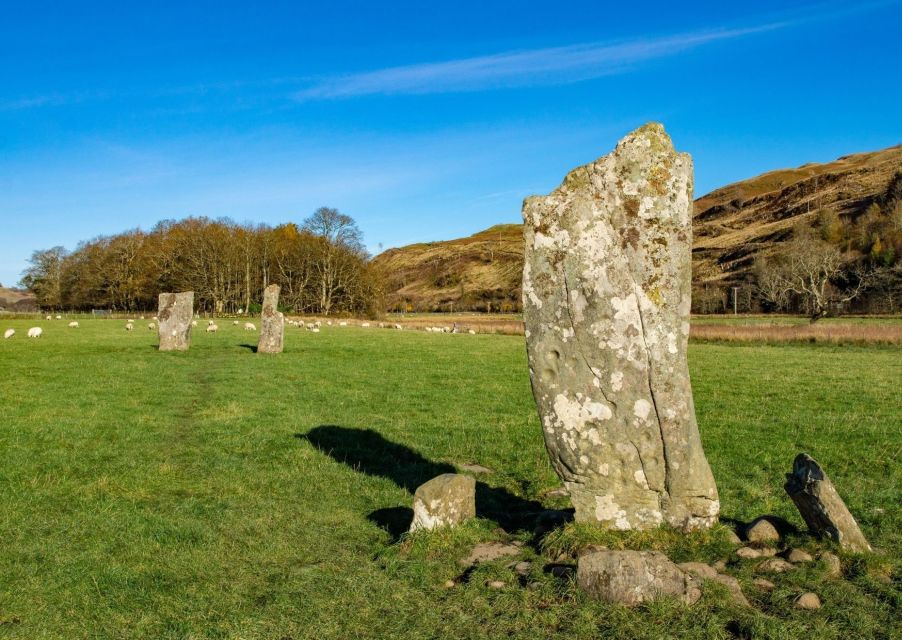
Then you arrive at the megalithic part of the day: a collection of monolithic standing stones, stone circles, and burial cairns believed to be over 5,000 years old. This is one of those places where the setting matters as much as the objects. The stones don’t need interpretation to look impressive—but the interpretation is what makes them meaningful.
The tour leans into the role-play feeling a bit. Think Outlander energy for a minute, but grounded in what you’re actually seeing: upright stones, circle layouts, and burial cairns that suggest ritual and community. The effect is that you stop treating the site like a backdrop and start treating it like a real place people cared about.
This is also a good stop to slow down. If you’re the type who likes to read slowly or sketch a quick note about what you’re noticing, you’ll get more out of it than if you rush through for the perfect photo. Let your eyes adjust. Then you start seeing patterns.
Kilchurn Castle ruins: the walk, the view, and the lightning rumor
The day ends with a short guided walk out to the ruins of Kilchurn Castle on the banks of Loch Awe. Ruins can be hit or miss on tours—sometimes you’re just there to say you saw something. Here, you’re walking out, so you get a more physical feel for the site and the way the loch frames it.
One detail that adds character: there’s a rumor that the castle was destroyed by lightning. Even if you don’t treat folklore like a documentary, it gives the ruins a reason to feel dramatic. Weather also plays into that. Clouds rolling in can make the castle feel even more like a scene from an old story.
This stop is a strong closer because it brings everything together. You’ve moved through water, fort history, Jacobite-era details, and ancient burial sites. Then you finish at a ruin that sits right in the natural setting—so the day’s theme stays coherent even when the time periods change.
Price and value: what your $101 covers
At about $101 per person, this is the type of day trip where value comes from what’s bundled—not just from the headline price. Your transport in an air-conditioned vehicle, your local guide, the standing stones visit, and the walk out to Kilchurn Castle are included. You’re also getting a short guided hike, which often costs extra on tours that feel less structured.
What’s not included: food and drink and the entry fee to Inveraray Castle. So you’ll want to budget for lunch. The tour mentions you’ll visit a cafe where you can purchase lunch, which is helpful because you’re not guessing where to eat once you’re out in the Highlands.
If Inveraray Castle is open during your travel dates, plan on paying the entry fee separately. If it’s closed in the winter months (1 November to 31 March), you’ll get town time instead, so your spending may shift. Either way, the core value is the guided day structure and the fact that you don’t have to coordinate driving yourself.
Timing, energy level, and how to prepare
This is a full day with multiple stops, so it’s best if you’re comfortable spending time on the coach between moments. The itinerary includes several travel stretches, plus walking time at the standing stones area and the Kilchurn Castle ruins walk. If you’re hoping for a low-effort tour, this one probably won’t match that.
Bring comfortable shoes and weather-appropriate clothing. Even in fair conditions, you’ll want footwear that handles uneven ground and the kind of paths ruins often have. Layers are key—Scotland can switch moods quickly.
The tour is also not suitable for people with pre-existing medical conditions (as noted in the tour details). If that applies to you, I’d treat this as a reason to ask specific questions before booking so you can match the day to your needs.
One more practical note: no alcohol and drugs are allowed. That’s not unusual for day tours, but it’s good to know so you don’t get surprised.
Guides matter: when Laura or Derek is on your day
Two guide names have been highlighted in feedback: Laura and Derek. The praise is consistent: they make the day feel smooth and help the history land in a way that’s actually useful—not just spoken at you.
In a tour like this, a great guide changes the experience more than you’d think. Standing stones and forts are easy to photograph and harder to understand. Inveraray’s Jacobite references can feel abstract unless someone gives you the timeline and the why behind the details like the rifles used against Jacobite soldiers. A strong guide also helps you manage the pace so you get moments for the views without running out of time for the sites.
If your booking brings you a guide like Laura or Derek, you’ll probably enjoy the day even more because you’ll get that extra layer of clarity.
Should you book this Balloch Highlands day tour?
Book it if you want a one-day hit list that mixes dramatic scenery with meaningful history and includes real walking time. It’s especially good for people who like variety: loch views, a town stop, a major castle experience, early Celtic stories, ancient stones, and a ruin walk.
Skip it (or rethink it) if you need wheelchair-friendly access or you’re hoping for minimal walking. The tour is clearly not set up for that, and you should plan accordingly. Also, if you’re very sensitive to long coach days, factor in the 9-hour schedule and the multiple transit stretches.
If you want a Scotland day that feels like you’re moving through time—stone age to Jacobites to dramatic ruins—this one is a solid choice from Balloch. Just come prepared for weather, wear good shoes, and budget a little extra for lunch and Inveraray Castle entry when it’s open.
FAQ
Where does the tour start and end?
The tour meets at VisitScotland Balloch iCentre and ends back at the same meeting point.
How long is the tour?
The tour duration is 9 hours, with starting times depending on availability.
Is Inveraray Castle entry included?
No. Entry fees to Inveraray Castle are not included.
Is food included?
No. Food and drink are not included, and the tour notes you will visit a cafe where you can buy lunch.
What does the tour include for walking?
The tour includes a short guided hike and a walk out to Kilchurn Castle.
What’s the group size?
It’s a small group, limited to 8 participants.
Is it suitable for wheelchair users or mobility impairments?
No. The tour is not suitable for people with mobility impairments or wheelchair users.