REVIEW · ST ANDREWS
St Andrews: Town, Golf, and Old Course History Tour
Book on GetYourGuide →Operated by St Andrews Tours · Bookable on GetYourGuide
One walk ties golf to Scotland.
This St Andrews golf-history tour stitches together the town’s university life, cathedral ruins, and the game’s early story into one focused 105-minute route. Two things I love: you get proper context for why St Andrews became the Home of Golf, and you finish with that famous Swilkan Bridge photo moment after walking the Old Course areas.
The one real drawback is the practical side: the guide runs in fluent English-first mode, the tour involves quite a bit of walking, and it is strict about timing—late arrivals can miss the start.
In This Review
- Key things you will notice on this tour
- Getting started outside T-Squared Social on North Street
- St Salvator’s College quadrangle and chapel: where the town learns to think
- Cathedral ruins and the 124 noted golfing graves
- From the Bishop’s Palace ruins to the Scores: power, wealth, and university glamour
- Old Course approach: how the Open Championship story takes shape
- Walking by the 18th green, 1st tee, and first fairway
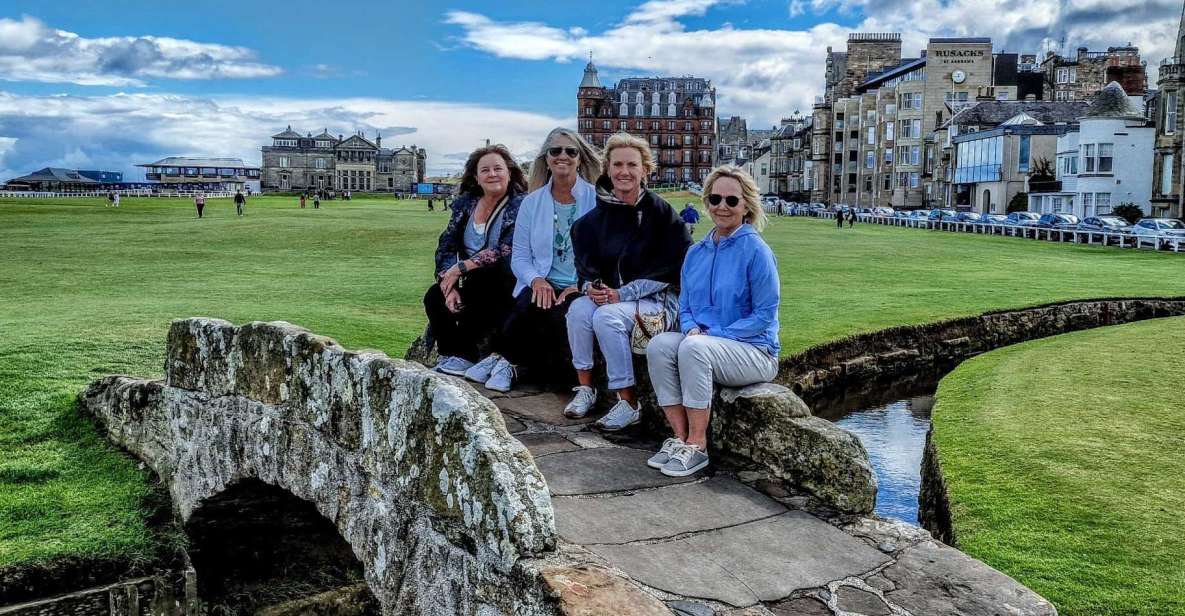
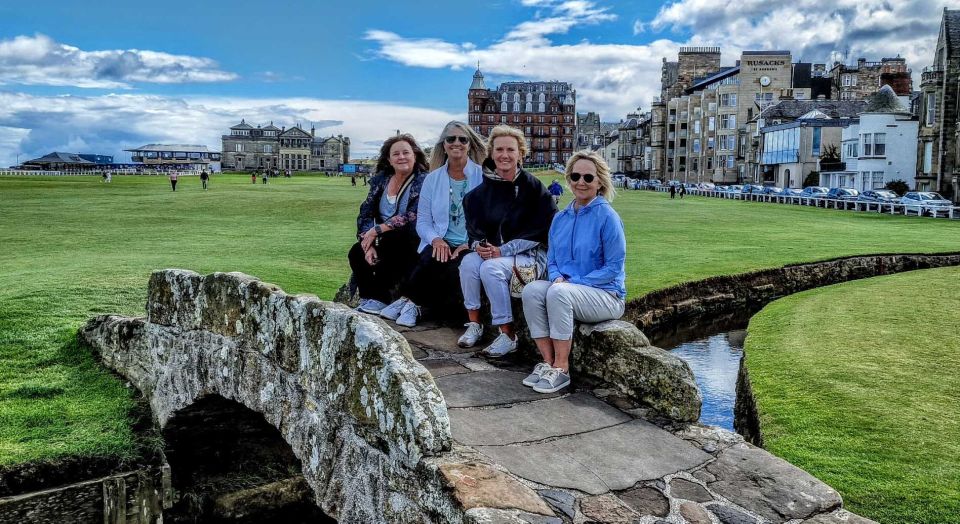
- Swilkan Bridge photo stop: what you came for
- Price and value: $27 for a guided course-and-town story
- Who should book this tour—and who should think twice
- FAQ
- Does the tour include golf history and St Andrews town history?
- How long is the tour?
- Where do I meet the guide?
- Is the tour in English?
- Is it suitable for non-golfers?
- Are there age limits?
- Is there luggage storage?
- Will I be able to take photos on Swilkan Bridge?
- Should you book this St Andrews golf-history tour?
Key things you will notice on this tour
- Golf history tied to real landmarks from university halls to the cathedral grounds
- Old Course access for photos and sightlines at major points like the 1st tee area and 18th green
- Named graves of golfing pioneers around the cathedral ruins area
- William and Kate context plus modern pop culture mentions (including The Crown and Nike)
- A photo-focused finish on Swilkan Bridge when not running tournament days
Getting started outside T-Squared Social on North Street
Meet your guide right outside T-Squared Social, 117 North St, St Andrews KY16 9AD, at your allotted time. The vibe here is straightforward: show up early, because the tour starts on schedule and they will not wait. If you are even a minute late, you may lose your place and will need to catch the next available tour instead.
What sets the tone is how the guide frames St Andrews immediately as a living story. Before you even get to the university and the ruins, you may hear playful and current references like Tiger Woods and Justin Timberlake’s new bar/restaurant, plus a mention of the Dunhill Championship. It sounds light at first, but it helps you understand the tour’s angle: yes, this is golf history. It is also modern St Andrews—where celebrity, sport, and storytelling all feed each other.
You will want comfortable shoes. This is not the kind of walk where you drift slowly at your own pace. It is paced for the full 105 minutes, and the route includes walking along town streets and through historic areas.
You can also read our reviews of more historical tours in St Andrews

St Salvator’s College quadrangle and chapel: where the town learns to think

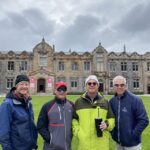
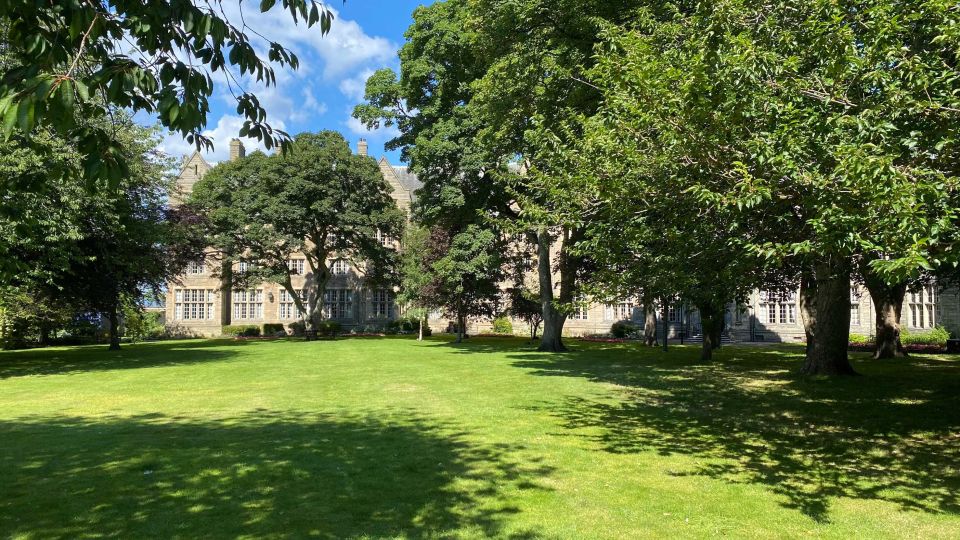
One of the best parts of this tour is how quickly it connects education to golf. St Andrews is a university town, so the guide pulls you toward St Salvator’s College and shows you the quadrangle area tied to Scotland’s oldest university traditions.
You will also stop at St Salvator’s Chapel. This is a strong moment for two reasons. First, it gives you a visual sense of how old institutions literally shape the town’s layout. Second, it sets up later stops where you’ll see how the same area that nurtures scholarship also became part of a sporting culture that eventually turned global.
If you only associate St Andrews with the Old Course, this is where the tour expands your mental map. The key is that it is not random history. The university stops help explain why St Andrews developed a culture of visitors, debate, and long-running traditions.
Cathedral ruins and the 124 noted golfing graves
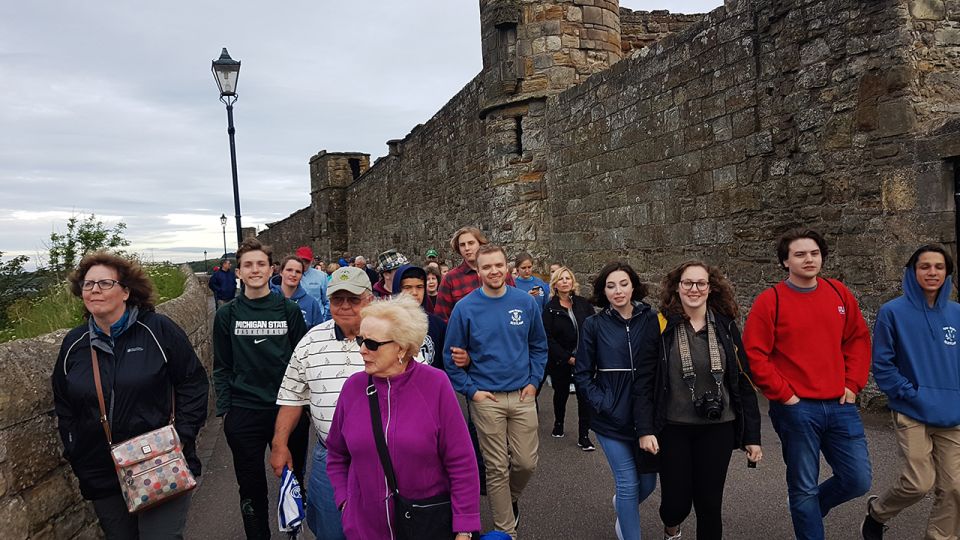
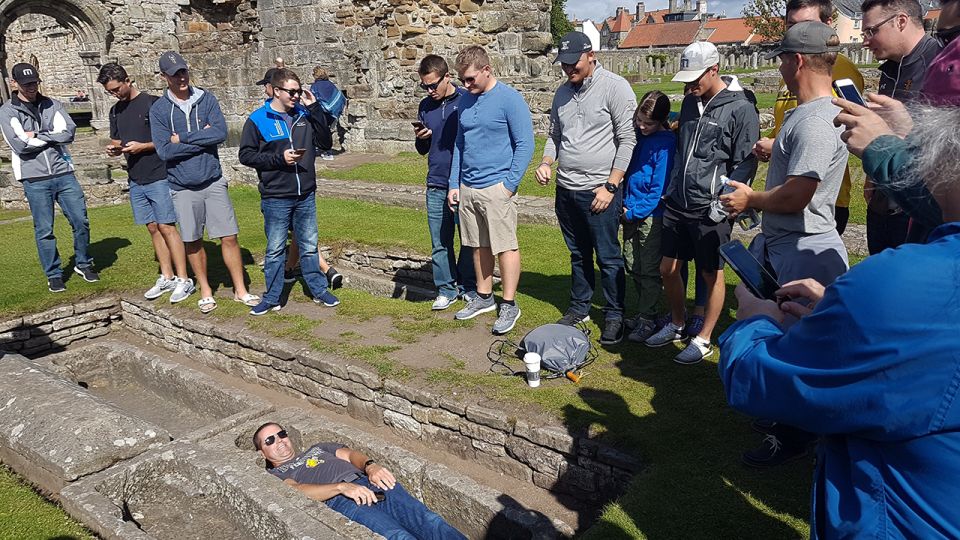
Then comes the emotional center: the cathedral ruins area. This is where the tour leans into the story of the game as something personal and memorialized, not just famous and televised.
A standout detail here is the number of noted golfers buried in the cathedral grounds—124 is the figure you are given. The guide also brings names into the mix that most golf fans know in theory but rarely get to connect to a single place: you will hear about Old and Young Tom Morris, plus Allan Robertson and Jamie Anderson. The tour treats these figures like people you can stand near, not just names in a timeline.
Even if you are not a hardcore golf devotee, this stop works because it is about heritage and craft. Golf in St Andrews grew out of a community. The cemetery/graveyard element gives that idea weight.
Timing consideration: the cathedral area is also a high-interest photo spot, and you may want to linger longer than the schedule allows. That is not a deal-breaker, but if your heart is set on extended time in the graveyard section, you should know this is a walking tour format rather than a slow, stop-at-one-place all afternoon plan.
From the Bishop’s Palace ruins to the Scores: power, wealth, and university glamour
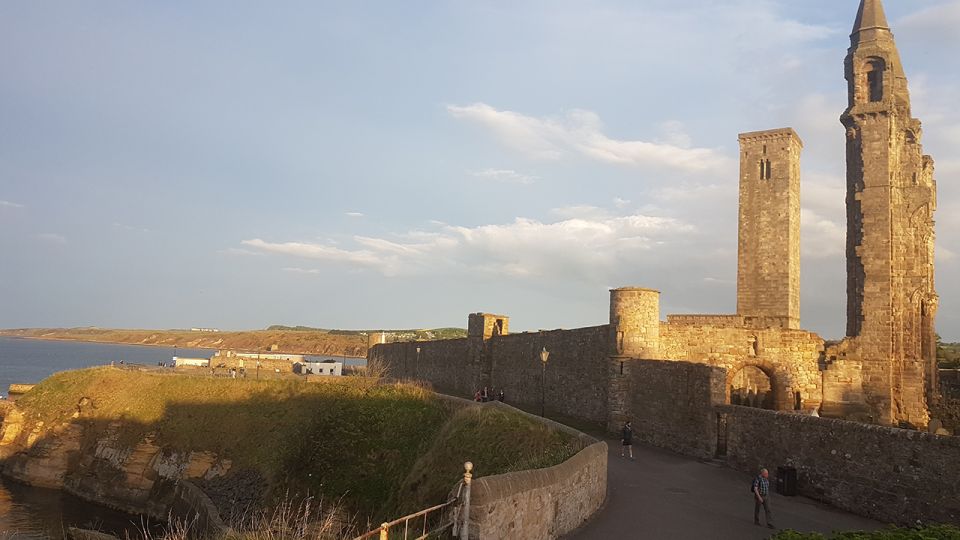
Next, you move toward the ruins of the Bishop’s Palace, which the guide presents as a symbol of Catholic wealth and power in Scotland. It is a useful contrast point: not every chapter in St Andrews is tied to golf. Some chapters are about status, authority, and the way the town used to be run.
From there, you walk along the Scores—and this part is both scenic and informative. The university buildings lining the way, including the Principals House and the residence connected with Prince William and Kate’s first year as students, help you see how the town’s identity is layered.
Here is where the tour’s humor and storytelling style really matter. The guide connects those modern-famous residents to St Andrews as a place that attracts high-profile people, which is why the tour mentions things like Netflix’s The Crown coming to town and even references Nike’s marketing role in shaping golf’s modern image. You might not care about every pop-culture mention, but you will likely enjoy how the guide keeps the history feeling current instead of dusty.
One practical note: the Scores and central lanes can have traffic noise, and you may find it harder to catch every word when cars and people are loud. If you want all the story details, position yourself toward the front and keep your attention tight during busier stretches.
Old Course approach: how the Open Championship story takes shape
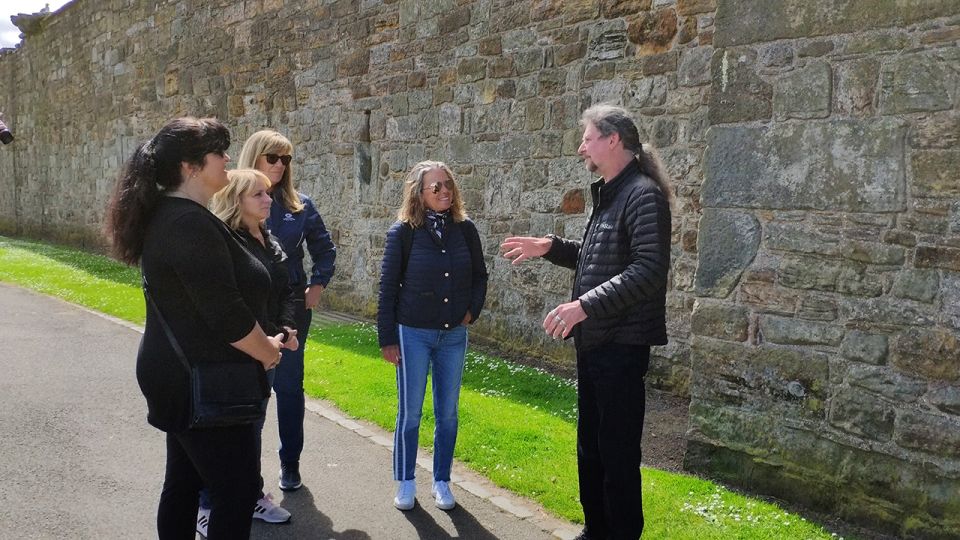
When you head to the Old Course area, the tour shifts gears from town-and-university to the development of the sport itself. You will hear about the early development of the Open Championship, and how golf’s evolution in St Andrews became the shorthand for the game’s origin story—often summarized as the Home of Golf concept.
This is also where the guide’s pacing matters. Some guides talk at a lively speed, and on this route, it can feel like you are constantly moving and listening. If you are the type who likes to absorb slowly, remind yourself to ask questions when you can. There’s enough time for interaction, especially if your group is engaged.
The Old Course segment is designed for both golf lovers and non-golfers. For the non-golf crowd, it is less about technique and more about meaning: why the course looks the way it does, why the holes are what they are, and why 18 holes became the shape of the classic game.

Walking by the 18th green, 1st tee, and first fairway
This is the part that makes the tour feel real.
You walk by and across areas near the 18th green and 1st tee and you get a view toward the first fairway. That means you are not standing behind a fence like you might at a typical attraction. You are moving through active course territory.
Important safety point: the tour asks you to keep an eye out for golf balls during live play and says you cross/play areas at your own risk. If balls are in play that day, you’ll want your head up and your eyes scanning the ground and flight paths, not buried in your phone.
You’ll also get the stories that help you see the course’s design as history rather than just layout. The guide shares details about how the Links came to have 18 holes, and they connect small “quirks of the game” to the broader timeline that made St Andrews iconic. Even if you cannot remember every name or date, the way the guide explains how those pieces fit together usually lands.
Another practical reality: parts of the Old Course route are open and exposed. Weather can change quickly on the coast. Bring weather-appropriate layers and treat windy, damp days as normal here.
Swilkan Bridge photo stop: what you came for
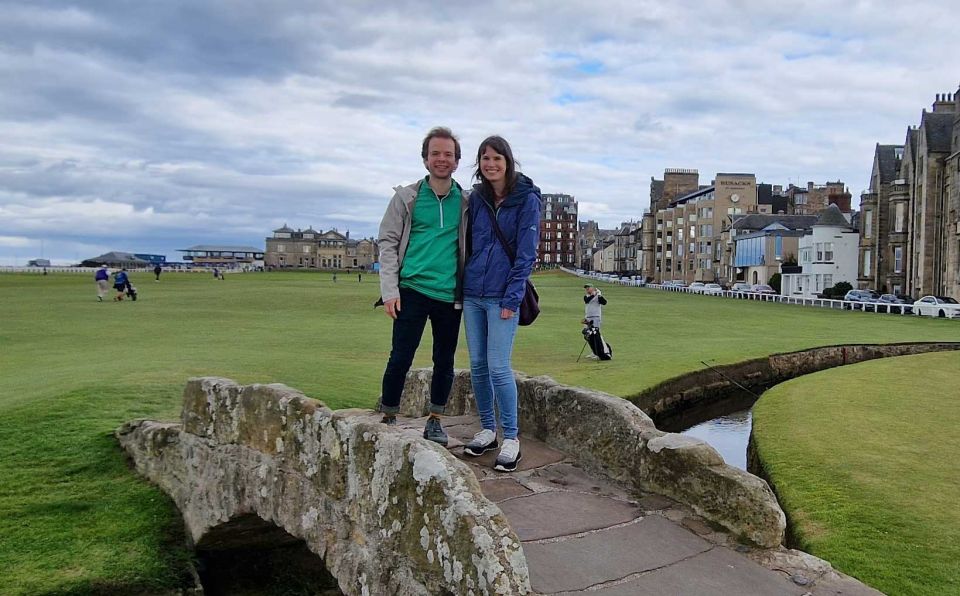
The tour finishes at the Swilkan Bridge, and this is the payoff for most people. When conditions allow, you get a chance to take photos right on that famous spot.
Two helpful details:
First, the photo stop is excluded on tournament days, so your Swilkan Bridge moment depends on your day’s schedule. Second, the guide is also described as a good photographer, so if you want family photos or a clean group shot, this is the moment to ask.
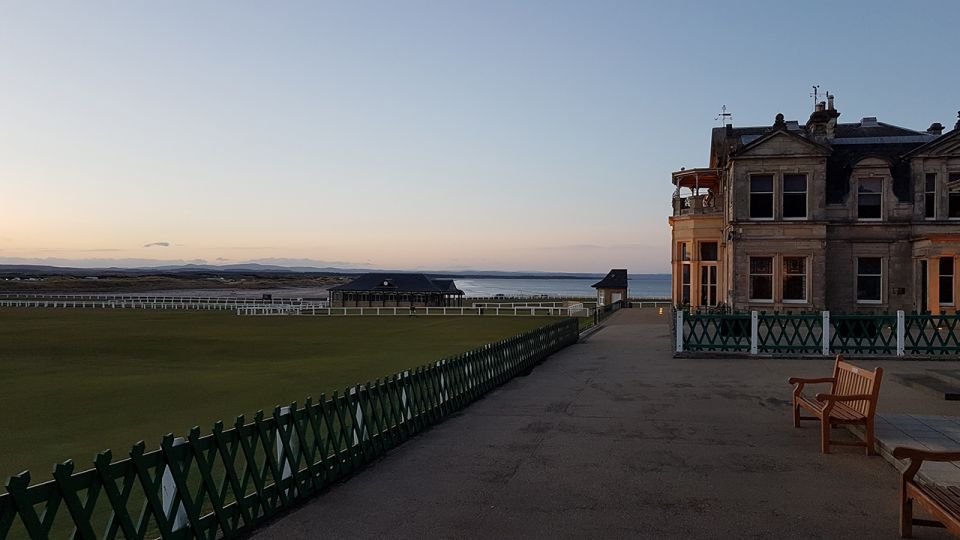
After the tour, you can relax at the Jigger Inn / Old Course Hotel area for iconic views. That is a smart move because it turns the tour’s walking intensity into downtime. You’ll have fresh context for what you are seeing from those viewpoints—where golfers connect the modern day to the historic layout you just walked through.
Price and value: $27 for a guided course-and-town story
At about $27 per person for 105 minutes, this tour is priced like a very focused experience, not a full-day tour with multiple transport legs. For that price, you are paying for two main things:
1) A professional historian guide who connects town landmarks, university life, and golf evolution into one narrative.
2) Access to the Old Course walking route areas and the Swilkan Bridge photo stop (when not on tournament days).
That value makes the most sense if you are trying to fit a lot into a short St Andrews stay. It is also good when you have mixed interests in your group. Golf fans get the key course touchpoints; non-golfers still get town history, the university, and the cathedral memorial elements that make St Andrews more than just a sports venue.
If you are the type who wants long sit-down time in museums or wants minimal walking, the value may feel lower because the format is built around movement.
Who should book this tour—and who should think twice
Book it if you want:
- A tight, guided explanation of why St Andrews became golf’s center
- Real place-based stops: cathedral ruins, university buildings, Old Course sightlines
- A photo payoff at the Swilkan Bridge that actually matches what you see in golf media
Think twice if:
- You struggle with English-only listening. This tour requires fluent English; slower speaking or translation is not the plan.
- You have mobility issues. It is not suitable for wheelchair users or people with walking difficulties.
- You want very slow pacing or lots of time at one single graveyard or course section.
- You are not comfortable walking across live course areas and keeping an eye out for golf balls.
If you match the tour’s pace and interests, this is a strong way to see St Andrews in about the time it takes to properly absorb it once.
FAQ
Does the tour include golf history and St Andrews town history?
Yes. The route is golf-oriented, but it is not only golf. You also cover the University area, William and Kate references, and the cathedral ruins and memorial sites.
How long is the tour?
It runs for 105 minutes.
Where do I meet the guide?
Meet outside the main entrance of T-Squared Social, 117 North St, St Andrews KY16 9AD at your allotted time.
Is the tour in English?
Yes, the tour is in English, and fluent English is essential for participants.
Is it suitable for non-golfers?
It was created for golfers and non-golfers. You get golf focus, but the stops include university sites, cathedral ruins, and other town history.
Are there age limits?
Children under 16 must be accompanied by an adult. Children under 5 are free, but the tour is not suitable for those under 2.
Is there luggage storage?
No luggage drop is mentioned, so plan to carry your items with you.
Will I be able to take photos on Swilkan Bridge?
Yes, the tour ends at the Swilkan Bridge for photos, but photo stops are excluded on tournament days.
Should you book this St Andrews golf-history tour?
If you have only a short window in St Andrews and you want one guide to connect the University, cathedral ruins, and the Old Course into a clear story, I’d book it. The timing is tight, the route is walk-based, and the guide’s voice matters—so go in ready to listen and walk. If you like golf history but also care about how St Andrews became St Andrews, this tour is a smart use of 105 minutes.