
REVIEW · STIRLING
Stirling: Daily Guided Walking Tour (11am & 2pm)
Book on GetYourGuide →Operated by Walking Tours In · Bookable on GetYourGuide
Stirling’s Old Town reads like a mystery map. This 1.5-hour guided walk stitches together Stirling Castle and the quieter corners in between, with stories that connect jails, market life, battles, and everyday people.
I especially like two things about this tour. First, the pace feels relaxed and you’re not expected to power up every hill—your guide slows down as needed. Second, the tour includes a local drink tasting, plus building-by-building clues that help you look at the Old Town like a detective.
One trade-off to plan for: you’ll be walking outside and there are some steep hills. Bring good shoes and weather layers, because comfort matters on a route that climbs.
In This Review
- Key highlights worth knowing
- Entering Stirling on foot: Old Town Jail to Stirling Castle
- Why the guide matters more than the checklist
- Stop-by-stop: what you’ll actually do and see
- Stirling Old Town Jail: where the punishment stories begin
- Stirling Highland Hotel and Broad Street: streets that shaped daily life
- The Tolbooth: town justice stories in plain sight
- Mar’s Wark: symbols above doors and clues in the walls
- Holy Rude: the Church of the Holy Rude and the role of faith
- Cowanes Trust: more local character on the route
- Old Town Cemetery: deciphering three-century gravestones
- Stirling Castle finish: big history, right where it happened
- William Wallace, Robert the Bruce, and why Stirling is the gateway
- Stirling Craig views: when the climbs pay off
- The local drink tasting: a small bonus with real payoff
- Price and value: is $19 a fair deal?
- Comfort and practical tips for a smooth walk
- Who should book this tour (and who might not)
- Should you book Stirling’s Old Town Jail to Castle walk?
- FAQ
- What time do the Stirling Daily Guided Walking Tours run?
- How long is the walking tour?
- Where do I meet the guide?
- Where does the tour finish?
- What’s included in the tour price?
- Is the tour conducted in English?
- Is the tour wheelchair accessible?
- Do I need hotel pickup and drop-off?
- Are there steep hills, and is it suitable for different fitness levels?
- Can I cancel for a full refund?
- What should I bring for the walk?
Key highlights worth knowing
- Old Town Jail start: you begin with crime-and-punishment stories, not castle postcards
- Local drink tasting included: a small extra that makes the walk feel more like local life
- Stirling Castle finish: you end at Scotland’s big-history landmark
- Cemetery stop for gravestones: learn how to read age-old markers up close
- Street detail training: you’ll look at symbols and house features in a new way
- Legends and battles: William Wallace and Robert the Bruce come into the conversation
Entering Stirling on foot: Old Town Jail to Stirling Castle
This is a classic “first time in Stirling” walk, because it gives you a clean storyline and a hit list of sights without turning into a speed march. Starting outside the Stirling Old Town Jail, you’ll follow your guide through the Old Town and end at Stirling Castle.
The timing is simple: it runs at 11am and 2pm (check availability for the exact start times you see). The tour lasts about 1.5 hours, so it fits neatly between meals or before/after castle time nearby.
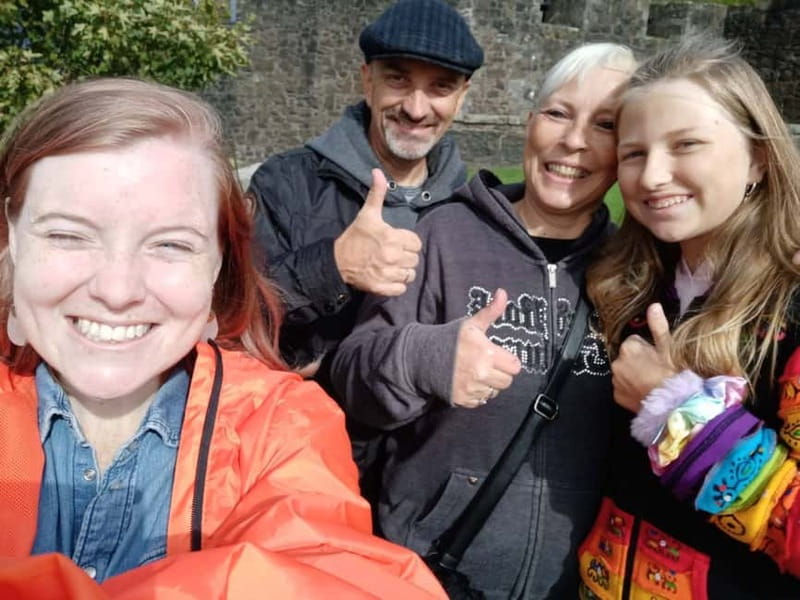
Meeting is easy too. You’ll find your guide outside the Old Town Jail, wearing a bright orange jacket. Arrive about 5–10 minutes early so you don’t waste time hunting for the group.
You can also read our reviews of more walking tours in Stirling


Why the guide matters more than the checklist
In small towns, guides can make or break the day. What I like here is that the tour is built for conversation, questions, and stopping when something sparks curiosity. People consistently point out that guides keep the pace unhurried, so you can actually listen instead of just walking along.
Guide names that show up again and again include Donnie, Dianne, Jane, Diane, Georgia, Beth, and Jayne. Across different guides, the common thread is how they make Stirling understandable—turning stone, street layout, and old institutions into stories you can picture.
You also get that practical “orientation” effect. After the walk, Stirling doesn’t feel like a map full of unrelated stops. It feels connected, with a sense of why the city matters in Scottish history.
Stop-by-stop: what you’ll actually do and see
The route is structured like a story arc: institutions and punishment, then town life and architecture, then the solemn evidence left behind in the cemetery, and finally the big political center at the castle.
Stirling Old Town Jail: where the punishment stories begin
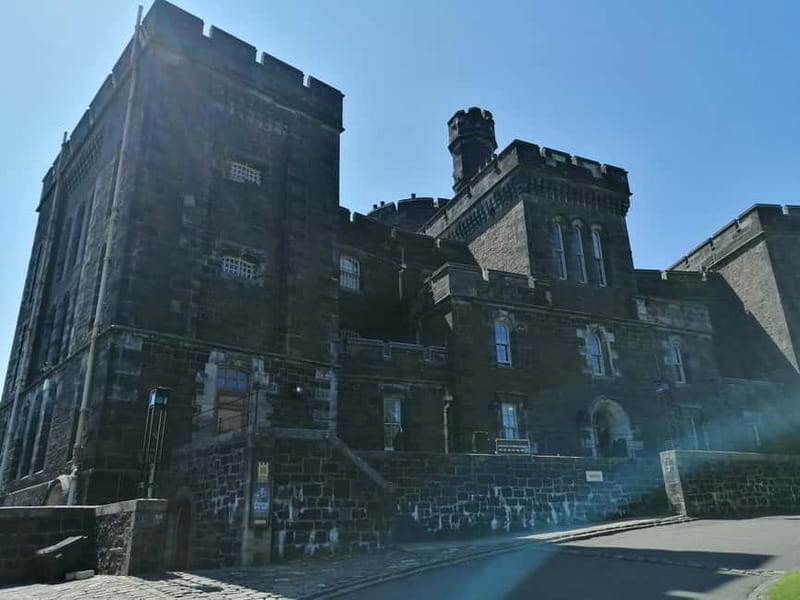
Starting at the Old Town Jail sets the tone fast. You’ll learn how Stirling handled crime and punishment, and you’ll also hear about the people caught up in those systems. It’s one of those starts that makes the rest of the Old Town feel less like scenery and more like lived-in history.
This isn’t just dates and names. The walk focuses on interpretation—what you’re looking at and why it mattered to everyday life in Stirling.
Stirling Highland Hotel and Broad Street: streets that shaped daily life
As you move along, you’ll hit places tied to town flow and civic activity, including Stirling Highland Hotel and Broad Street. This is where the tour helps you connect the past to how people would have moved, worked, and gathered.
Broad Street is also a natural place for market-life themes. You’ll hear about the happenings of the marketplace and how public spaces could become the stage for events that shaped reputations and order in town.
You can also read our reviews of more guided tours in Stirling

The Tolbooth: town justice stories in plain sight
You’ll pass The Tolbooth, and the tour uses it to talk about how Stirling ran its systems—especially around justice and punishment. Even if you’re not a history expert, it’s taught in a way that makes the building details feel important instead of random.
Think of this stop as a bridge between the jail start and the broader civic story of Stirling.
Mar’s Wark: symbols above doors and clues in the walls
Next up is Mar’s Wark, where the guide turns you into a building-reader. You’ll learn to notice symbols above houses and connect them to who lived where and what those features could signal.
This is one of the tour’s most useful skills. After Mar’s Wark, you’ll start spotting details on your own as you walk—little markers that tell you the building has a job in the larger story.
Holy Rude: the Church of the Holy Rude and the role of faith
At the Church of the Holy Rude, the guide brings in stories that help explain how religion and community intersected with public life. The key is that you’re not just looking at a church façade—you’re learning how this place fits into Stirling’s timeline.
It’s a stop that helps the tour feel balanced. You get the dramatic parts of history, but you also get the quieter institutions that held communities together.
Cowanes Trust: more local character on the route
The tour includes a stop at Cowanes Trust, used as another checkpoint in the Old Town narrative. You’ll hear local lore that adds texture to what you see, and it helps build the sense that Stirling was shaped by a mix of big events and local organization.
Even without you being handed a script of facts, this part works because it keeps you in “what does this building mean?” mode.
Old Town Cemetery: deciphering three-century gravestones
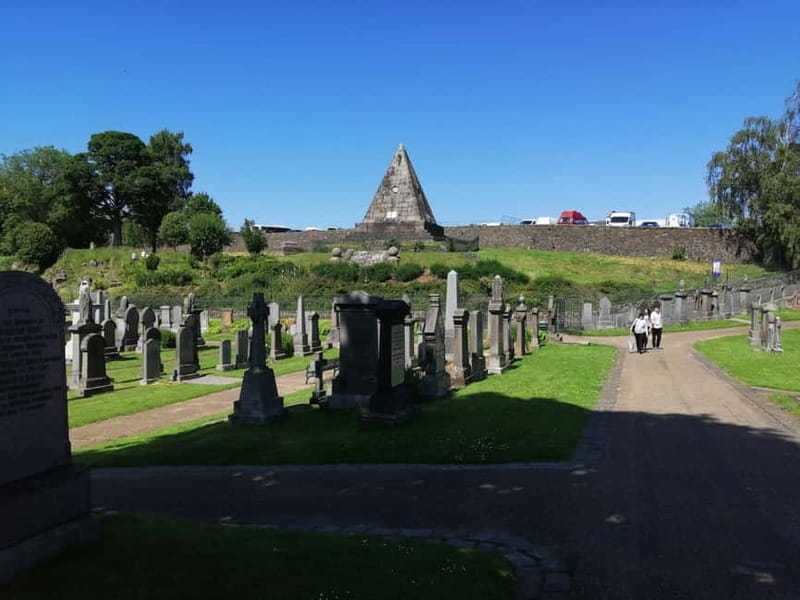
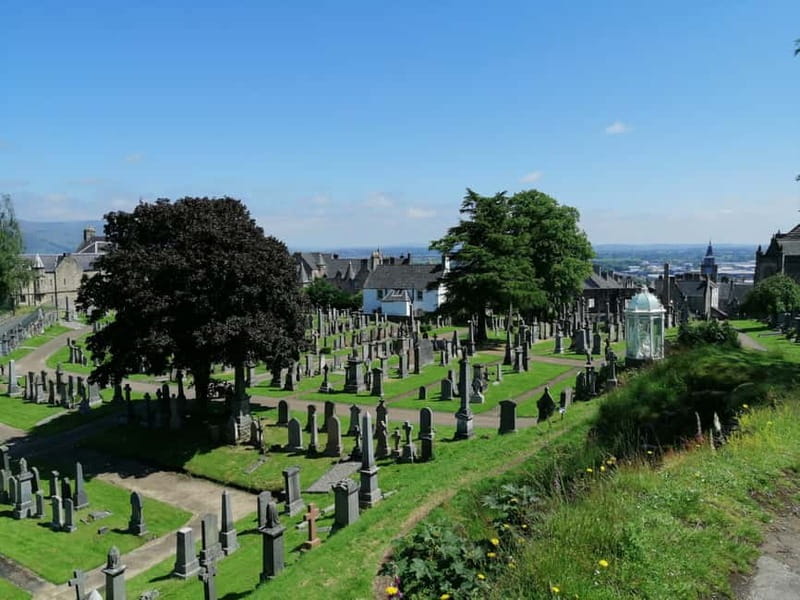
Then comes a standout moment: Old Town Cemetery, Stirling. This is where you get to decipher the secrets of gravestones that date back about three hundred years.
If you like the human side of history, this stop is for you. Gravestones tend to feel like decoration to visitors until someone shows you how to read them. Here, the guide helps you notice meaning in the stone, so it’s not just a walk past old markers.
Stirling Castle finish: big history, right where it happened
You end at Stirling Castle, which is a smart payoff. You’ve already learned how the city functioned, where conflict played out, and how everyday life and major events intertwine.
Finishing at the castle doesn’t feel like an unrelated add-on. It feels like the last page of the story you started at the jail.
William Wallace, Robert the Bruce, and why Stirling is the gateway
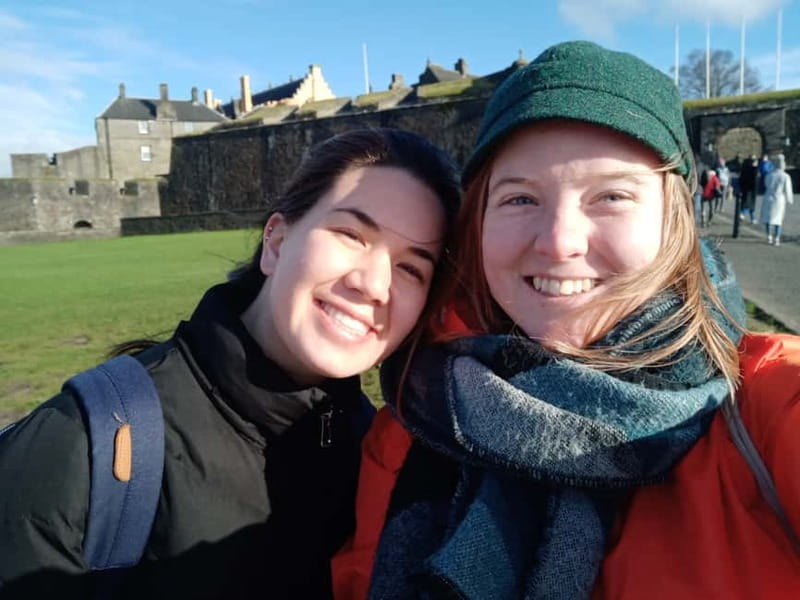
This tour connects Stirling to some of Scotland’s most famous names. You’ll hear about epic heroes of legend and how major events influenced the course of Scottish history.
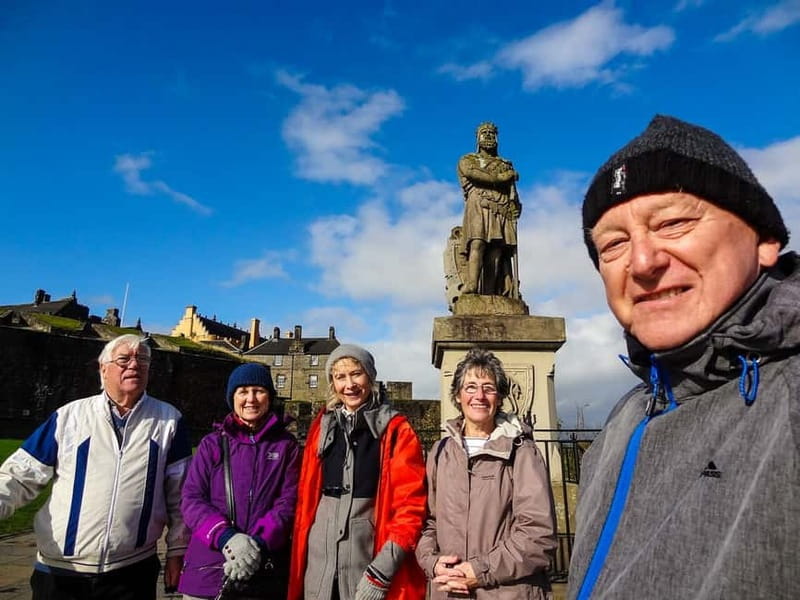
Expect the conversation to touch on William Wallace and Robert the Bruce, plus the battle linked to Stirling Bridge. The guide also ties Stirling into its nickname as the Gateway to the Highlands, so it doesn’t feel like a detour you made. It feels like a key stop in the wider story.
One helpful angle: the tour doesn’t treat history like a separate museum world. It keeps pointing you back to real places in town—streets, institutions, and monuments—so you can connect the legends to geography.
Stirling Craig views: when the climbs pay off
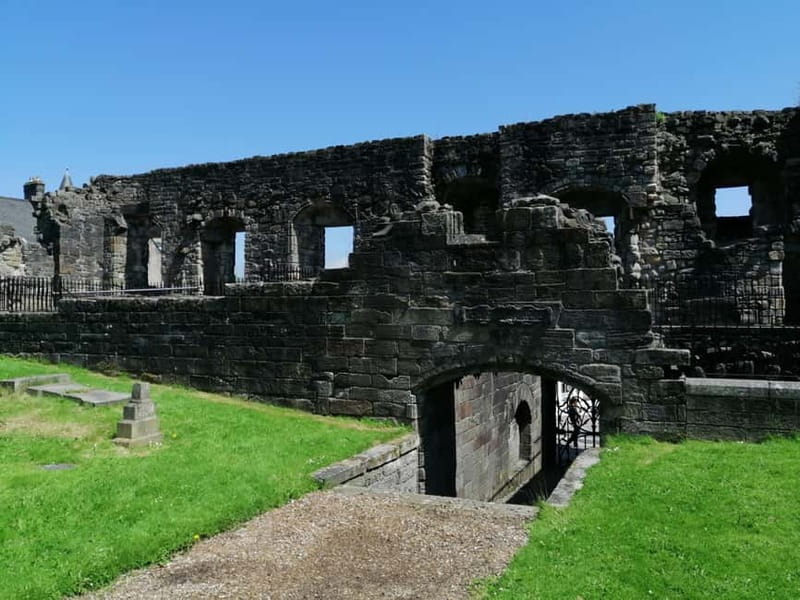
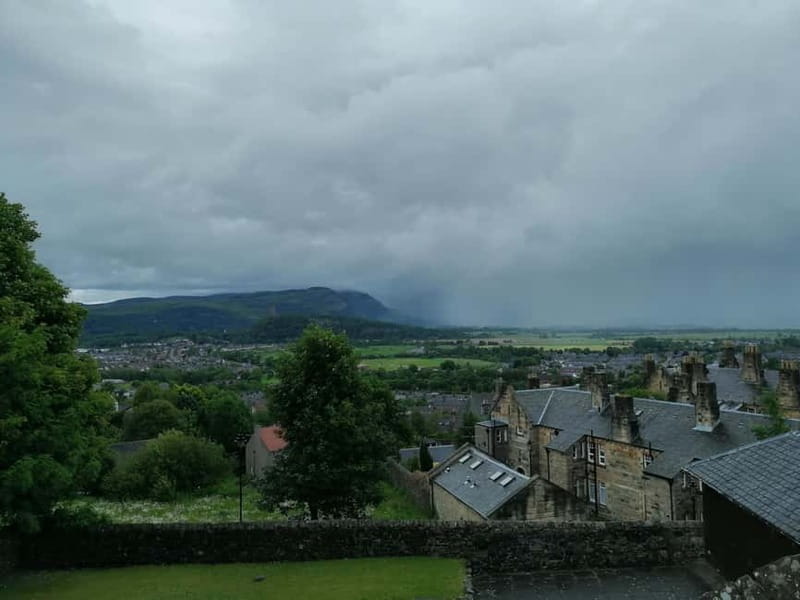
There’s a viewpoint component too. The route includes a reference to Stirling Craig, known for views, and the guide uses it to add perspective.
This matters even if you’re not chasing photos. Height gives you a mental model for how Stirling sits and how movement through town would have worked. It’s also a good place to slow down and catch your breath before the final push.
The local drink tasting: a small bonus with real payoff
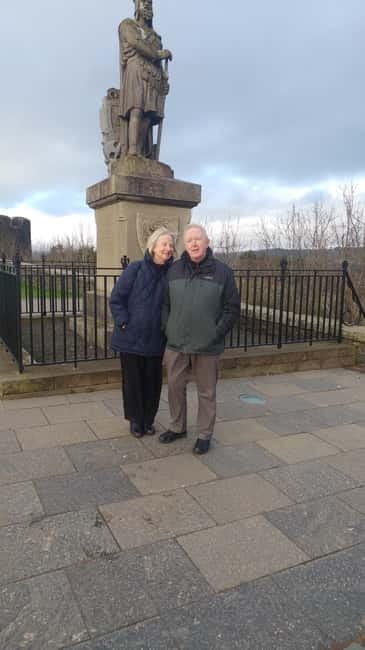
A local drink tasting is included, and that’s honestly one of the better “extras” for a short walking tour. It gives you a taste of Stirling beyond what’s written on plaques.
Where it lands during the 1.5 hours isn’t something you should count on, so just plan to be flexible. Either way, it’s part of the value equation because it’s included and it connects to the local feel the guide keeps emphasizing.
Price and value: is $19 a fair deal?
At $19 per person for about 1.5 hours, this tour is priced like an efficient orientation experience. You’re paying for two things: a local guide who helps you read the city, and the included drink tasting.
If you’re short on time, this is often a better use of energy than trying to assemble the story yourself from guidebooks. The tour also saves you from a common problem in historic towns: you see the buildings, but you don’t know what you’re looking at until you miss your chance to ask.
The only value “warning” is the walking. If you know you struggle with hills or uneven ground, the tour can still work because guides slow down, but your enjoyment depends on your comfort level outdoors.
Comfort and practical tips for a smooth walk
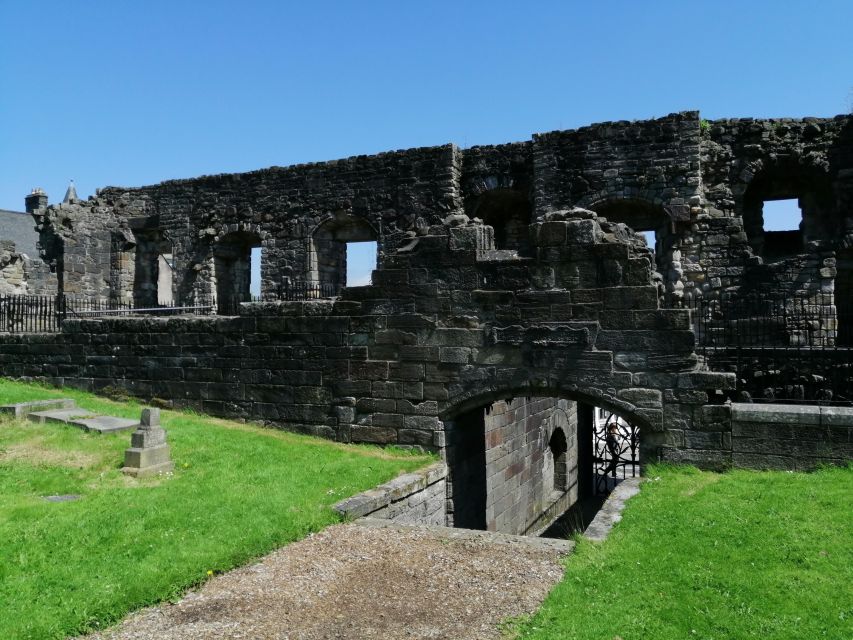
This is an active walking tour. There are some steep hills, and the guide will make sure the group takes them slowly if needed. Still, you should show up prepared.
I’d wear comfortable shoes and bring weather-appropriate clothing. Stirling conditions can change quickly, and you’ll be outside long enough for a light chill or sudden rain to matter.
If you’re using the wheelchair accessibility option, you’ll still want to check the route surface suitability day-of. The tour is listed as wheelchair accessible, but streets and historic areas can still be uneven.
Who should book this tour (and who might not)
You’ll get the most out of this walk if you want:
- a guided introduction to Stirling’s Old Town
- help interpreting what you’re seeing, not just where things are
- history that ties legends and battles to real places
- a short activity that still feels like a full story arc
It’s also a good choice if you’re traveling with family members who can handle walking at a relaxed pace. People mention the stroll is leisurely and that the guide doesn’t rush the group.
You might skip it if you absolutely hate hills or you prefer a quieter, self-paced option with no need to follow a route.
Should you book Stirling’s Old Town Jail to Castle walk?
Yes, if your goal is to understand Stirling, not just pass through it. This tour does well at turning street-level details into meaning, and the ending at Stirling Castle makes the time feel “complete.”
Book it especially if you like local guides who tell the stories with humor and patience, and if you want to learn how to read signs, symbols, and even cemetery markers instead of treating them like background.
If you’re unsure, my advice is to pick the time that best fits your day and show up with good shoes. Stirling rewards the people who slow down enough to look.
FAQ
What time do the Stirling Daily Guided Walking Tours run?
Tours run at 11am and 2pm. Check availability for the exact starting times shown for your date.
How long is the walking tour?
The tour lasts about 1.5 hours.
Where do I meet the guide?
Meet your guide outside the Stirling Old Town Jail. The guide will be wearing a bright orange jacket.
Where does the tour finish?
The tour finishes at Stirling Castle.
What’s included in the tour price?
The tour includes a local guide and a local drink tasting.
Is the tour conducted in English?
Yes, the live tour guide speaks English.
Is the tour wheelchair accessible?
Yes, the tour is listed as wheelchair accessible.
Do I need hotel pickup and drop-off?
No. Hotel pickup and drop-off is not included.
Are there steep hills, and is it suitable for different fitness levels?
There are some steep hills to climb. The guide will take them slowly if needed, and the tour is suitable for all fitness levels.
Can I cancel for a full refund?
Yes. You can cancel up to 24 hours in advance for a full refund.
What should I bring for the walk?
Bring comfortable shoes and weather-appropriate clothing. Also arrive 5–10 minutes before the start time and bring your booking confirmation (electronic is fine).