
REVIEW · STIRLING
Stirling: Historical Walking Tour in Spanish
Book on GetYourGuide →Operated by Scotland City Tours - Somos Escocia · Bookable on GetYourGuide
Stirling packs Scotland into 90 minutes. This Spanish walking tour turns the city’s medieval walls into a story you can actually walk through, and it hits big moments from the wars for independence to the darkest prison in 19th-century Britain.
What I like most is the mix of places you’d otherwise have to piece together yourself, plus the way the guide makes the stops feel connected. You also get small-group attention, capped at 10 people.
One thing to keep in mind: it runs in all weather (with route tweaks), and the Spanish narration can be quick, so plan to listen and take your time.
In This Review
- Key things I’d circle before you go
- A 90-Minute Walking Route That Actually Makes Stirling Click
- Stirling as the Door to the Highlands
- King Street, Poets, and the Easy Work of Getting Oriented
- The Medieval Wall: Seeing Defense as Urban Design
- Up to the Highest Part: The Medieval Market and Public Executions
- The Old Jail: Britain’s Worst 19th-Century Imprisonment
- Holy Rude Church and King James VI’s Coronation
- Other Named Stops You’ll Pass Along the Way
- Spanish-Language Guidance and the Small-Group Advantage
- Price and Value: Is $24 a Good Deal for 1.5 Hours?
- Weather Reality: A Walk That Moves, Even When It’s Not Perfect
- Meeting Point: Caffe Nero Check-In and Arrival Time
- Who Should Book This Tour (and Who Might Want Something Else)
- Should You Book Stirling: Historical Walking Tour in Spanish?
- FAQ
- FAQ
- What is the duration of the Stirling Historical Walking Tour in Spanish?
- Where is the meeting point?
- What language is the tour guide?
- How big is the group?
- Is the tour wheelchair accessible?
- What is included in the tour price?
- Does the tour include hotel pickup or an audio guide?
- How does the tour handle bad weather?
Key things I’d circle before you go
- 90 minutes, tight route, major landmarks
- Stirling’s role in the 14th-century independence wars
- The Old Jail, described as Britain’s worst 19th-century jail
- Holy Rude Church and King James VI’s coronation
- Small group limited to 10 for real guide interaction
- A walk that includes key civic sites like Mercat Cross and the Tollbooth
A 90-Minute Walking Route That Actually Makes Stirling Click

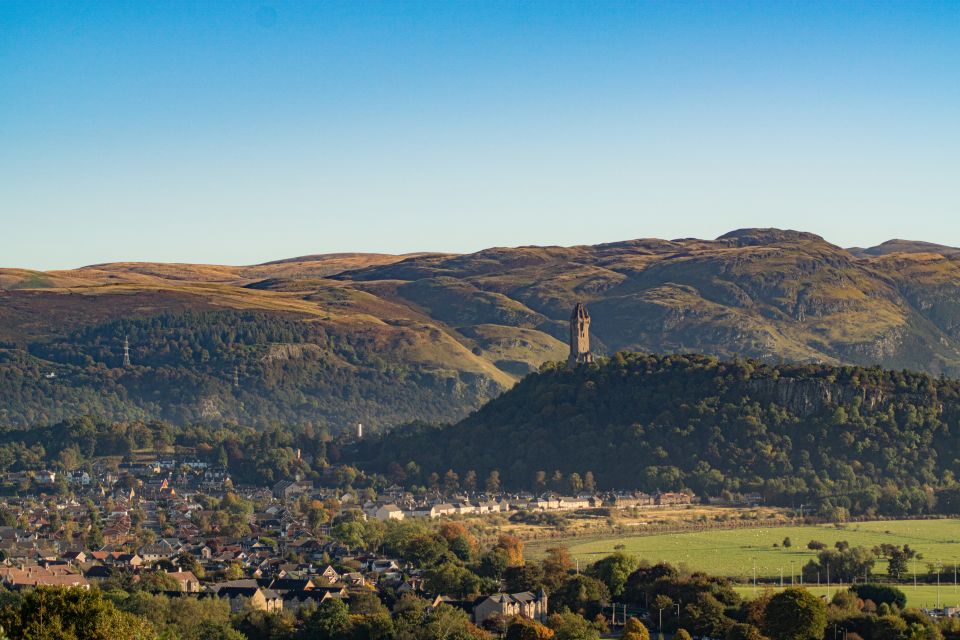
Stirling sits right on Scotland’s path toward the Highlands, which is why the place keeps showing up when power shifts. In this tour, you don’t just read about rulers and battles. You walk the medieval wall and the streets that helped shape who held the city, and when.
The whole thing runs about 1.5 hours, so it’s a smart option if you’re short on time but still want the “why this place matters” version of Stirling. And because it’s a live guide in Spanish, you’ll get the context behind the buildings and sites rather than just passively looking at them.
You can also read our reviews of more walking tours in Stirling


Stirling as the Door to the Highlands

The big idea you’re working with is simple: whoever controlled Stirling often controlled the routes and pressure points tied to the Highlands. That’s why the tour leans into one central theme—the city’s strategic importance—and then uses specific spots to prove it.
You’ll learn how Stirling was key in the wars of independence between Scotland and England in the 14th century. The way it’s taught matters here. Instead of getting lost in dates, the guide ties the conflict to the physical layout—walls, entrances, market area, and key civic buildings—so the history feels grounded.
If you’ve ever wondered why a smallish city can feel like a big deal in Scottish stories, this is the answer in walking form.
King Street, Poets, and the Easy Work of Getting Oriented
After you check in, the walk starts rolling through the town’s core. One of the most useful parts for you is that the guide uses King Street as a backbone for orientation. It’s where you’re likely to pick up your bearings fast, because it’s tied to what Stirling’s known for—people, power, and the buildings that still show the city’s logic.
You’ll also hear about famous poets connected to the area. The point isn’t turning this into a literature lecture; it’s helping you see Stirling as more than castles and conflict. The city had culture, voices, and public life alongside the politics.
This section is also where you’ll get the benefit of a short tour: there’s enough time to learn what to look for next, without feeling like you’re stuck on a slow circuit.
The Medieval Wall: Seeing Defense as Urban Design
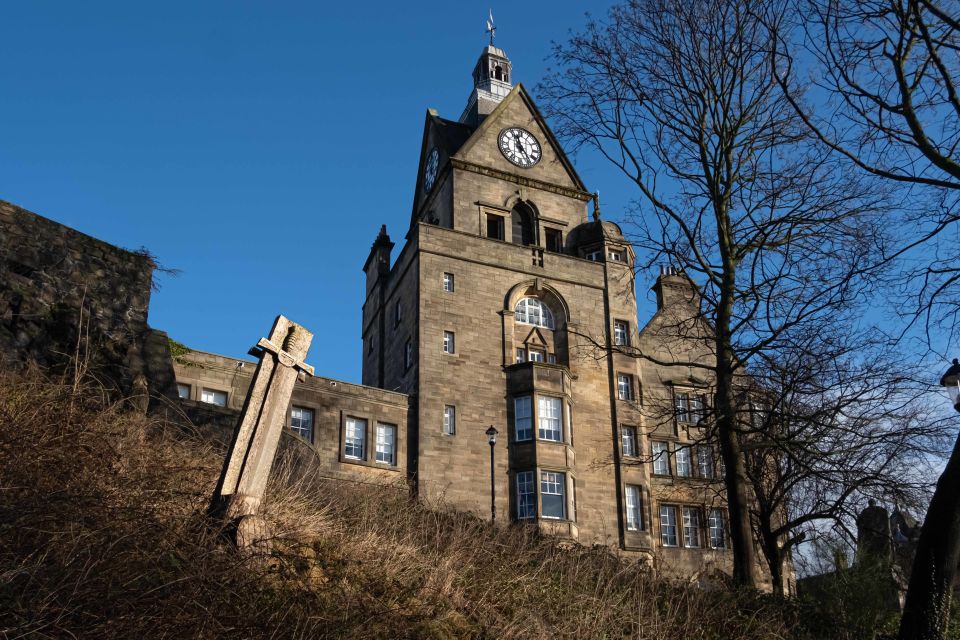
The tour doesn’t just mention fortifications—it has you experience them on foot. Scotland had 11 fortified cities in its history, and Stirling is one of them. Walking along the medieval wall gives you a direct feel for why defenses were placed where they were.
Here’s what you’ll likely notice as you go:
- The wall isn’t abstract. It’s part of how the city developed and how movement was shaped.
- The guide’s explanation helps you connect “fortification” with everyday street life—where people walked, gathered, and worked.
Even if you’re not a “history person,” this works because it’s visual and physical. You’re not just hearing about strategy; you’re watching how the city holds its own shape.
Up to the Highest Part: The Medieval Market and Public Executions
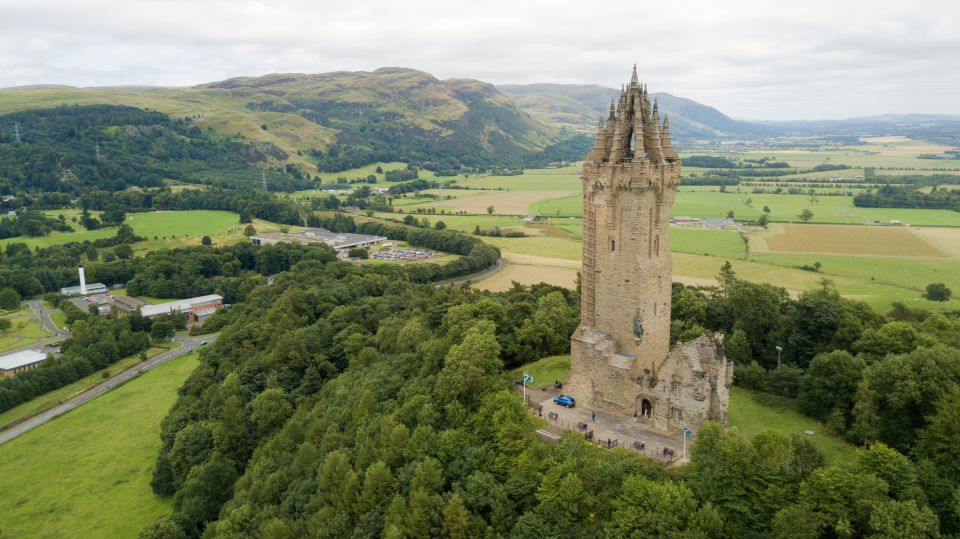
You’ll also head to the highest part of Stirling. This stop is important because it connects civic space with punishment and authority—two things that were tightly linked in medieval towns.
The guide points out two key realities:
- The old medieval market was located here.
- The place also relates to public executions.
That combination hits hard in a way that feels honest. Markets were where daily life happened. Public executions were where power showed itself. Seeing both tied to the same elevated area helps you understand how a city communicated control—not only through walls, but through public spectacle.
It’s not a comfortable idea, but it’s a meaningful one. If you come prepared for that kind of historical contrast, you’ll get more out of the walk.



The Old Jail: Britain’s Worst 19th-Century Imprisonment

If there’s one stop that changes the tone of the whole tour, it’s the Old Jail. The tour describes it as Britain’s worst jail in the 19th century—a wet, nasty place that held a crowded mix of prisoners.
This is where the guide gets specific about what made it brutal:
- Prisoners included men, women, and children.
- Ages ranged from minor offenders to adults.
- It included people awaiting trial, murderers, and debtors.
That range matters. It’s not just about criminals in the modern sense. It’s about how wide the net of punishment and detention could be, and how everyday people could end up trapped by the justice system and debt.
Practical tip: if you’re easily affected by dark topics, go in with awareness. This is one of those historical moments that’s designed to land, not to entertain.
Holy Rude Church and King James VI’s Coronation
Then the tour moves into a completely different kind of power: religious ceremony tied to monarchy. You’ll visit the Church of the Holy Rude, and you’ll hear how it hosted King James VI’s coronation—the son of Mary Stuart.
The tour highlights something special about this church in Britain’s church-history story. Alongside Westminster Abbey, Holy Rude Church is described as the only church still in use that has seen coronation events like this in Great Britain.
Even if you don’t know the details of the Stuarts, this stop gives you something tangible: a landmark connected to national authority, not just local legend. It’s the “who ruled” story again—but told through architecture and ceremony instead of war and prisons.
If you want your Scotland trip to feel balanced—kingdom, church, conflict, and consequence—this is where that balance lands.
Other Named Stops You’ll Pass Along the Way
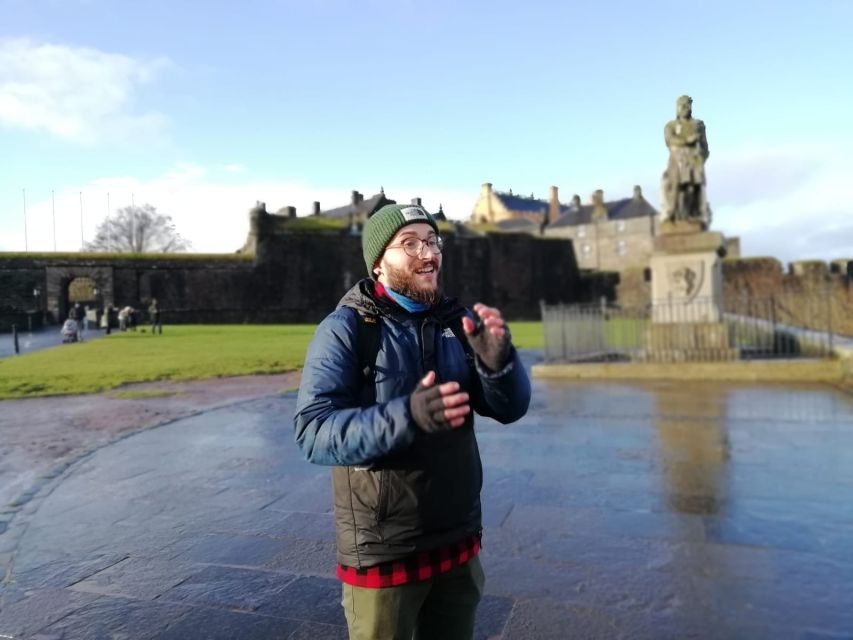
The tour route also includes several additional Stirling landmarks that help build a full picture of the city beyond the headline sites. You’ll encounter places like:
- Mercat Cross
- the Tollbooth
- John Cowane Hospital
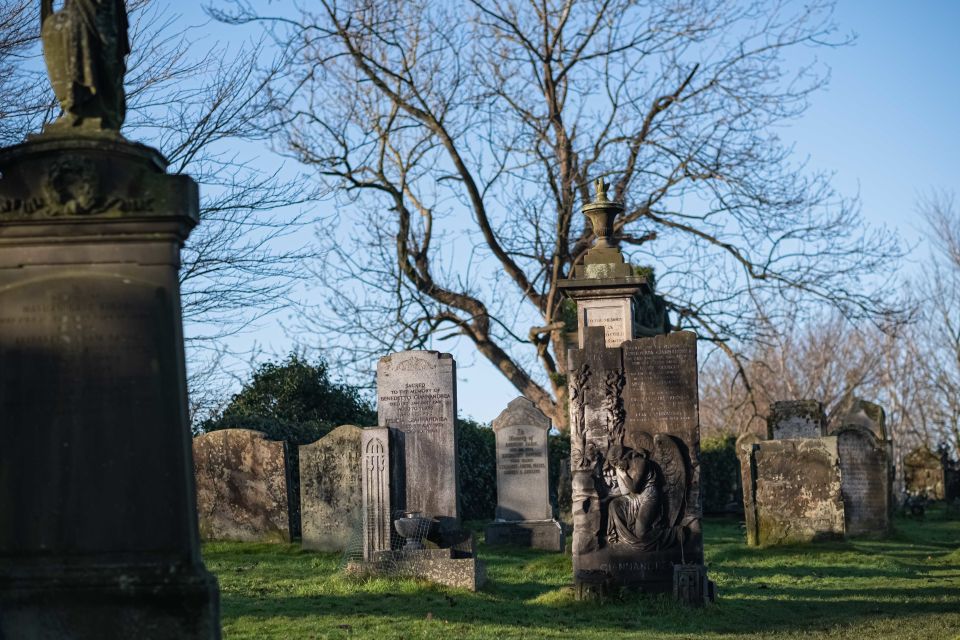
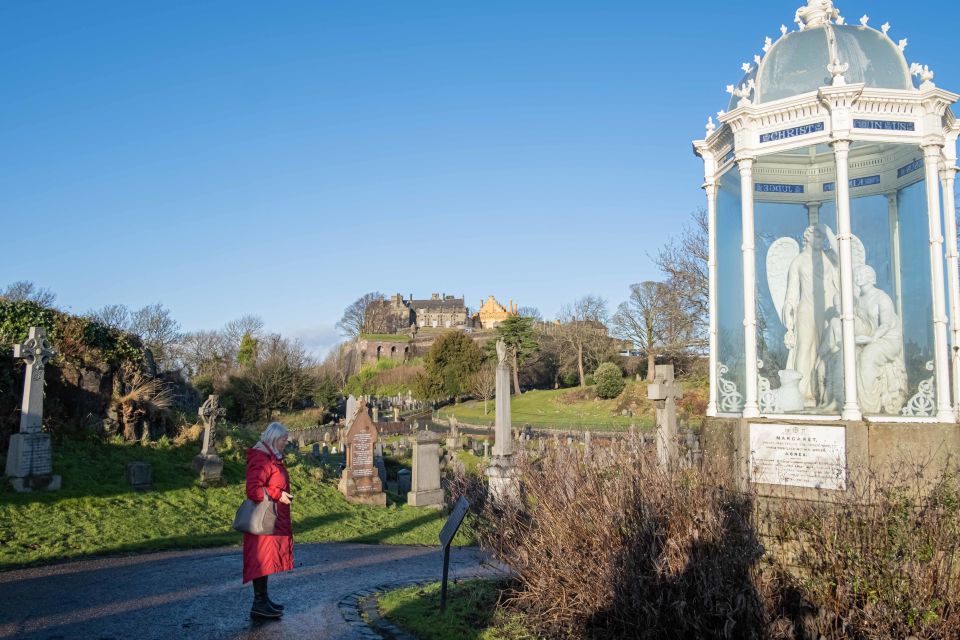
- the Old Cemetery
- Pyramid Star
You may see these as separate points on the map at first. The guide’s job is to connect them so they start to feel like parts of one system: civic life, public authority, care for the community, memory, and commemoration.
Because this is a guided walking route, the value is in how the guide stitches them together into a single story of rule and daily life. It’s also a good way to spot what you might want to revisit later on your own—especially if one stop grabs you emotionally or intellectually.
Spanish-Language Guidance and the Small-Group Advantage
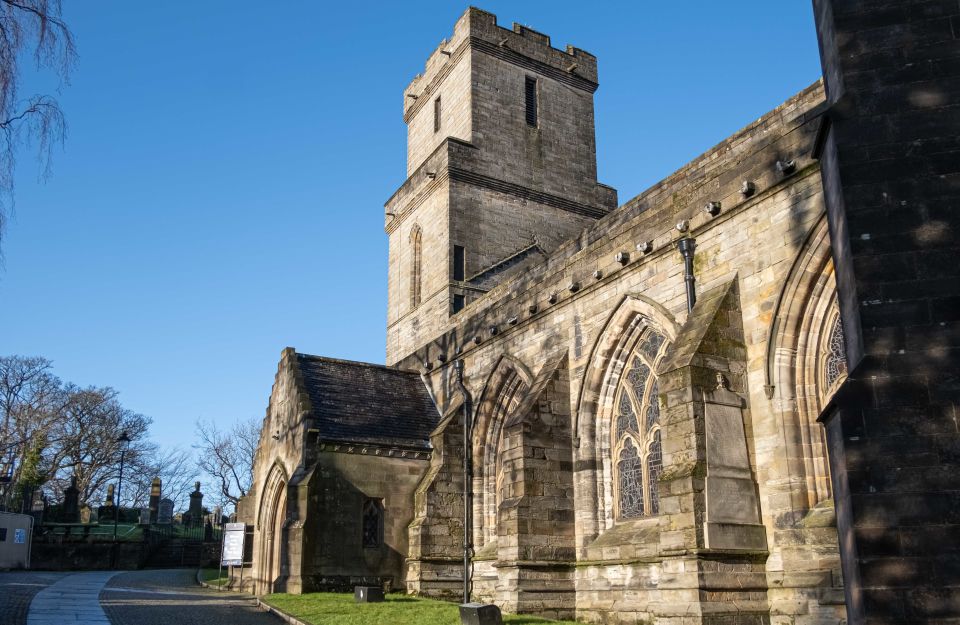
This is a live tour with a Spanish guide, and it’s offered as a small group limited to 10 participants. That matters more than it sounds. Short tours can feel rushed when the guide can’t connect with people. A smaller group means the guide can keep momentum while still giving you room to ask questions or follow closely.
The experience also earns praise for guide quality. In particular, guides such as Ara and Lorena are described as attentive, and Ara is noted for sharing anecdotes in an enjoyable way. That’s exactly what you want here: human stories that make the medieval wall and jail descriptions easier to hold in your head.
One consideration: some people note the guide may speak a bit quickly. If that’s you, pick a quiet moment to start listening (don’t arrive late) and keep your focus during the more explanatory parts.
Price and Value: Is $24 a Good Deal for 1.5 Hours?
At about $24 per person for 1.5 hours, this tour sits in the “small price, big payoff” category—mainly because you’re not just getting walking time. You’re getting a guided interpretation of multiple landmarks that would be harder to connect without help.
Here’s what makes the value feel real:
- You cover standout sites tied to Scotland’s power struggles and monarchy.
- You get a live Spanish guide rather than a self-guided experience.
- The group size stays small, which usually improves the quality of the explanation.
What you won’t get included: hotel pickup/drop-off and an audio guide. That’s normal for a walking tour, but it does mean you should be comfortable getting yourself to the meeting point.
Overall, if you want a compact history fix with clear highlights, the price makes sense.
Weather Reality: A Walk That Moves, Even When It’s Not Perfect
The tour runs in all weather except extreme conditions. The route is adapted to minimize exposure to rain or snow, so you won’t be forced into an uncomfortable situation just because conditions look bad.
That means you should dress for Scottish weather as if it might change quickly—because it can. Wear shoes you trust on uneven pavement and bring a light layer that won’t slow you down. If you hate wet-weather walking, this is still workable, but treat it like a proper outdoor activity.
Meeting Point: Caffe Nero Check-In and Arrival Time
Meet inside the coffee shop Caffe Nero. Staff are there to check you in, so you’re not hunting for a guide at the last second.
Arrive at least 15 minutes before the tour starts. With a small group, being on time helps the whole tour run smoothly, and it also gives you a moment to settle in if you’re syncing with Spanish narration.
Who Should Book This Tour (and Who Might Want Something Else)
This tour is a strong fit if you:
- Want a short, high-impact Stirling overview without a full-day commitment.
- Like history that’s tied to places you can physically walk through.
- Are comfortable following a Spanish live guide for the full 1.5 hours.
- Want to see the Old Jail and Holy Rude Church with the context that makes them matter.
You might choose another option if you:
- Want a self-paced format with no language barrier.
- Need very slow, step-by-step explanations throughout.
- Are uncomfortable with heavier themes related to imprisonment and public punishment.
Should You Book Stirling: Historical Walking Tour in Spanish?
If you’re spending time in Stirling and you want the city’s big story—rule, defense, punishment, and monarchy—in a single compact walk, I’d book it. The payoff is strong for the time: medieval walls, a major church tied to King James VI, and the sobering Old Jail description that gives Stirling its emotional weight.
Book it especially if you’ll appreciate a guide-led story more than a checklist of landmarks. The small group size helps, and the guide style described as attentive and anecdote-friendly is exactly the kind of energy that turns history into something you can remember.
FAQ
FAQ
What is the duration of the Stirling Historical Walking Tour in Spanish?
The tour lasts 1.5 hours.
Where is the meeting point?
You meet inside the coffee shop Caffe Nero, where staff will check you in.
What language is the tour guide?
The live tour guide speaks Spanish.
How big is the group?
The group is small, limited to 10 participants.
Is the tour wheelchair accessible?
Yes, the tour is wheelchair accessible.
What is included in the tour price?
The tour includes local guides.
Does the tour include hotel pickup or an audio guide?
No. Hotel pickup and drop-off are not included, and there is no audio guide.
How does the tour handle bad weather?
It runs in all weather except extreme conditions, and the route can be adapted to minimize exposure to rain or snow.
If you want, tell me your travel dates and whether you prefer a faster or slower pace in Spanish, and I’ll help you decide if this format will feel comfortable for you.