REVIEW · ABERDEEN
Aberdeen’s Ancient Heritage and Folklore Tour
Book on GetYourGuide →Operated by Grampian Escapes & Tours Ltd · Bookable on GetYourGuide
Pictish stones and hillfort earthworks in one day. This 7.5-hour Aberdeenshire ancient heritage outing pairs real walking time with hands-on explanations of symbols, settlement life, and the stories that shaped northeast Scotland. I especially liked the chance to see the monuments close up and then connect them to meaning through clear, myth-meets-reality storytelling. The second big plus is the small group size (up to 7), which makes it easier to ask questions and actually hear your guide. One thing to consider: you’ll do moderate walking on unpaved paths and grassy ground, with some steep sections.
What makes the day feel special is the way it’s built around layers: early hillfort communities, the later castle layer on top, and then the Pictish strongholds with their carved stones. In guide feedback, Jacqueline comes up again and again as a patient fountain of information who loves the subject and adapts when people need a slower pace. You’ll still want to plan around the outdoors—sturdy shoes and water matter more than you’d think.
In This Review
- Key highlights at a glance
- A small-group Pictish day from Aberdeen’s William Wallace statue
- Barra Hill Fort: reading hillfort earthworks like a map
- Dunnideer Castle and the stone circle: power stacked on older sacred ground
- Rhynie and Tap O’Noth: Scotland’s largest hillfort and the Pictish stronghold feel
- Kildrummy lunch break: a practical pause before the next ancient layer
- Easter Aquhorthies and Loanhead of Daviot: recumbent stone circles you can see clearly
- Inverurie’s Bass & Symbol Stones: motte-and-bailey on a mound, Pictish stone on display
- Tomnaverie Stone Circle: the panoramic payoff moment
- Dyce Symbol Stones at St. Fergus’ Chapel: carvings near Aberdeen, up close
- Who this tour suits best (and who may want to choose a different day)
- Value and what you really get for $134
- What you should bring so the day feels easy
- Should you book Aberdeen’s Ancient Heritage and Folklore Tour?
- FAQ
- How long is the Aberdeen’s Ancient Heritage and Folklore Tour?
- What’s included in the price?
- Is food included?
- How much walking is involved?
- Where does the tour start?
- What group size should I expect?
- Is the tour suitable for people with mobility impairments?
Key highlights at a glance
- Pictish symbols you can name and interpret during stops tied to real sites and carved stone meanings
- Hillfort walking on earthworks and foundations, so the layout makes sense in your legs
- Stone circles with recumbent-stone details, including a best-preserved style around Inverurie
- A layered route that links prehistoric monuments, medieval power, and early medieval carvings
- Small group feel (max 7) with time to ask questions and hear the folklore clearly
A small-group Pictish day from Aberdeen’s William Wallace statue
The tour starts next to the William Wallace statue by Union Terrace Gardens on Rosemount Viaduct, with a meet-up point that’s easy to find and hard to miss. From there, you ride to a string of prehistoric and early medieval sites, mixing brief van transfers with time on foot. For a day like this, that balance is ideal: you get movement and views, but you’re not spending the whole day stuck in traffic.
What you’re paying for isn’t only “seeing stones.” It’s having someone explain why these places mattered, and then giving you enough time to look closely. With up to 7 participants, it doesn’t feel like you’re watching an audio track through the countryside. It feels more like being guided through a big open-air lesson—while still having enough room to pause, take photos, and breathe in the quiet.
You can also read our reviews of more historical tours in Aberdeen

Barra Hill Fort: reading hillfort earthworks like a map
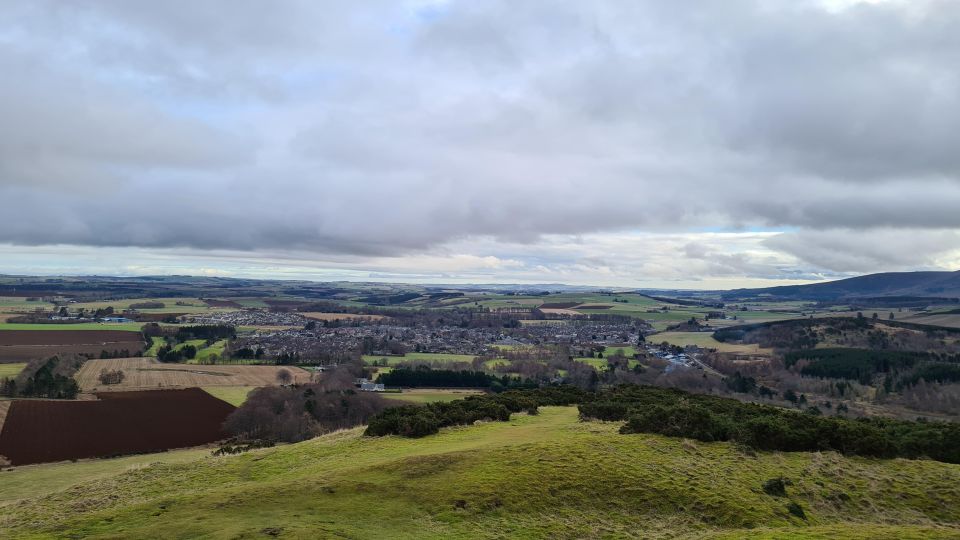
Your first stop is Barra Hill Fort, a hillfort type common across Aberdeenshire. The point here is not to treat the site like a museum display. You actually walk along the earthworks and foundations, built on higher ground, where early communities organized settlements using enclosures—often wood or stone—around living and working spaces.
One of the best ways to understand a hillfort is to feel how the terrain shapes decisions. You’ll be walking through fields and off-road paths, which helps you notice the slope and the natural “defense” logic without your guide having to spell it out every minute. Even if you’re not an archaeology nerd, you’ll start to picture why someone would choose this spot, not the next hill over.
The main practical consideration: you’re not on a paved trail. Comfortable shoes or hiking shoes are a must, and you’ll want water. The upside is that the walk makes this first stop much more memorable than a quick viewpoint.
Dunnideer Castle and the stone circle: power stacked on older sacred ground
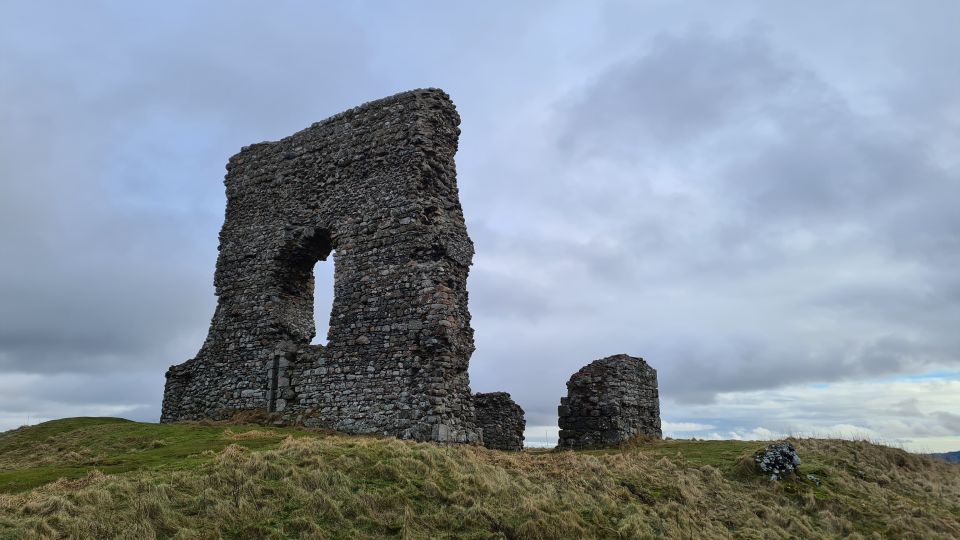
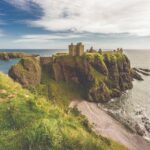
After Barra Hill, you move to the Insch area for a break and a photo stop at Dunnideer Castle. This one matters because it represents a later layer of occupation: a tower house built around c. 1260, partly using remains of an earlier vitrified hillfort that had already been on the site.
That “built on top of” idea is one of the themes of the day. A hill that once held earlier defenses and settlement could later become a strategic spot again—this time with a castle footprint and a medieval household life. Nearby, you also get remaining stones from the Dunnideer Stone Circle, which adds an older prehistoric feel right beside the medieval story.
Why I like this pairing for you: it gives context for how sacred and strategic places can keep getting reused across centuries. It also helps the folklore elements feel less random; the same terrain can inspire stories again and again because people keep coming back for similar reasons.
Rhynie and Tap O’Noth: Scotland’s largest hillfort and the Pictish stronghold feel
Rhynie is a standout because the area is described as a Pictish stronghold, and your visit centers on Tap O’Noth, Scotland’s largest hillfort. At its height, it rivaled the largest post-Roman settlements in Europe, and research suggests it could have supported a community of over 5,000 residents.
That scale changes how you see the hill. Instead of picturing a handful of houses, you’re asked to imagine a major hub of people, trade, and power. Your guide connects this to the Pictish carved stones in the area, including how researchers interpret symbols and meanings. This is one of the most satisfying parts of the tour: it’s the moment when “stone = decoration” stops and stone becomes a language.
You’ll also hear about the Crawstane, a lone standing stone once at the center of a settlement with trade reaching across the Mediterranean and tied to great wealth. Then the story turns political and cultural—how the King of the Scots changed Scotland’s cultural landscape, which ultimately led toward the downfall of the Picts.
This is also where folklore becomes more than spooky atmosphere. When your guide ties symbols to beliefs and changing power, you start to understand why stories survived in local memory. You’re not just hearing tales. You’re being shown how history and myth often travel together in this part of Scotland.
Kildrummy lunch break: a practical pause before the next ancient layer
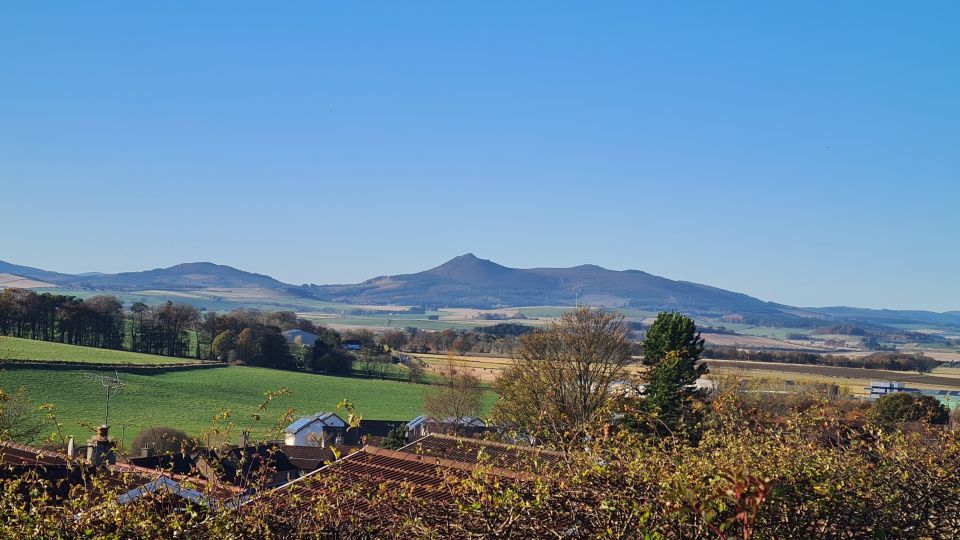
Midday comes with a lunch break at Kildrummy. Lunch isn’t included, and the same is true for food and refreshments overall, so you’ll want to bring your own plan. The good news is that this break keeps the day from feeling like a nonstop sprint between stones.
This pause is also useful for recharging your “looking mode.” Once you’ve been walking and reading carvings, you’ll appreciate time to sit, eat, and reset before more monuments. If the weather changes (and it can in the north), this is your buffer.


Easter Aquhorthies and Loanhead of Daviot: recumbent stone circles you can see clearly
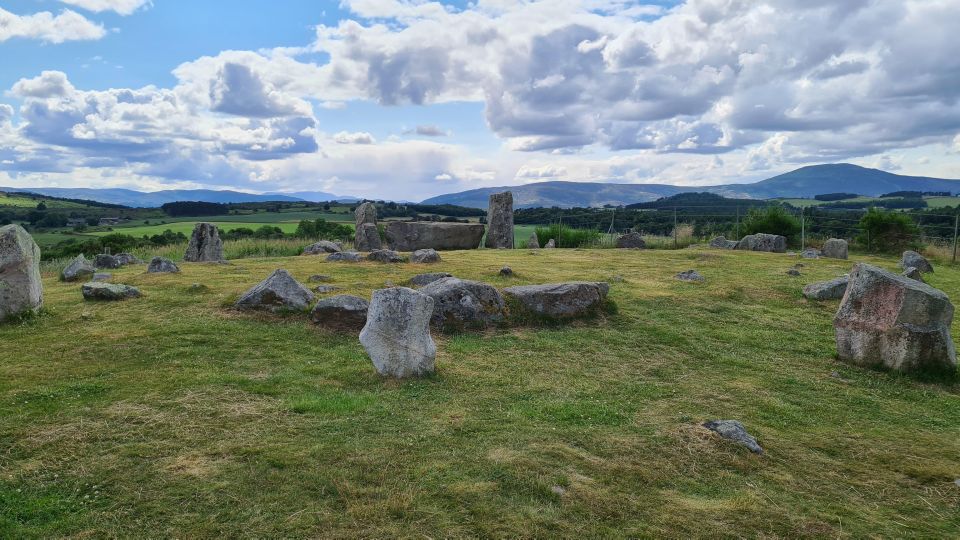
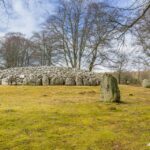
From the Rhynie area, the tour route moves you toward some of the most distinctive stone-circle styles in the region. One named highlight is the Easter Aquhorthies and Loanhead of Daviot circles, described as one of Scotland’s best-preserved recumbent stone circles dating to over 4,000 years ago in the late Neolithic or early Bronze Age.
Here’s what makes the design worth your attention: the recumbent stone is flanked by two tall standing stones, with a nearly perfect ring of smaller stones around them. Even without any special equipment, your guide’s explanation helps you look at the circle as a structured monument, not just a pile of rocks.
For you, the value is that these details give the day a sense of variety. Hillfort earthworks are about terrain and settlement patterns. Recumbent circles are about geometry and monument building—plus a different kind of atmosphere.
You’ll want sturdy footwear and outdoor clothing here too, because even short walks and photos can happen on uneven ground.
Inverurie’s Bass & Symbol Stones: motte-and-bailey on a mound, Pictish stone on display
The Bass is one of those sites where layers feel physical. It begins as a natural mound about 15 m (50 ft) high, then becomes a classic medieval motte in the 12th century, scarped by the Earls of Garioch. The adjoining “Little Bass” forms the bailey.
But the tour doesn’t leave it at medieval control. You also get a museum-like element: four Class I Pictish stones are sheltered in a glass case between the Bass and Little Bass. Even sheltered, these stones connect the day back to early medieval artistry, and your guide explains symbols and how they’re grouped and interpreted.
This is also the point where you’ll likely start paying attention to symbols more consciously. Once your guide gives you a way to see them, you can look again and notice patterns—mirror-and-comb style motifs, disc shapes, and animal figures, depending on the stone.
Tomnaverie Stone Circle: the panoramic payoff moment
Tomnaverie Stone Circle is included as a photo stop and walk, and one of the best ways to think about it is as the day’s visual reward. The provided experience highlights mention the fantastic panoramic view from Tomnaverie, which matters because you’ve spent much of the day focused on details: earthen defenses, castle remnants, and carved stone symbolism. A panoramic stop snaps the whole story back to the bigger picture—why these builders chose these locations.
Time on site matters too. You get a walk and a photo stop rather than a drive-by, so you can get a feel for how the circle sits in relation to the surrounding ground. That’s when your earlier hillfort impressions start to click: the north is about terrain as much as it is about stone.
Dyce Symbol Stones at St. Fergus’ Chapel: carvings near Aberdeen, up close
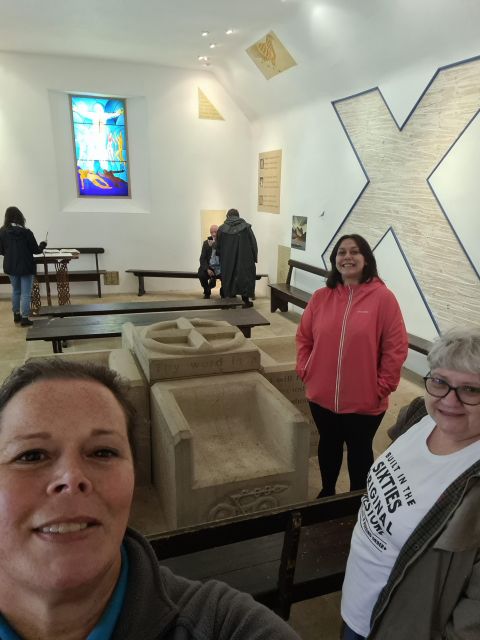
Another named stop in the tour description is the Dyce Symbol Stones in the old churchyard of St. Fergus’ Chapel in Dyce near Aberdeen. These stones date to around the 6th to 8th centuries and are known for intricate carvings typical of Pictish artistry.
Your guide focuses on symbols such as a mirror and comb, a double-disc, a crescent, and unique animal figures. This stop is especially useful if you like the “close-up” side of the day. When you’re standing near carved stone, the details you’d miss from a distance become readable, and the guide’s explanations become instantly practical.
If you care about early medieval art, this is the moment to slow down and actually look. Take your time tracing shapes the way your guide describes them. This is the part of the day that can feel quietly unforgettable.
Who this tour suits best (and who may want to choose a different day)
This experience is a great fit if you like outdoor walking plus story-based learning. It’s also a strong choice if you want a guided interpretation of Pictish symbols and the meaning behind monuments, not just a checklist of places.
You’ll be happiest if you’re comfortable on unpaved paths and don’t mind some steep sections. The tour notes a moderate level of intensity and suggests guests aren’t required to participate in all stops or walks. If you want a gentler day, you can still enjoy the van segments and picture stops, but this is not the best pick for low fitness or mobility limitations.
It’s also a good match if you want a small-group day rather than a large bus tour. With a limited group size, you get more conversation, and your guide can adjust pace when needed.
Value and what you really get for $134
At $134 per person, this isn’t the cheapest thing you can do in the area, but it also isn’t priced like a luxury private tour. The value comes from the combination of things that cost time and effort to assemble:
- Multiple major ancient and early medieval sites packed into one 7.5-hour outing
- A live English guide who provides explanations of symbols and history
- No additional entry tickets required
- A small group size that keeps the experience personal
What’s not included is food and refreshments, and that matters for cost planning. Lunch is on you, so budget for a meal during the Kildrummy break. If you treat that as part of your overall spend and come prepared, the ticket price feels fair for the amount of guided content and physical experience you’ll get.
What you should bring so the day feels easy
The tour’s advice is straightforward, and I’ll echo it: you’ll want comfortable shoes (or hiking shoes), water, and clothes suited to outdoor conditions. Since the walking includes unpaved paths and grassy terrain, think traction and comfort first.
If you’d like extra stability, the tour may provide a few walking poles on the day for those who want them. If you have your own poles, bringing them can make you feel more confident on steep sections.
Should you book Aberdeen’s Ancient Heritage and Folklore Tour?
I’d book this if your idea of a good day is: walking a bit, seeing stone and earthworks up close, and getting explanations that turn carvings and ruins into something you can actually understand. The small-group size and the focus on Pictish symbols make it a standout type of tour, and guide feedback points to Jacqueline’s strong knowledge and willingness to adjust pacing.
Skip it if you want fully paved, low-walking sightseeing, or if your fitness and mobility limits mean you’d struggle with unpaved paths and steep sections. This is outdoors-first.
If you do book, plan for your lunch, wear sturdy footwear, and give yourself permission to slow down at the moments that matter. That’s where the day’s stories land.
FAQ
How long is the Aberdeen’s Ancient Heritage and Folklore Tour?
The tour duration is 7.5 hours.
What’s included in the price?
The tour includes a live English guide and says no additional entry tickets are required.
Is food included?
No. Food and refreshments are not included, and the tour notes a lunch stop.
How much walking is involved?
There is a moderate amount of walking, including unpaved paths/off-road paths and grassy terrain, with some steep hill sections.
Where does the tour start?
The meeting point is next to the William Wallace statue by Union Terrace Gardens on Rosemount Viaduct.
What group size should I expect?
It’s a small group limited to 7 participants.
Is the tour suitable for people with mobility impairments?
No. It is not suitable for people with mobility impairments, and it also notes it’s not suitable for people with low level of fitness.