REVIEW · ABERDEEN
Aberdeenshire Private Half Day Castle & Historic Building Tour
Book on Viator →Operated by Time Exposure Travel · Bookable on Viator
Castle ruins and gardens in one tight loop.
This private Aberdeenshire tour is built for people who want castle views without public-transport hassle, plus a guide who turns the drive into stories you can actually see. I especially like having your plans shaped around your interests, and I liked how Malcolm kept history practical and human from stop to stop. One thing to consider: the day is time-boxed, some castle interiors cost extra, and bad weather can limit what you can go into.
From Aberdeen, you’ll be picked up from your hotel or other agreed spot, then whisked on a loop that mixes dramatic exteriors with gardens and a walk through Old Aberdeen’s older streets. It’s also a popular option, often booked about 3 months ahead, so snagging your preferred date can matter.
In This Review
- Key points to know before you go
- A tight half-day that still feels complete
- Where the day starts: Aberdeen pickup that saves your energy
- Dunnottar Castle: a headland fortress with an inside option
- What I’d do with your Dunnottar time
- Crathes Castle, garden, and estate: turrets, gargoyles, and yew hedges
- A small timing reality check
- Drum Castle and gardens: Robert the Bruce’s era meets a big garden idea
- Old Aberdeen: history that doesn’t require an entrance fee
- Malcolm’s guiding style: stories with pace and attitude
- Price and what you actually get for $245.78 per person
- Timing, weather, and how to plan your expectations
- Who this tour fits best
- Final call: should you book this Aberdeenshire private castle tour?
- FAQ
- How long is the Aberdeenshire private half-day castle tour?
- Where is pickup available?
- Is this tour private?
- Are castle interiors included?
- Do I need to buy tickets in advance for Dunnottar or Crathes?
- What if the weather is poor?
- What is the cancellation policy?
- Is the tour in English, and are service animals allowed?
Key points to know before you go
- Private pickup and transport from central Aberdeen, with possible surcharges outside the city
- Malcolm’s adaptive guiding style when wind or snow changes what you can enter
- A smart mix of sights: headland ruins, a showpiece castle garden, a historic estate, and Old Aberdeen
- Free exterior viewing at multiple stops, with paid interior options at the door
- A flexible route based on where you’re staying and what you want to prioritize
A tight half-day that still feels complete
This tour is the kind of day-trip format that works in Scotland: four stops, clear time blocks, and a local driver/guide doing the navigation and the pacing. Instead of you figuring out where the buses stop (or guessing which viewpoint is best), you get a plan and room for tweaks.
You’ll also benefit from the private setup. Your group is only one party, so the pace is more usable for families, couples, and friends traveling together. And because the guide is there with you from the start, you’ll get context while you’re standing in front of the places, not after you get back to your hotel.
The “half-day” label can sound short. But the route is set up so you can see a lot without sprinting. Dunnottar gets the first long look, then you rotate through Crathes and Drum with their gardens, then end with Old Aberdeen’s historic atmosphere. If you’ve got limited vacation time, this is a good use of it.
You can also read our reviews of more private tours in Aberdeen



Where the day starts: Aberdeen pickup that saves your energy
Pickup is part of the value here. You can be collected from Aberdeen City accommodations, the Aberdeen train station, or even a cruise liner. That means you avoid the usual scramble of finding a meeting point, hauling bags across town, or trying to line up your own transport.
The main thing to watch is the possible pickup surcharge if you’re outside Aberdeen City (more than 20 miles costs extra, with higher tiers for longer distances). It’s payable on the day, so it’s smart to confirm where you’ll be staying relative to the city boundary before you travel.
If you’re booking for a family or a small group with mixed mobility needs, pickup is one of those details that quietly makes the trip better. Less time commuting also means more time at each location, instead of “wasting daylight” on logistics.
Dunnottar Castle: a headland fortress with an inside option
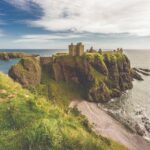
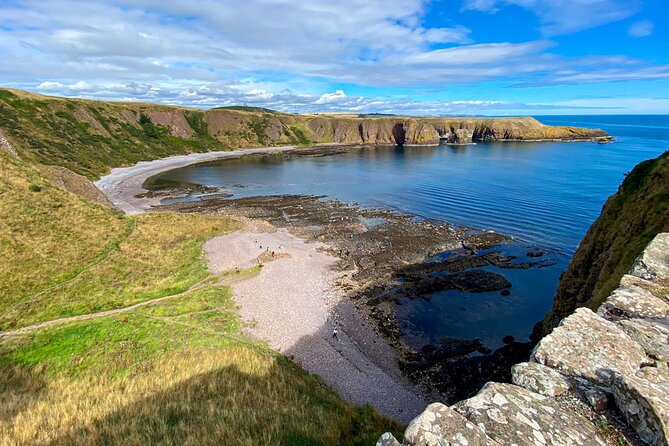
Dunnottar Castle is the big opener. It sits on a rugged, rocky headland near Stonehaven, and even in ruins it has that wow factor you want from Scotland. It’s described as a medieval fortress and the surviving structures date roughly from the 13th to the 16th centuries, though the place was fortified much earlier in the Early Middle Ages.
Your time at Dunnottar is about an hour. That’s enough to take in the dramatic exterior views and still have time for the viewpoints that help you understand how a fortress works when it’s built on rock. You’ll mostly be “reading” the castle from the outside, and that’s exactly where the setting does the heavy lifting.
The practical note: Dunnottar is free to see from outside, but entry into the castle costs extra. There’s no pre-book requirement mentioned, and the interior admission is listed as £12.00 per person at the door. So you can decide on the spot—great if the weather turns or if you want more time looking rather than walking.
What I’d do with your Dunnottar time
- If you love big views and history-at-eye-level, aim to spend most of your hour at the best vantage spots first.
- If you’re an interiors person, you can factor in the paid entry, but don’t feel forced. The exterior setting is the star.
Also, Scottish weather can change quickly. One of the most reassuring parts of this tour is how the guide responds when conditions make certain interior access harder. On snowy or windy days, the focus can shift to what you can see from where you stand, with the history explained in real time.
Crathes Castle, garden, and estate: turrets, gargoyles, and yew hedges
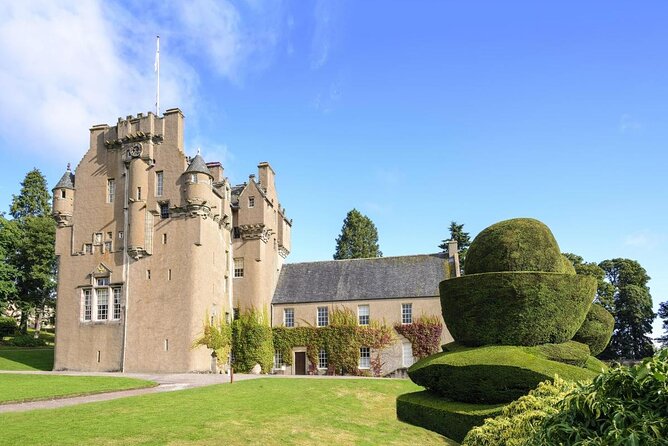
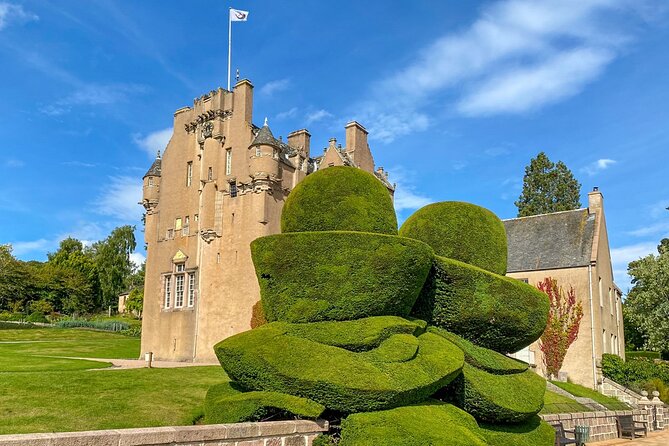
After Dunnottar, you’ll head to Crathes Castle, Garden & Estate, with about 45 minutes there. Crathes is a 16th-century castle known for its turrets and gargoyles, plus 16th-century painted ceilings (inside). Outside, it’s the grounds that keep grabbing your attention—especially the ancient great yew hedges and the walled gardens.
Crathes is set in Royal Deeside, so you’re not just touring one building. You’re stepping into a designed landscape around it, where the gardens are part of the story. Even if you’re not a hardcore garden person, those hedges and garden walls create structure, and that helps you understand why estates like this mattered to people.
As with Dunnottar, you can see Crathes for free from outside, but the paid interior option is not included. The interior admission is listed as £16.00 per person, paid at the door with no pre-booking. That makes Crathes easy to shape around your group.
You can also read our reviews of more historical tours in Aberdeen

A small timing reality check
At 45 minutes, Crathes works best if you pick a focus:
- If you want garden time, keep interior ambitions modest.
- If you want interior ceilings and rooms, treat the exterior walk as your warm-up.
Drum Castle and gardens: Robert the Bruce’s era meets a big garden idea
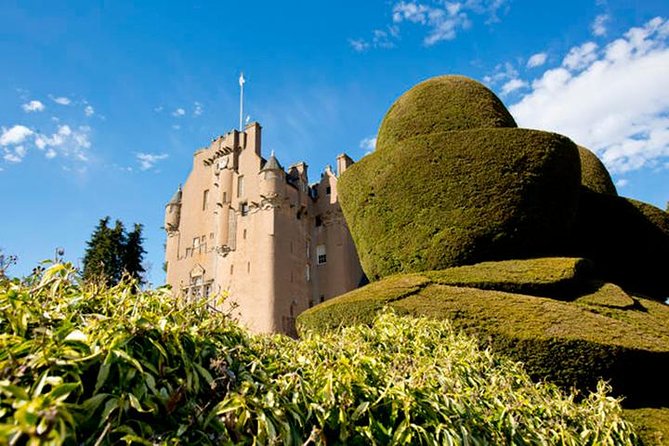
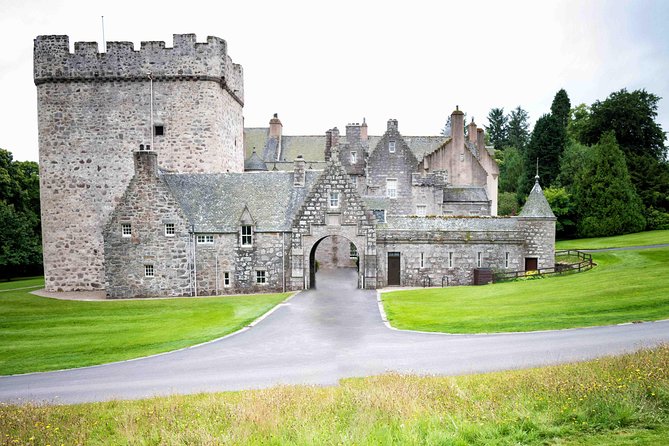
Drum Castle, Garden & Estate is another 45-minute stop, and it adds a different flavor than Crathes. This place dates back to Robert the Bruce in the 14th century, and it carries a darker reputation—its history is described as dark. That matters because it sets expectations. This isn’t just pretty stone and postcard angles. It’s a real historic site tied to turbulent medieval Scotland.
Then you get the contrast: Drum’s 18th-century gardens. The gardens include a rose garden and an arboretum with trees from all regions of the 18th-century British Empire. That’s the kind of detail that makes you slow down, because it’s not a generic garden description. It hints at how far-reaching plant collecting and estate culture was at the time.
Drum is a “must see” on a castle trail, and that’s because it blends era layers: medieval roots plus later garden design. If you like seeing how the same estate gets reshaped over time, this is a strong stop.
One practical note: Drum is listed as free to see in the sense that the stop doesn’t include an admission ticket requirement. That keeps the stop flexible—if you want to linger on the gardens, you can do that without worrying about separate pricing.
Old Aberdeen: history that doesn’t require an entrance fee
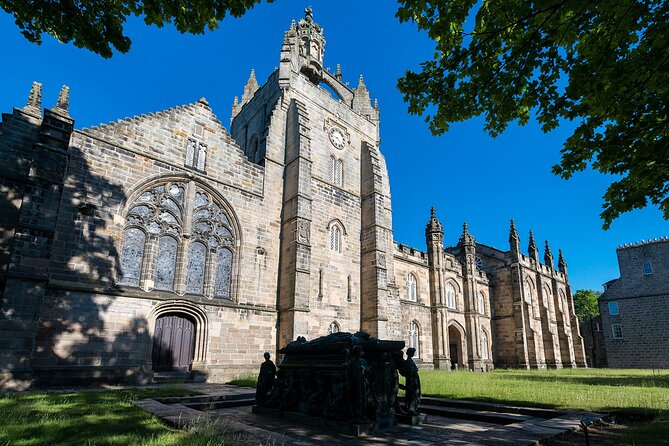
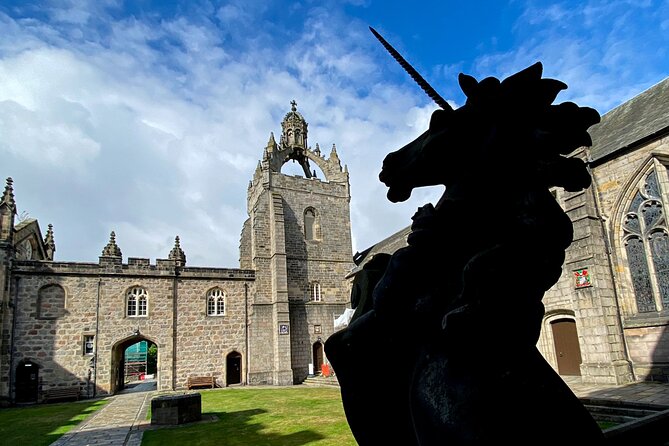
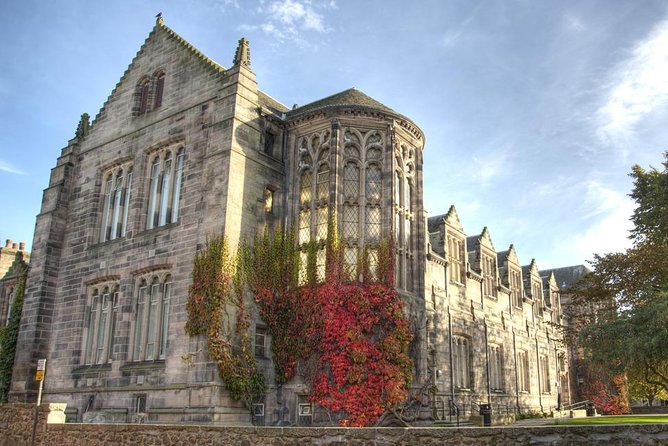
Your final stop is Old Aberdeen, with about an hour there. This is where the day shifts from estate grounds to the feel of a real city neighborhood. Old Aberdeen is described as having fascinating ancient buildings going back hundreds of years, and that’s the point: you’re not just touring “attractions,” you’re walking through a place that has kept its age.
Old Aberdeen is a good closer because it helps you reset your brain after castles. You’ve spent the day looking at fortifications, estates, and designed gardens. Now you get older street energy, where history is in the streets and building lines, not only in a single structure.
It’s also a good use of time if you’re traveling with people who enjoy photos. Walking around Old Aberdeen makes it easy to get variety without needing tickets or special entries.
Malcolm’s guiding style: stories with pace and attitude
The guide is one of the most praised parts of this experience, and his name comes up again and again: Malcolm. The biggest thing I take from that pattern is how he handles curiosity. People asking questions get answers. Even teens tend to stay engaged because the stories are not just dates—they’re the human side of Scottish life, told in a way that sticks.
Malcolm is also described as easy going with a good sense of humor. That matters on a 4.5-hour day, because a tour can’t be a lecture. You need moments of breathing room, and you need the guide to read the room—especially when weather is doing its own thing.
He’s also specifically noted for adapting when conditions change. In one situation, wind or snow affected the ability to go into one of the castles, so he focused on explaining history in direct view of what you could see. In another case, the plan adjusted when weather made the initial vehicle less suitable, and a colleague with a four-wheel-drive setup helped keep the schedule moving.
For you, that translates to less stress. You’re not just hoping the day goes perfectly. You’re traveling with someone who’s dealt with the reality of Aberdeenshire weather before.
Price and what you actually get for $245.78 per person
At $245.78 per person, this is not a budget day trip. But private tours rarely are—and the value here is tied to concrete things you’d otherwise pay for or lose time on.
You’re getting:
- Private transport and a driver/guide for a half day
- Pickup from Aberdeen City (plus listed pickup options like train station or cruise liner)
- A flexible route shaped around what you want to see
- Mobile ticket for easier access
Then there’s the other half of value: you’re also being strategic with paid time. Because multiple locations are free to see from outside, you control where your extra money goes. You can choose whether to pay for interior entry at Dunnottar and Crathes based on your group’s energy and the day’s weather.
So the question isn’t only what you pay upfront. It’s also how you spend during the day. If you skip interiors, you can keep costs down. If you love interiors and gardens, you’ll likely pay those door-entry fees anyway—but at least you’re deciding in context.
Timing, weather, and how to plan your expectations
This tour runs about 4 hours 30 minutes, and the stop lengths add up to around 3 hours 30 minutes on site, with transit doing the rest. That’s a realistic rhythm. It’s long enough to see the key angles, but short enough that you don’t end up exhausted.
Weather is a real factor. This experience is described as requiring good weather. That’s common in Scotland, and it affects what you can access comfortably—especially at exposed places like headlands and ruined fortresses.
Here’s how I’d plan your mindset: treat interior entry fees as optional upgrades, not “must-do items.” Dunnottar and Crathes both have exterior viewing that’s available without interior tickets, and the guide can shift focus when the weather changes what’s practical.
Also, since you’re in a small private group, the route flexibility can help. If one stop becomes less comfortable, the day doesn’t have to feel like a loss—it can still be a great story-filled tour.
Who this tour fits best
I think this tour is a strong match if:
- You want a private day from Aberdeen without wrestling bus schedules
- Your group includes people who want both architecture and gardens
- You like history explained in plain language while you’re standing in front of the place
- You’d rather pay for a guide than spend your day figuring out logistics
It’s also a decent pick for families. A teen-friendly advantage shows up in the way Malcolm tells stories, including the kind of darker details that keep older kids from zoning out. If your group prefers quieter explanations, a good guide can still keep things respectful—just with less emphasis on the gruesome bits.
If you’re a solo traveler, it can still work well because pickup and private pacing reduce friction. But if you only want one castle and nothing else, you might decide a lighter option is enough. This one is designed for variety.
Final call: should you book this Aberdeenshire private castle tour?
If you’re spending time in Aberdeen and want a practical route that hits the biggest names—Dunnottar, Crathes, Drum, plus Old Aberdeen—I’d book it. The value lands best when you want a guide-led day with private pickup, and when you’re okay treating castle interiors as optional paid add-ons rather than the whole point.
Book especially if:
- You care about having someone adapt when weather gets rough
- You want a mix of ruined fortress, royal estate gardens, and older city streets
- You’re traveling with a small group that wants a personalized pace
Skip it if:
- You only want one site and would rather travel independently
- Your group needs lots of extra time inside buildings no matter what the weather is doing
If you do book, pack layers, bring a camera you trust, and keep your expectations flexible. Aberdeenshire rewards that kind of attitude—and Malcolm’s style is built for exactly that.
FAQ
How long is the Aberdeenshire private half-day castle tour?
It runs about 4 hours 30 minutes.
Where is pickup available?
Pickup is offered from within Aberdeen City, from the Aberdeen train station, and from a cruise liner. If you are staying outside Aberdeen City, a pickup surcharge may apply.
Is this tour private?
Yes. It’s private, so only your group participates.
Are castle interiors included?
Dunnottar Castle and Crathes Castle can be viewed for free from outside, but going inside costs extra. Dunnottar interior admission is listed as £12.00 per person, and Crathes interior admission is listed as £16.00 per person, paid at the door.
Do I need to buy tickets in advance for Dunnottar or Crathes?
No pre-booking is mentioned for Dunnottar and Crathes interior entry. You pay at the door if you want to go inside.
What if the weather is poor?
The experience requires good weather. If it’s canceled due to poor weather, you’ll be offered a different date or a full refund.
What is the cancellation policy?
This experience is non-refundable and cannot be changed for any reason. If it’s canceled due to poor weather or because a minimum traveler requirement isn’t met, you’ll be offered a different date/experience or a full refund.
Is the tour in English, and are service animals allowed?
The tour is offered in English, and service animals are allowed. Most travelers can participate.