REVIEW · GLASGOW
Glasgow: City Sightseeing Hop-On Hop-Off Bus Tour
Book on GetYourGuide →Operated by City Sightseeing UK · Bookable on GetYourGuide
Glasgow in one ride, then you decide. The City Sightseeing hop-on hop-off red route pairs open-top double-decker views with live guide storytelling (seasonal), plus audio in 7 languages. My only heads-up: the open-top setup means wind can make the audio harder to catch, and a couple stops can shift temporarily.
What makes this tour especially useful is how it stitches together spots that are spread out—so you can do cathedral, art, museums, and riverside stops without playing bus-route Tetris all day. The best fit is a 1- or 2-day ticket if you want frequent buses and the freedom to linger. One more thing to plan for: attraction entry, food, and drinks are not included, so you’ll still pay for what you choose to go inside.
I also like that the staff and drivers come across as friendly and organized, and the buses are clean and comfortable. If you’re traveling with limited walking, you’ll also appreciate wheelchair access. Just note there’s no room for pets or large luggage, so pack light.
In This Review
- Key Highlights You’ll Actually Use
- How the Glasgow Red Route Loop Works (90 Minutes, Every 30)
- Getting the Best Views on an Open-Top Double-Decker
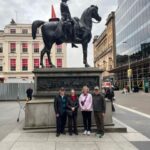
- George Square and Glasgow Cathedral: Your First Big-Impact Stops
- Merchant City, The Barras Market, and Glasgow Green
- St Enoch Centre and Theatre Royal: Arts, Events, and Easy Reboarding
- Clydeside Distillery and Riverside Museum: Glasgow by the Water
- University of Glasgow, Kelvingrove Museum, and the 360-Degree Feel
- Charing Cross, Art Schools, and Theatre Royal’s Perfect Finish
- Planning a 1-Day vs 2-Day Glasgow Sightseeing Strategy
- Price and Value at About $26 Per Person
- Booking Notes, Stop Shifts, and Practical Tips
- Should You Book This Glasgow Hop-On Hop-Off Bus Tour?
- FAQ
- How long is the Glasgow Red Route hop-on hop-off tour?
- How often do the buses run?
- What time is the first and last tour from Stop 1?
- Is there a live guide on the Red Route?
- What languages are included in the audio guide?
- Is this tour wheelchair accessible?
- Are attraction tickets or food included?
- Can I cancel for a full refund?
Key Highlights You’ll Actually Use
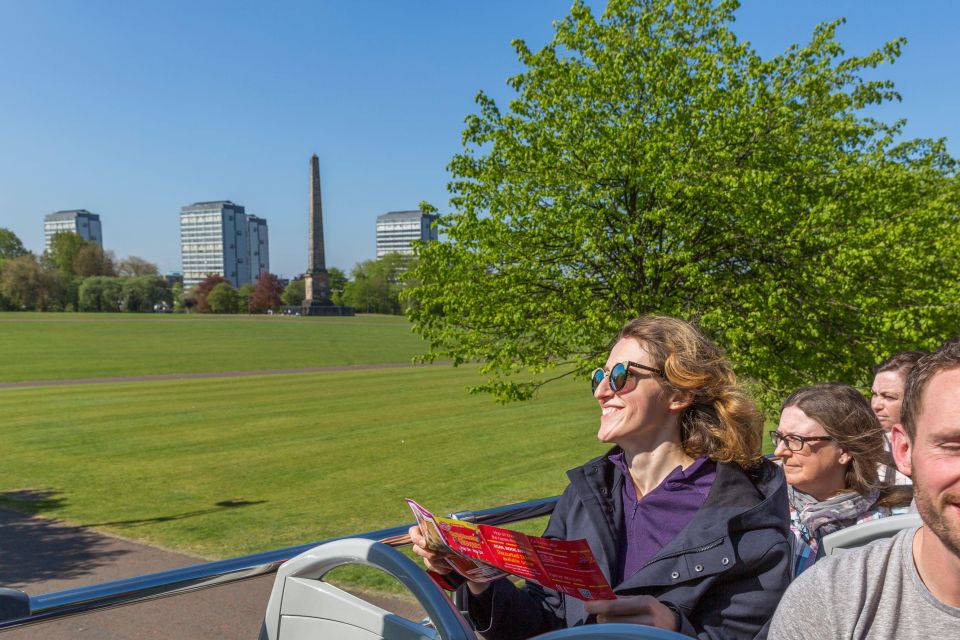
- Open-top panoramic sightseeing from a double-decker with easy photo angles
- Live guide (April to September) on the Red Route, plus audio commentary when live guiding isn’t running
- A loop that takes about 90 minutes, letting you hop off and re-board without stress
- Stops built for major sights like Glasgow Cathedral, Theatre Royal, and the Riverside Museum
- 360-degree viewpoint opportunities around Glasgow, especially near the park/museum areas
- Frequent departures every 30 minutes, which matters when you’re waiting in real weather
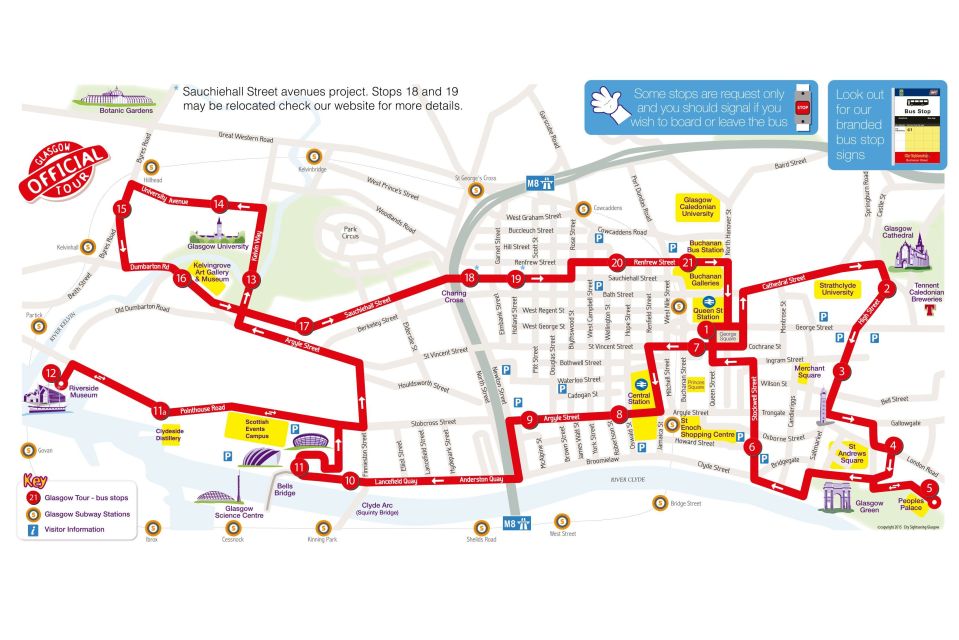
How the Glasgow Red Route Loop Works (90 Minutes, Every 30)
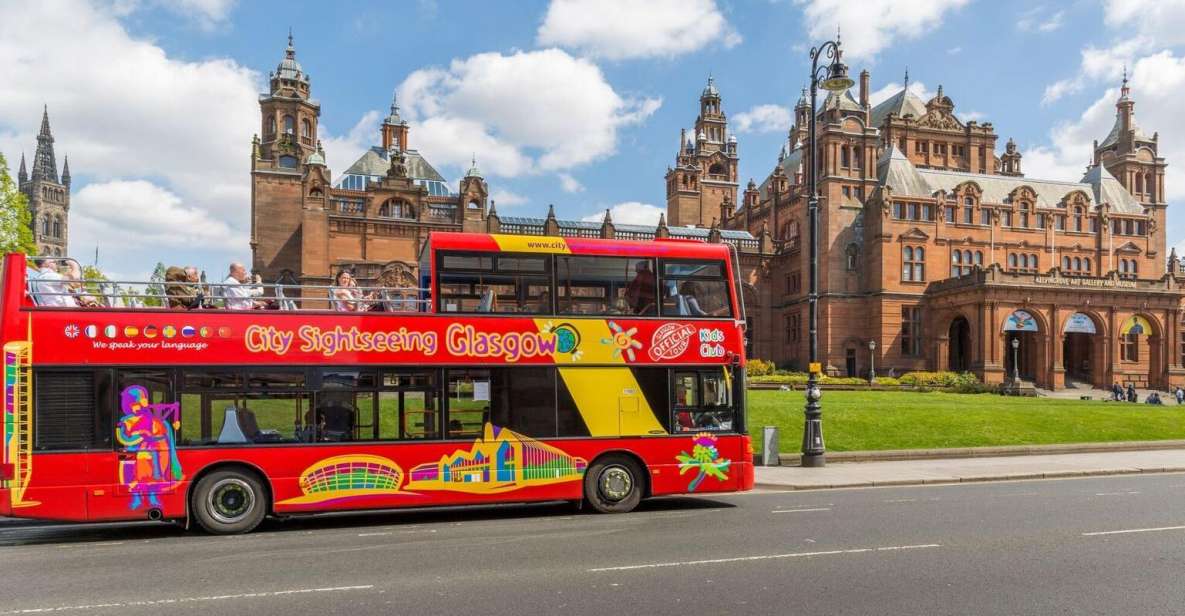
This tour is built for short attention spans and longer museum breaks. The full Red Route loop runs for about 90 minutes, and buses run about every 30 minutes. That timing is great for Glasgow, where some of the best stops sit far enough apart that walking would turn into a long slog.
Start points matter here. The Red Route has some temporary changes, so double-check your stop before you arrive. One key update: Stop 7 at St. Vincent Street is the main starting and ending point. Another update: Stop 1 is on Cathedral Street and operates as pick-up and drop-off only. If you’re catching a later tour, note that some departures from Stop 7 (3:30pm, 4:00pm, 4:30pm) terminate on Cathedral Street instead of at the main end point.
Timing tip: the first tour from Stop 1 is 10:00am, and the last is 4:00pm. If you want the best rhythm for hop-on hopping, I’d aim to get on early rather than plan everything for late afternoon.
The Red Route is available all year round, with live guiding running seasonally. If you’re traveling outside peak months, you’ll still get the audio guide, which keeps the tour from turning into a silent sightseeing bus.
You can also read our reviews of more city tours in Glasgow



Getting the Best Views on an Open-Top Double-Decker
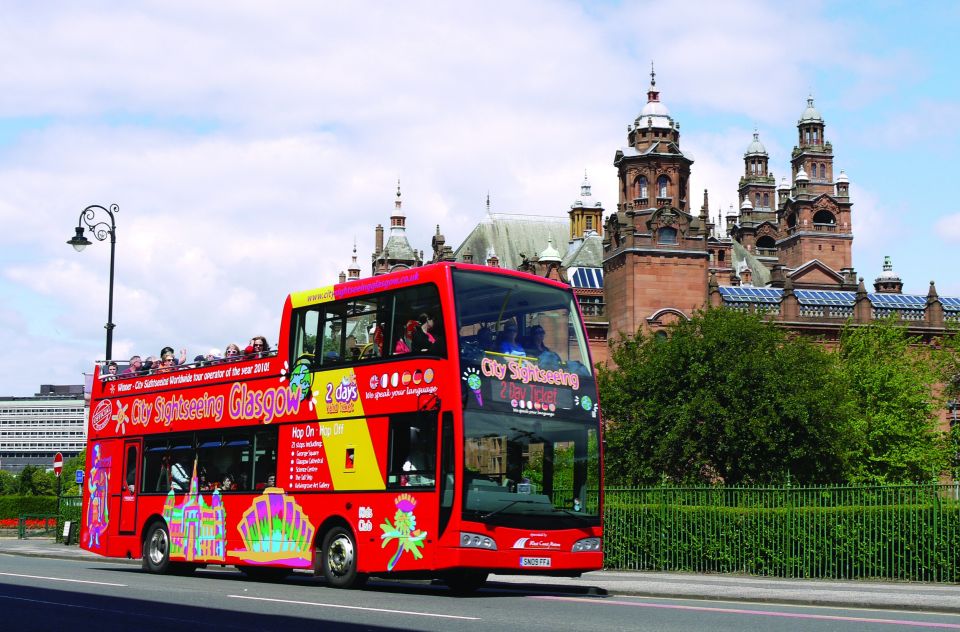
Glasgow looks good from street level, but it’s a different city from the top deck. The buses are open-top and double-decker, which means you get wide angles across the city—especially helpful around the river areas and the bigger civic sites.
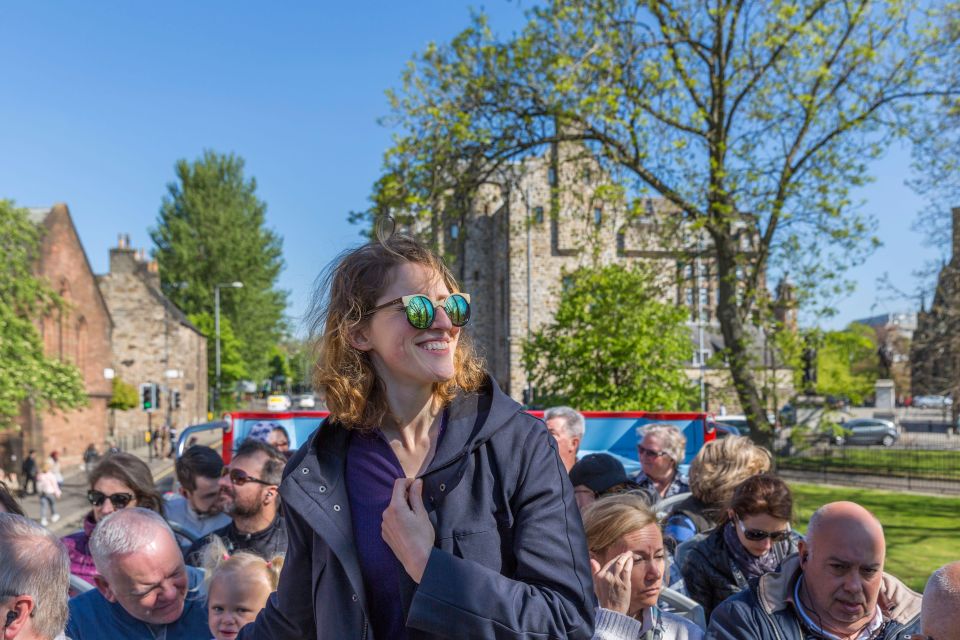
Practical note: the open-top format is fun, but it’s not a climate-controlled office. One reviewer flagged that windy weather can make it harder to hear audio through headphones. If your day looks gusty, bring a jacket that actually holds up in the wind, and consider moving closer to the front if you’re having trouble hearing.
Inside the bus, you’ll get headphones for the audio portion. Live guidance (when running) can be a real upgrade. Guests specifically praised guides like Liz, Craig, Jim, and Keith for being funny and genuinely informative, not just reading a script. That live element is one of the best reasons to choose the Red Route during months when it’s on.
Also worth knowing: there’s no promise of hotel pickup or drop-off, so treat the bus stops as your navigation hub. Once you find your stop, everything else gets easier.
George Square and Glasgow Cathedral: Your First Big-Impact Stops
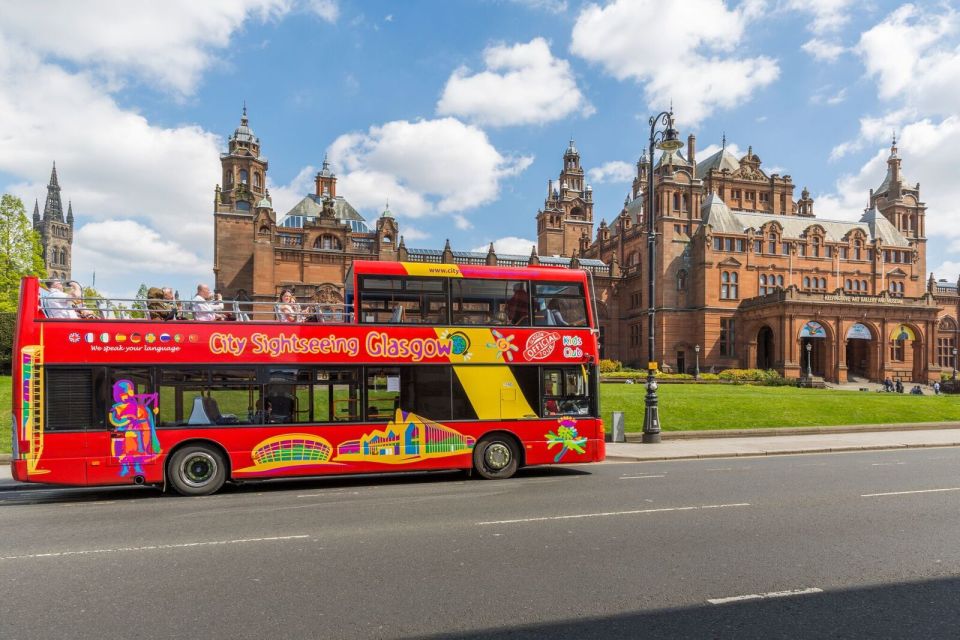
You can start the day in the city core, and the route makes that easy. George Square is a strong first anchor because it’s central and works well as an orientation stop. If you’re visiting for the first time, it helps to see the rest of the city from the top deck right away, then decide what you want to go back for.
Next up is the main medieval payoff: Glasgow Cathedral. This is one of Scotland’s magnificent medieval buildings, and it’s exactly the kind of stop that benefits from hop-off freedom. You can get off for photos and a slower look without worrying about missing the next bus immediately.
What I like about this pairing is the contrast. You go from civic Glasgow (George Square) to stone-and-history Glasgow (Glasgow Cathedral) without changing plans. And because the buses are frequent, you don’t feel trapped spending too long at either one.
Merchant City, The Barras Market, and Glasgow Green
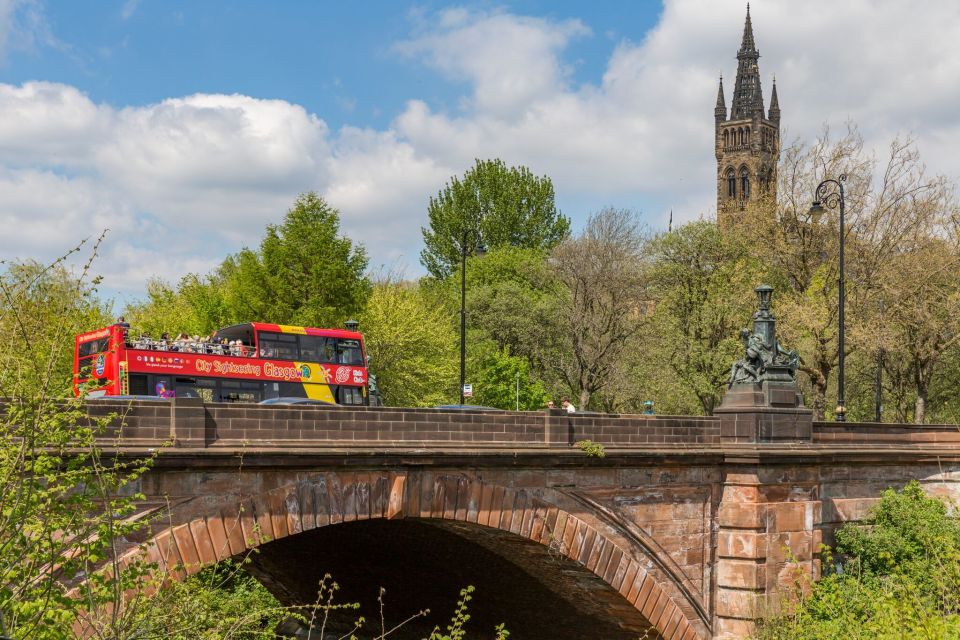
After the cathedral, you slide into areas that feel more everyday—less postcard, more real street life. The route includes stops near Merchant City and High Street, which makes it a convenient jump-off point if you want to browse shops, grab a coffee, or simply walk some streets.
Then there’s The Barras, a market area that’s great if you like browsing and don’t need everything to be museum-themed. Even if you don’t plan a full market visit, it’s a useful stop for breaking up the day between longer attractions.
Finally, you hit Glasgow Green, a large city park space. Parks are underrated on sightseeing days, because they give your feet a reset while you still feel like you’re seeing something important. This stop also fits well with the tour’s promise of wide city views—especially if you time it when the weather lets you enjoy the scenery.
Small strategy I recommend: hop off at these mid-route stops for shorter breaks. Don’t force them into long plans. Use them to reset, then get back on for the bigger attraction stops.
St Enoch Centre and Theatre Royal: Arts, Events, and Easy Reboarding
A big part of Glasgow’s appeal is how often culture lives next to practical city life. The Red Route includes stops around St Enoch Centre and St. Vincent Place, which are handy if you want to be near transport, shopping, and theatre connections.
The standout cultural stop here is Theatre Royal Glasgow. It’s home to Scottish Opera and Scottish Ballet, which makes it a perfect “even if you don’t have tickets” stop. You can check out the building, watch the street bustle, and then decide whether you want to return for a show.
This is where the hop-on hop-off format really earns its keep. Theatre areas can be busy and timing-sensitive. With this bus, you’re not locked into a single scheduled walk. You can do a quick look, then move on.
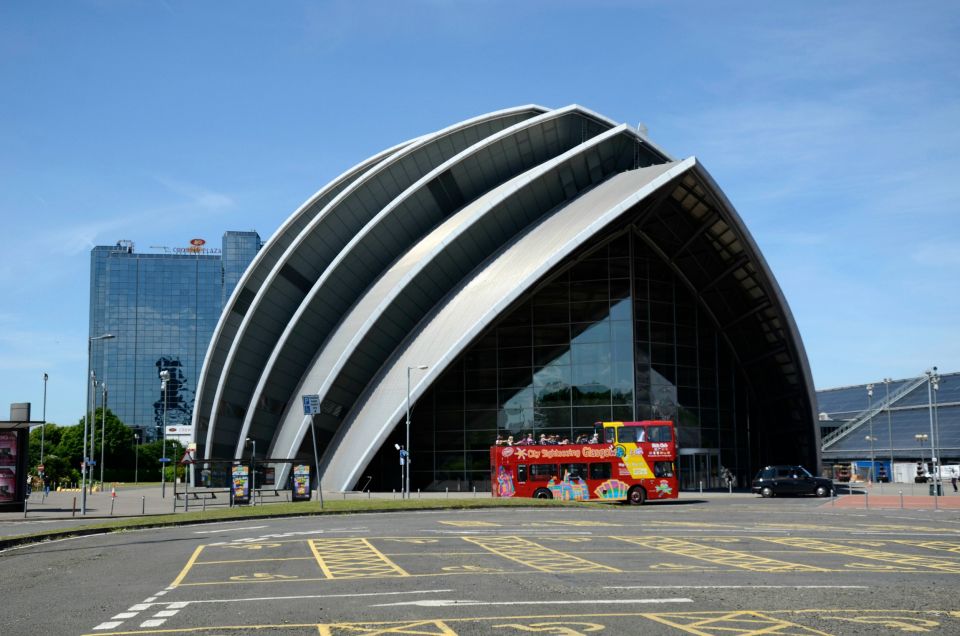
One more planning note: the route includes stops near major venues and event spaces like the SEC Centre. Even if you’re not attending anything that day, it’s helpful for understanding where the city’s bigger programs happen.




Clydeside Distillery and Riverside Museum: Glasgow by the Water
If there’s a “you’re in the right city” moment on this route, it’s the move toward the river. The bus includes Clydeside Distillery, which is a compelling stop if you want to connect Glasgow sightseeing with the city’s whisky story.
But the real magnet for many people is the Riverside Museum. It’s described as Glasgow’s award-winning transport museum, and it’s the kind of attraction that can swallow a chunk of your day—in a good way. One guest even called it out as a highlight they wouldn’t have known to choose on their own.
What I like about the riverside stretch is pacing. You’re not just moving from one “must-see” building to another. You get a change of scenery and a more relaxed vibe. That matters because museum time often requires a slower rhythm.
Also on the route is Old Schoolhouse, a named stop that can help you access the surrounding museum cluster without needing to re-map everything.
University of Glasgow, Kelvingrove Museum, and the 360-Degree Feel
The route then moves toward the west and the park-and-museum zone. You’ll see University of Glasgow and Byres Road on the way, which are useful if you want to experience Glasgow’s student areas and the feel of a major academic campus from street level.
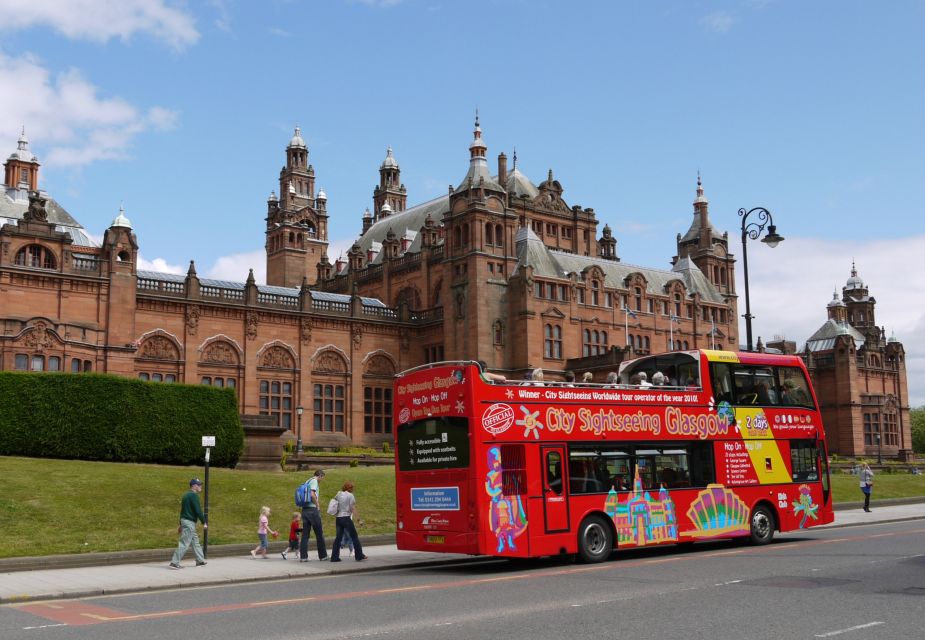
After that comes Kelvingrove Art Gallery and Museum. This is a big one. A reviewer specifically said the stop at Kelvingrove was well worth the cost of the bus tour, and they also noted the museum’s setting is excellent for turning a bus break into a longer visit.
Right after, you get Kelvingrove Park, where the tour’s promise of broad viewpoints makes more sense. On a clear day, parks let you step back from the streets and enjoy Glasgow’s scale—less “look at one building,” more “look at the whole picture.”
The 360-degree feel isn’t just a marketing line. Between the open-top bus angles and the park-side viewing opportunities, you’ll get plenty of chances to reframe the city while you travel.
Charing Cross, Art Schools, and Theatre Royal’s Perfect Finish
As the route continues, it loops back through central areas that are great for browsing and street photos. You’ll find a stop at Charing Cross, plus stops connected to art training and performance institutions like the School of Art and the RSAMD area.
This is a smart route design for people who want to understand Glasgow’s creative side without needing a long commute. You get culture in multiple forms: opera and ballet at Theatre Royal, and arts education nearby.
Then you land at Buchanan Bus Station, a practical end point if you’re continuing your day with another bus, heading to the station, or simply wanting an easy place to regroup.
Planning a 1-Day vs 2-Day Glasgow Sightseeing Strategy
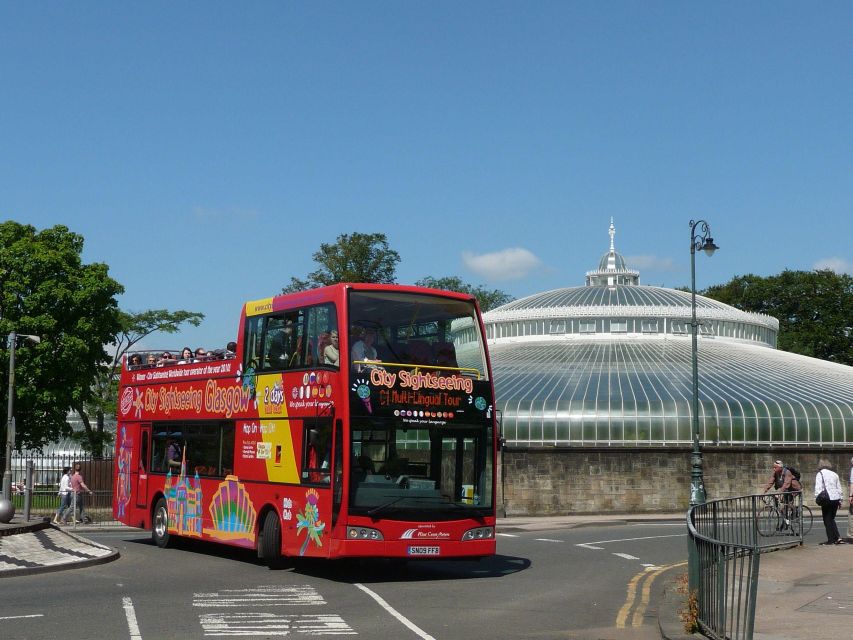
A 1-day ticket is best when you want a quick hit of the highlights and don’t mind picking a couple longer stops. Start early for fewer crowds and more daylight for open-top views. A classic “great hits” flow is: George Square → Glasgow Cathedral → riverside/Riverside Museum → Kelvingrove. That sequence keeps the day moving from civic and medieval to arts and riverside scenery.
A 2-day ticket makes sense if you like options. You can use day one for orientation and then tailor day two to whatever you liked most. One guest shared a smart approach: they took the full route first day, then used the second day to follow up on what felt most interesting.
Another helpful detail from real-world use: one reviewer said the two-day ticket could be changed so it didn’t have to be consecutive. If that flexibility matters to you, it’s worth checking at checkout.
If you’re traveling with family or anyone who needs breaks, the hop-on hop-off structure helps you manage energy. You can stay on top deck for the ride, then step off for a museum or park pause, then return when you’re ready.
Price and Value at About $26 Per Person
At around $26 per person, you’re paying for more than a bus ride. You’re paying for route-based access to major sights, plus narration that helps you understand what you’re seeing while you travel.
Here’s the honest value equation:
- You get transport + commentary bundled together.
- You don’t get attraction tickets or food and drinks, so you’ll still pay for the parts where you want to enter and spend time.
- The frequency and hop-on format can save you time and fatigue versus trying to stitch everything together with public transit on your first day in town.
If your goal is to cover a lot of Glasgow efficiently, this price can feel fair because it prevents the common sightseeing trap: spending half your day moving between stops and not enough time actually looking.
If you only plan to see one or two attractions and you’re staying in one tight neighborhood, you might not need the full tour. But if you’re doing a short break and want to see multiple sides of the city—cathedral, museums, arts, and the river—this ticket is a solid shortcut.
Booking Notes, Stop Shifts, and Practical Tips
A few small details can keep your day smooth:
- Buses are wheelchair accessible.
- The driver speaks English.
- Audio includes languages: Spanish, English, French, German, Italian, Chinese, Polish.
- Pets aren’t allowed, and no smoking.
- Luggage or large bags aren’t allowed, so travel light if you can.
Stop updates are also worth keeping in mind. Stop 7 is your main starting/ending anchor at St. Vincent Street. Stop 1 is pick-up/drop-off only on Cathedral Street. Stop 8 remains on Jamaica Street outside Lidl, and Stop 9 is temporarily out of use. If any of those names are on your mental map, adjust your plans early.
Finally, audio quality can change with conditions. One guest said the headphones didn’t carry as well in windy weather. If the day looks rough, plan to stand closer, use the headphones properly, and accept that the open top means you’ll feel the weather.
Should You Book This Glasgow Hop-On Hop-Off Bus Tour?
Book it if you want an efficient, low-stress way to see Glasgow’s major sights over 1 to 2 days, especially if you’re short on time or not thrilled about planning transport between scattered stops. It’s also a good move on gloomy weather days because the bus lets you keep moving while still getting views.
Pass or rethink it if you’re the type who prefers deep neighborhood wandering with lots of walking, or if you only want one attraction and nothing else. Also keep expectations aligned: the ticket covers the guided bus experience, not museum entry.
If you do book, start early, pick one or two long stops per day (Riverside Museum and Kelvingrove are strong choices), and use the bus to give your feet a break. You’ll get a fast grasp of Glasgow’s layout—and a clearer idea of what you want to return to after the ride.
FAQ
How long is the Glasgow Red Route hop-on hop-off tour?
The Red Route takes about 90 minutes to complete as a loop.
How often do the buses run?
Buses run every 30 minutes.
What time is the first and last tour from Stop 1?
The first tour from Stop 1 is at 10:00am and the last is at 4:00pm.
Is there a live guide on the Red Route?
Yes, the Red Route includes a live guide from April to September, and live guiding is available until Sunday 19th October.
What languages are included in the audio guide?
The audio guide is included in Spanish, English, French, German, Italian, Chinese, and Polish.
Is this tour wheelchair accessible?
Yes, the buses are wheelchair accessible.
Are attraction tickets or food included?
No. Attraction tickets and food and drinks are not included.
Can I cancel for a full refund?
Yes. You can cancel up to 24 hours in advance for a full refund.