Night turns the Royal Mile into a storybook. I like the small-group feel, and I also like how the guide’s on-the-ground commentary turns street corners into real explanations. The one drawback to plan for is simple: refreshments aren’t included, so bring water or a small snack if you need it.
This is a tight, 2-hour nighttime walk in Edinburgh’s Old Town, using a mobile ticket and staying in English. You’ll cover a lot of famous names, but also the tucked-away “in-between” parts of the Royal Mile that you’d miss if you walked it alone. One more consideration: it runs on a schedule, so show up a little early, even if the meeting point is easy to find.
In This Review
- Key Points to Know Before You Go
- The Royal Mile at Night: What Makes This Walk Worth Your Time
- Price and What You Actually Get for $47.73
- Meeting at Abbey Strand and Ending Outside Edinburgh Castle
- Walking Stop by Stop: Royal Mile Highlights Explained
- The King’s Official Residence: Where Power Starts
- A Lesser-Known Edinburgh Spot: Why the Small Streets Matter
- Church and Tolbooths History: The System People Lived With
- Backhouse Close (1500s): A Step Into 16th-Century Reputation
- Old City Wall Pieces and an Outlander Film Location
- Goldsmiths House (Late 1400s): John Knox and Mary Queen of Scots Connections
- The Cathedral Front and the Site of the Edinburgh Tolbooth
- Place of Proclamations and Punishments: Public Message in Stone
- City Chambers Built on Earlier Closes: The City Reused Its Own Past
- Hidden 1580s-Era Stops: What to Watch For
- Lady Stair’s House (1620s): A Surviving Example of Scale and Style
- One of the Oldest Old Town Buildings: The Closing Image
- Guide Style and Group Size: Why the Tour Feels Personal
- Who This Tour Fits Best (And Who Might Skip It)
- Quick Practical Notes (So You Enjoy It More)
- Should You Book This Royal Mile Walking Tour?
- FAQ
- How long is the Royal Mile walking tour?
- What does it cost?
- Where does the tour start and end?
- Is the tour offered in English?
- How large is the group?
- Is a guided tour included?
- Are refreshments included?
- Can I cancel for a full refund?
Key Points to Know Before You Go
- A nighttime Royal Mile route that’s short enough to fit into a busy day
- Max 12 people, so you’re not lost in a crowd
- Real history connections tied to famous figures like John Knox and Mary Queen of Scots
- Tolbooths and proclamations that explain how public justice worked in the Old Town
- Outlander filming location and old wall remnants that add a modern pop-culture layer
- No refreshments included, so plan your own water
The Royal Mile at Night: What Makes This Walk Worth Your Time
The Royal Mile is famous, but it can also feel like a highlight reel if you rush it on your own. A nighttime walk changes the vibe. The stone reads differently in low light, the side streets feel tighter, and the stories about power and punishment land in a more human way.
You also get the best kind of time-saving value: someone links the landmarks together so they make sense as one flowing part of the Old Town. In about two hours, you hit royal authority, city governance, and the places where ordinary people were processed by the system. That’s a lot to ask of yourself at your own pace.
You can also read our reviews of more walking tours in Edinburgh


Price and What You Actually Get for $47.73
At $47.73 per person for roughly two hours, you’re paying for guided context more than for access. The walk stays out in the open, so there’s no big add-on ticket cost for each stop. What you’re buying is a guide who can explain why these streets and buildings matter, and how the Royal Mile’s layers connect.
For me, the value math works when you want more than photos. If you like learning quickly, enjoy walking with a plan, and want someone to point out the story behind what you’re seeing, this price sits in a sensible range. If you prefer slow wandering with no structure, you might feel the stops are too “packed.” (This tour is built for coverage.)
Meeting at Abbey Strand and Ending Outside Edinburgh Castle
The walk starts at Abbey Strand, Edinburgh EH8 8DU, and ends at 537 Royal Mile, outside Edinburgh Castle (Castlehill). That finish matters, because you’re not just circling the Royal Mile. You end near the castle, which helps you connect the whole Old Town picture in your head.
It also helps that the meeting point is in a transit-friendly part of town. You can usually get there without a taxi. And since this tour uses a mobile ticket, you’re not scrambling for paper or printing at the last second.
Walking Stop by Stop: Royal Mile Highlights Explained
This tour moves through the Old Town with a strong thread: authority up top, everyday life in the middle, and punishment and politics right where you’re standing.
The King’s Official Residence: Where Power Starts
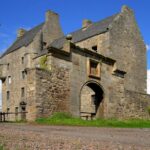
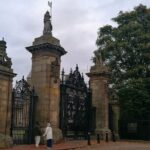
You begin with the King’s official residence in Scotland. Even if you know the castle basics already, hearing how royal space shaped movement on the Royal Mile gives you a new starting point. You start by thinking in terms of control—who belonged where, and why major routes stayed important.
Look at this stop as your orientation moment. It’s the first “big authority” anchor before the tour shifts into closes, civic buildings, and the machinery of local rule.



A Lesser-Known Edinburgh Spot: Why the Small Streets Matter
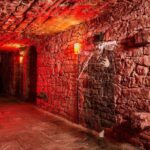
Next comes one of Edinburgh’s less-frequented areas. This is where a guide earns their money. The Royal Mile is easy to spot on a map, but the side lanes and tucked corners are what reveal how the city actually functioned day to day.
If you like old stone streets, this section is where the tour starts to feel less like sightseeing and more like walking inside history.
Church and Tolbooths History: The System People Lived With
Then you move into history tied to a once-separate burgh, plus Church and Tolbooths. This part is important because it explains that the Old Town wasn’t just pretty buildings and views. It was administration, religion, and justice—sometimes all in the same place.
You’ll hear how public order worked in the past, and why the Tolbooth mattered. The guide’s storytelling here helps you understand that the city’s key buildings weren’t only for ceremony; they also shaped consequences.
Backhouse Close (1500s): A Step Into 16th-Century Reputation
After that, you’ll step back to the 1500s at Backhouse Close, once home to places tied to ill repute. This stop is vivid, but it’s also practical: you learn how “closes” weren’t just shortcuts. They carried social meaning.
When you stand in a close like this, you can imagine how quickly the city changed from public main street to private, less-polished spaces. It’s one of those moments that helps you see the Royal Mile as a connected network, not one straight line.
Old City Wall Pieces and an Outlander Film Location
You also see parts of the Old City Wall, plus an Outlander film location. The wall pieces give you physical proof that defense and boundaries shaped the layout. Even small remnants can help you picture where the city ended and where movement became controlled.
The Outlander connection is a fun bonus layer. It’s not there to replace the history. It’s more like a hook that makes the visuals stick in your mind long after the walk ends.
Goldsmiths House (Late 1400s): John Knox and Mary Queen of Scots Connections
One highlight is a stop tied to a Goldsmiths House from the late 1400s, with connections to John Knox and Mary Queen of Scots. This is the kind of intersection I love: you’re not just hearing famous names. You’re seeing how influential people intersected with civic and professional life.
It helps you understand why the Old Town’s institutions felt so intertwined. Religion, power, and public life didn’t live on separate pages—they overlapped in real buildings you can still walk past.
The Cathedral Front and the Site of the Edinburgh Tolbooth
Next you get a direct hit on a notorious place: the area in front of the cathedral, described as the site of the infamous Edinburgh tolbooth. This stop turns the walking into something heavier.
You’re reminded that tolbooths were about more than architecture. They were about managing trouble, holding people, and enforcing rules that shaped daily life. The guide’s narration helps you connect the location to what happened there, instead of treating it like a name on a plaque.
Place of Proclamations and Punishments: Public Message in Stone
From there you walk through the Place of Proclamations and punishments. This part is valuable because you learn how information and control were broadcast to the public. It’s not abstract. You see how the city used public space to deliver authority.
If you like social history, this is one of the strongest emotional sections. It answers the question you didn’t know you had: why certain streets felt like they belonged to judgment and public enforcement.
City Chambers Built on Earlier Closes: The City Reused Its Own Past
Then you reach the City Chambers, explained as being built on the site of several closes. That idea of reuse is more than trivia. It shows that Edinburgh’s Old Town kept layers: streets shifted, buildings changed, and new civic authority took over old layouts.
For you, it means the tour isn’t just a list of stops. It teaches you how to “read” the city by noticing the ground-level clue that something older used to be there.
Hidden 1580s-Era Stops: What to Watch For
You also get hidden points dating to the 1580s. Even without a modern marker, these stops push you to pay attention to small cues: the age of stonework, the curve of a close, the sense that you’ve walked into a different time pocket.
The benefit here is mental. After this, you stop seeing the Royal Mile as one era. You start seeing it as overlapping periods, with each decade leaving physical fingerprints.
Lady Stair’s House (1620s): A Surviving Example of Scale and Style
Another named highlight is Lady Stair’s House, dated to the 1620s. This stop helps you compare what’s coming into view: as you move through time, the city’s architecture and status signals evolve.
It’s also a reminder that “history” isn’t only battle dates and royal headlines. Sometimes it’s a townhouse that survived, letting you picture where people stood socially and daily.
One of the Oldest Old Town Buildings: The Closing Image
The tour finishes with one of the oldest buildings in Edinburgh’s Old Town, with explanation of its history. Ending here works because it brings you back to the big picture: the Royal Mile’s power and people stories were built on real structures that endured long enough to become landmarks.
And since the walk ends near Edinburgh Castle at Castlehill, you’ll also have a clear “line of sight” payoff. You can look back down toward where you started and feel like you understand the city’s spine.
Guide Style and Group Size: Why the Tour Feels Personal
This is a small-group outing, capped at 12 travelers. That size changes everything. You can actually hear details without leaning. You can ask questions without feeling like you’re interrupting a busload of people. And when the group is smaller, the guide has more room to tailor the pace.
The guide storytelling is the single most praised part of the experience. Good commentary turns the stop list into something you remember as a connected story about governance, religion, and public life.
Still, reality check: even well-run walking tours can face hiccups. I recommend you arrive a few minutes early and keep your ticket ready, since this kind of tour starts on time and hinges on meeting the guide at the appointed spot.
Who This Tour Fits Best (And Who Might Skip It)
This is a great match if:
- you want Royal Mile history fast without planning a self-guided route
- you like nighttime sightseeing and the sense of atmosphere
- you’re interested in how justice and city governance worked, not just who ruled
- you enjoy side streets, closes, and places with layered stories
You might skip this if:
- you dislike structured itineraries and want pure free roaming
- you’re coming mainly for views and photos, not explanation
- you need a lot of stops that are spaced far apart (this is a concentrated walk)
If you’re doing a short Edinburgh visit, this tour is a smart way to get your bearings and learn the “why” behind what you’re seeing.
Quick Practical Notes (So You Enjoy It More)
- Bring your own water since refreshments aren’t included.
- Wear comfortable walking shoes. Old Town streets don’t do you any favors on hard soles.
- Go in expecting walking-focused storytelling, not a sit-down tour with long breaks.
- Since the tour is in English, it’s best for speakers comfortable with guided narration.
Should You Book This Royal Mile Walking Tour?
I’d book it if your goal is to understand Edinburgh’s Old Town in a short window and you like the Royal Mile when it’s not packed with daytime noise. The value comes from guided context: tolbooths, proclamations, closes, and named connections to John Knox and Mary Queen of Scots help the whole area click into place.
I’d hesitate only if you’re the kind of person who needs a fully hands-off experience with zero schedule pressure, or if you’re hoping for refreshments and long stops. Otherwise, this small-group nighttime walk is a solid use of time, especially if you want authentic stories on the exact streets where they happened.
FAQ
How long is the Royal Mile walking tour?
It’s about 2 hours.
What does it cost?
The price is $47.73 per person.
Where does the tour start and end?
It starts at Abbey Strand, Edinburgh EH8 8DU, UK and ends outside Edinburgh Castle at Castlehill (537 Royal Mile).
Is the tour offered in English?
Yes, it’s offered in English.
How large is the group?
The tour has a maximum of 12 travelers.
Is a guided tour included?
Yes. The included item is a guided walking tour.
Are refreshments included?
No. Refreshments are not included.
Can I cancel for a full refund?
Yes. You can cancel for a full refund if you cancel at least 24 hours before the experience starts. If the tour is canceled because the minimum traveler requirement isn’t met, you’ll be offered another date/experience or a full refund.