REVIEW · ABERDEEN
Aberdeen’s Ancient Heritage and Folklore
Book on Viator →Operated by Grampian Escapes Tours Ltd · Bookable on Viator
Pict stones tell stories you can still feel. This small-group day from Aberdeen stitches together Pictish hillforts, carved standing stones, and recumbent stone circles so the folklore lands on real ground. I like how the guide, Jacqueline, keeps the symbolism and history clear, even when the subject turns properly mysterious.
I also love the mix of pacing and place. You get short, manageable walks to hilltop ruins and stone settings, then a proper break for a picnic-style lunch near the Cairngorm National Park.
One thing to consider: the route includes hills and uneven ground. It’s geared to moderate fitness, and it’s not recommended if you have mobility issues. If you use walking poles, bring them—steep bits can pop up.
In This Review
- Quick hits
- Why Pictish places near Aberdeen feel different from typical sightseeing
- The 7.5-hour pacing: short walks, long viewpoints, and a country-road rhythm
- Stop 1: Barra Hill fort and the “higher ground” logic of early settlements
- Stop 2: Dunnideer Hillfort ruins, concentric earthworks, and a nearby stone circle
- Stop 3: Rhynie and the Pict stronghold of Tap O’Noth and carved stones
- Lunch at Bellabeg near the Doune of Invernochty motte and bailey
- Tomnaverie Stone Circle: the recumbent circle style and a 4,500-year cairn nearby
- How Jacqueline turns folklore and archaeology into something you can actually use
- Value check: is $135.49 a fair deal for a 7.5-hour small-group day?
- Weather, comfort, and what to pack (so hills don’t ruin your day)
- Should you book this Picts and folklore tour from Aberdeen?
- FAQ
- How long is the tour?
- Where does the tour start and end?
- Is lunch included?
- What’s included in the price?
- What kind of fitness level do I need?
- How large is the group?
- What happens if weather is bad?
Quick hits
- Small group (max 7): You get a more personal pace and more chances to ask questions.
- Carved stones at Rhynie: The Pict symbols and meanings get explained in plain language.
- Dunnideer’s concentric defenses: You can see the high banks and ditches that once formed rings of protection.
- Tomnaverie’s recumbent circle: A stone circle style found only in north-eastern Scotland.
- Lunch in the countryside: Picnic options by river lanes near a motte-and-bailey castle site.
- Personal touches from Jacqueline: On some days, she may add extras like a sea-cliff viewpoint for seabirds and stops such as a whiskey brewery or castle, depending on interest and timing.
Why Pictish places near Aberdeen feel different from typical sightseeing
If you’ve only seen Scotland through castles-on-postcards, this tour changes the angle. Instead of chasing one famous building, you’re guided through older “in-between” places: hillforts, earthworks, standing stones, and stone circles. Those sites can feel quiet today, but they weren’t quiet when people lived, worked, traded, and argued up on those banks.
I like that the stories here aren’t floating in a fog. The Picts shaped the north-east long before the names on today’s maps became fixed. You’ll hear how their legacy connects to the wider idea of the People of Alba, and you’ll also learn how cultural change is often tied to power shifts, not just religion or poetry.
And yes, Jacqueline makes a difference. The best heritage guides don’t just recite dates; they help you look at what’s in front of you and understand why it mattered to people who had no museums, no brochures, and no interest in impressing tourists.
You can also read our reviews of more historical tours in Aberdeen

The 7.5-hour pacing: short walks, long viewpoints, and a country-road rhythm
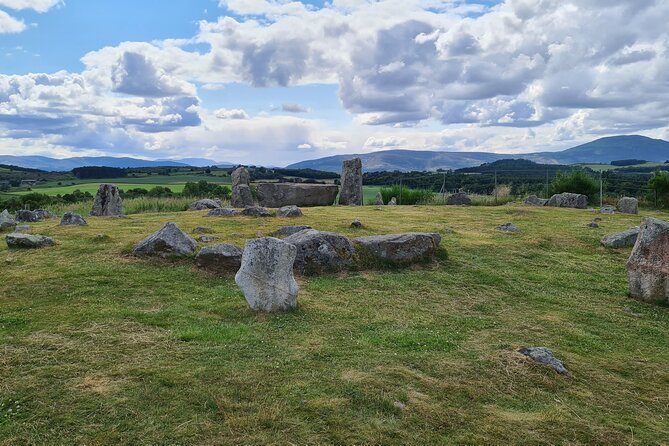
This is a 7 hours 30 minutes day out of Aberdeen, starting at the William Wallace Statue on Union Terrace at 9:00 am and ending back at the same meeting point. With a group capped at 7 travelers, it doesn’t feel like you’re herded. You’ll move often enough to stay engaged, but the walking is broken into shorter sections.
Expect some uphill bits. The tour isn’t a hard hike, but you are going up to hillfort ground and moving around stone sites. If you know your limits, plan for uneven terrain and bring the right shoes. The tour notes specifically that walking poles can help, and some might be available to borrow, but don’t rely on that.
One practical plus: WiFi on board. Rural signal can be flaky, so having it helps with mapping and translations while you’re in transit.
Stop 1: Barra Hill fort and the “higher ground” logic of early settlements
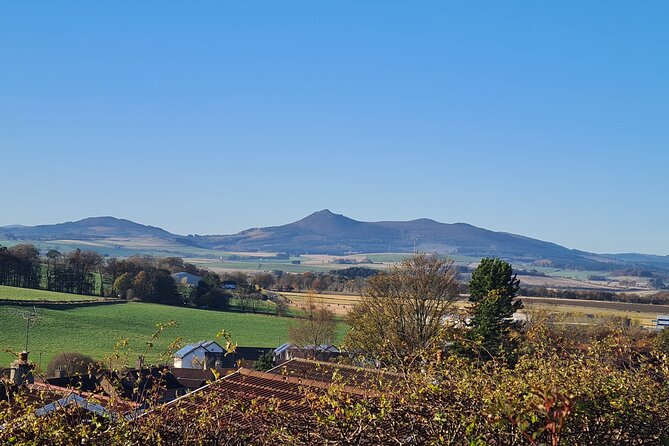
Your day begins with a visit to Barra Hill fort. In Aberdeenshire, hillforts are often placed on higher ground, likely because it made defense easier and it helped people control movement across the area. Many hillfort structures across the region survive mainly as foundations now, with wooden or stone enclosures long gone.
This stop is the kind of site that rewards slow attention. Even when you can’t see a full wall standing today, you can still read the shape of the place. The open ground, the slope, the way the earth holds onto old boundaries—those details are what archaeologists work with when they reconstruct how a community might have lived.
The tour also frames why archaeological study keeps moving forward. Each new analysis can tweak what we think we know about everyday life: where people gathered, how work was organized, and how the early communities formed the backbone of later towns and villages in the region.
If you’re the type who enjoys origins—how a place got its first pattern—you’ll get a lot out of Barra Hill.
Stop 2: Dunnideer Hillfort ruins, concentric earthworks, and a nearby stone circle
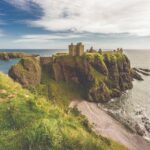
From there, the focus shifts to Dunnideer Hillfort. You start with a short walk up a low hill, where you’ll see the ruins of Dunnideer Castle in the distance. The castle is described as a tower house near Insch, built around c. 1260, and it was constructed partly from the remains of an older vitrified hillfort at the same location.
That layering matters. It’s a reminder that people reuse strategic ground. When a site is defensible and useful, later generations often rebuild right on top of older systems.
What makes Dunnideer especially striking is the visible defense layout. The hillfort is made up of at least five concentric rings of defenses, which show up as high banks and ditches you can spot from below and from the top. It’s one of those sites where you can almost picture the movement: approach, retreat, regroup, and press again—like the ground itself is a diagram.
A short distance away are the remaining stones of Dunnideer Stone Circle. The combination works well because it gives you two different kinds of past: one built for protection, and one built for ceremony, memory, or meaning (we don’t always know which, but you’ll learn the theories and interpretations the guide shares).
Stop 3: Rhynie and the Pict stronghold of Tap O’Noth and carved stones
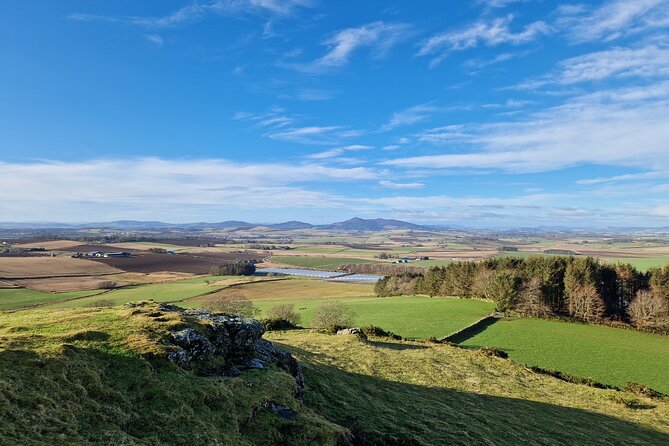
Rhynie is the stop where the tour becomes genuinely special for anyone who likes symbolism. The Rhynie area is described as a Pictish stronghold in the north-east of Scotland. Here, the big feature is Tap O’Noth, which the tour notes as Scotland’s largest hillfort. At its height, it may have rivaled the largest known post-Roman settlements in Europe, and researchers believe the community could have had over 5,000 residents.
That scale changes how you picture a hillfort. This wasn’t a small outpost with a couple of families and a vague plan to stay safe. It reads more like a real center—busy enough to sustain trade, leadership, and culture.
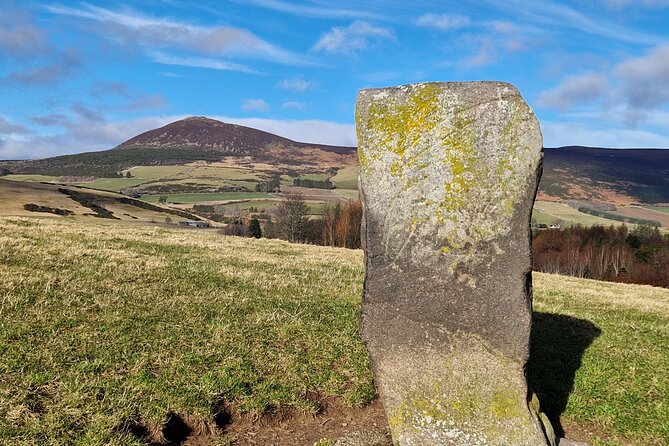
You’ll also see a collection of Pictish carved stones. The tour focuses on the symbols, carvings, and what they may have meant. That matters because Pictish art isn’t just decoration. It can be a coded language of identity, power, belief, and storytelling.
A standout mentioned is the Crawstane, a lone standing stone that was once at the center of a settlement. The tour notes that this community had trade across the Mediterranean and considerable wealth. If you’ve only ever heard of the north-east as remote, this is the moment that flips the script.
Finally, you’ll hear about the King of the Scots and how changing cultural landscapes eventually contributed to the downfall of the Picts. I like how this part stays grounded in place. It’s easier to accept cultural change when you can stand in the very area where the old order once held sway.


Lunch at Bellabeg near the Doune of Invernochty motte and bailey
By the time you reach Bellabeg, you’ll be ready to slow down. This is your lunch break, and it’s timed in a smart way so you’re not just driving and walking non-stop. The lunch spot is near the Doune of Invernochty motte and bailey castle (described as the foot of the site), and you’re within the Cairngorm National Park area.
Bellabeg gets described as charming, and that matches how the setting feels: country lanes, a river-side picnic option, and fewer distractions than in town. If you’re the kind of person who needs to refuel before the next hike-ish section, this break helps a lot.
You have options. Lunch can be purchased in Insch or Bellabeg, or you can bring your own picnic. A cooler is provided, which is a real practical gift—especially if you’re bringing sandwiches, fruit, or anything that doesn’t love warm car conditions.
If you forget to plan lunch, there are buying options on the day. Still, I recommend bringing something simple if you want fewer decisions while you’re hungry.
Tomnaverie Stone Circle: the recumbent circle style and a 4,500-year cairn nearby
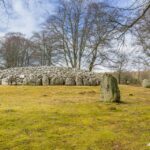
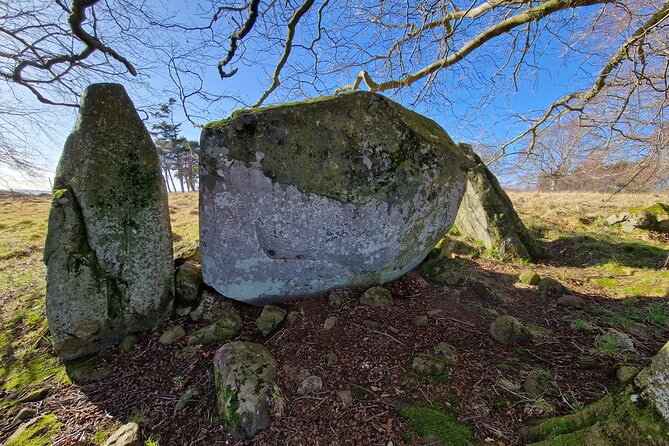
The final site brings you to Tomnaverie Stone Circle, a recumbent stone circle known for its strong north-eastern Scotland character. The tour describes the signature layout: a large stone lying on its side, flanked by two upright stones, with additional standing stones completing the circle.
These are the kinds of monuments where your brain starts asking questions fast. Why this shape? Why this orientation? Why the recumbent stone? The good news is you’re not left alone with guesses. The tour notes that relatively little is known about why these structures were built, and it shares several theories during the visit.
The location also adds context. Tomnaverie sits close to a burial cairn dating to about 4,500 years ago. That doesn’t prove the circle’s purpose, but it does suggest the area held long-term significance—people cared about marking and remembering there across many generations.
On a clear day, the views from a stone circle can feel cinematic without being contrived. Even if the weather isn’t perfect, the atmosphere still does the job: you’re standing in a place where people once arranged stone with intent.
How Jacqueline turns folklore and archaeology into something you can actually use
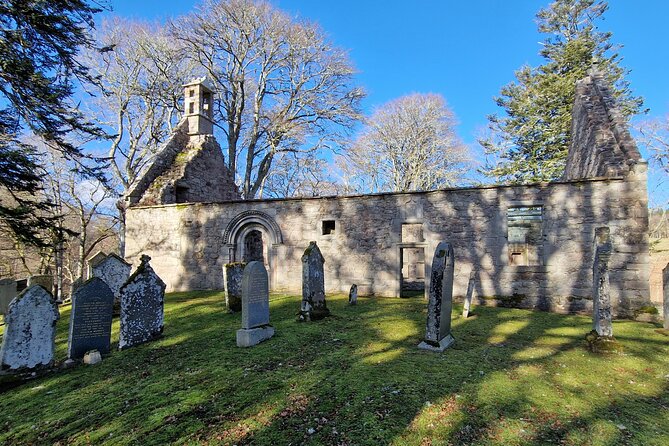
What I appreciate most is the way the guide connects the dots without pretending the past is fully solved. You’ll hear stories and folklore tied to Pict beliefs, but you’ll also get the interpretive “why” behind the monuments—what’s visible, what’s uncertain, and what archaeology can and can’t confirm.
Jacqueline’s personalization is also a big part of why this experience has a strong reputation. One review highlights that after the tour started, the guide made it more specific to personal interests, even when that meant adding a sea-cliff viewpoint with seabirds and puffins, plus other stops like a whiskey brewery and a castle. That’s not guaranteed on every day, but it shows the approach: ask, listen, and then adjust when the day allows it.
If you like history that feels alive instead of static facts in a lecture format, this tour is built for you.
Value check: is $135.49 a fair deal for a 7.5-hour small-group day?
At $135.49 per person, you’re paying for a guided, full-day experience with rural driving, site access where needed, and a small group limit that makes it easier to ask questions.
A few cost-saving factors help:
- Admission tickets are listed as free for the stops on the day.
- WiFi on board is included.
- The group size cap means you’re not paying for a giant bus tour vibe.
The one obvious trade-off is that lunch isn’t included. You’ll either buy in the local area or bring a picnic, and that can add a bit depending on your preferences. Still, because a cooler is provided, it’s easy to control your spending if you pack simple food.
Also consider the day length. Seven and a half hours is long enough that you’re likely to feel the value, especially compared with short half-day tours that barely cover the countryside. With the hillfort and stone circle combination, this is the kind of itinerary that uses time efficiently.
If you’re visiting Aberdeen and want a day that feels off the main tourist path—without losing comfort and structure—it’s a strong value.
Weather, comfort, and what to pack (so hills don’t ruin your day)
This tour depends on good weather. If the weather is poor, it may be canceled with an alternative date or a full refund offered. That’s not a gimmick; it’s smart for hillfort and stone sites where footing and visibility matter.
Pack for outdoors. Wear shoes with grip for uneven ground and slopes. If you have walking poles, bring them for the hill sections. Layers help because Scotland can shift from mild to chilly quickly, even when the forecast looked friendly at breakfast.
For lunch, decide early. If you want maximum control, bring a picnic and use the cooler. If you’d rather keep it light, plan to buy lunch in Insch or Bellabeg during the break.
Finally, if you’re a photography person, charge devices and bring a small power bank if you rely on camera gear. Having WiFi on board helps with mapping, but rural signal can still be inconsistent when you’re out at the sites.
Should you book this Picts and folklore tour from Aberdeen?
Book it if you want a day that goes beyond the obvious and you enjoy places where you have to do a little looking. The Pictish carved stones at Rhynie, the visible defense geometry at Dunnideer, and the distinctive recumbent circle at Tomnaverie make a strong trio of experiences. I also like that the guide, Jacqueline, is open to tailoring the day to your interests, which can turn a good tour into a memorable one.
Skip it or think carefully if you need fully accessible routes. The tour is not recommended for travelers with mobility issues, and it does involve hill sections and uneven terrain.
If your idea of a great Scotland day is standing where older communities planned, marked, and defended their world, this tour is a smart choice. It’s not just scenery with a story attached—it’s the story, tied to stone and earth you can still see.
FAQ
How long is the tour?
The tour lasts about 7 hours 30 minutes.
Where does the tour start and end?
It starts at the William Wallace Statue on Union Terrace, Aberdeen (AB10 1NP) and ends back at the same meeting point.
Is lunch included?
No. Lunch is not included. You can purchase lunch in Insch or Bellabeg, or bring a picnic.
What’s included in the price?
WiFi on board is included. Admission tickets at the stops are listed as free.
What kind of fitness level do I need?
You should have a moderate physical fitness level. The tour is not recommended for travelers with mobility issues.
How large is the group?
The tour has a maximum of 7 travelers.
What happens if weather is bad?
This experience requires good weather. If it’s canceled due to poor weather, you’ll be offered a different date or a full refund.