
REVIEW · EDINBURGH
Edinburgh – Dark History
Book on Viator →Operated by All-Star Guides · Bookable on Viator
Edinburgh gets darker on this walk. I love how the guide stitches together real places on the Royal Mile with stories that explain how punishment, plague, and law shaped daily life. The stops are timed well for an evening circuit, and each major site you pause at comes with free entry for the experience.
One thing to plan for: it’s still a walking tour, and on cold or drizzly nights the pacing matters. Some people also felt the format is mostly you listening to the guide rather than lots of group interaction, so come ready to enjoy a strong storytelling rhythm.
In This Review
- Key highlights before you go
- Why this Royal Mile dark-history walk feels so real
- Royal Mile logistics: where you start, how long you should plan
- Heart of Midlothian: the Old Tollbooth and the myth-making power of literature
- St Giles Cathedral: what looks ordinary can hide a controversial story
- Mercat Cross: executions as civic theater
- The Royal Mile stretch: plague, sanitation, and a tradition with a weird origin
- John Knox House Museum: quick stop, strong sense of 16th-century Edinburgh
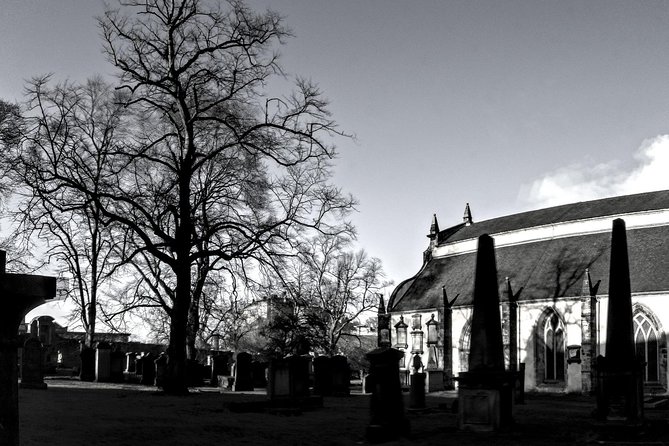
- Canongate Kirk: graves, body-snatchers, cannibals, and where ghost stories start
- Price and value: is $22.19 worth a 2-hour walk?
- What the best guides do here (and what you should expect)
- Who should book this dark history tour
- Should you book Dark History in Edinburgh?
- FAQ
- What is the duration of the Dark History tour in Edinburgh?
- How much does the tour cost?
- Where does the tour start and end?
- What language is the tour offered in?
- How many people are in a typical group?
- Do I need to pay entry fees for the stops?
- Can I get a full refund if my plans change?
Key highlights before you go
- Old Tollbooth to Heart of Midlothian: you’ll learn why a notorious prison site became famous through Sir Walter Scott.
- St Giles Cathedral surprises: what looks like a simple spot can connect to a controversial burial and hidden layers.
- Mercat Cross and execution mechanics: you’ll hear how public punishment was part of city life.
- A plague-to-tradition chain: the tour links disease, sanitation, and a later, peculiar custom.
- Canongate Kirk’s graveyard lore: body-snatching and cannibal stories sit alongside ghost-story origins.
Why this Royal Mile dark-history walk feels so real
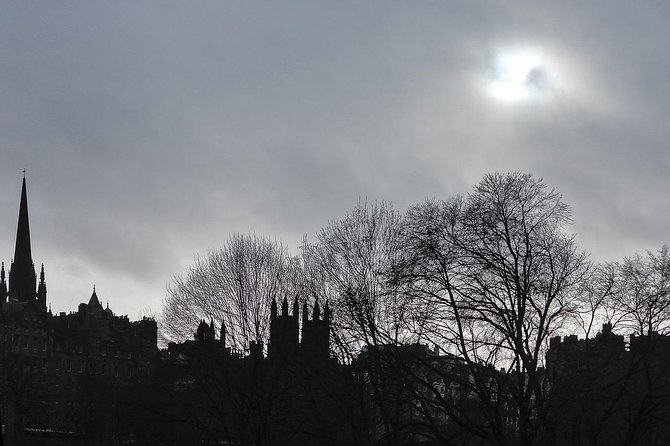
Edinburgh’s Old Town has a way of making history visible. On this tour, you don’t just see the buildings—you get the context for why people feared them, used them, or walked past them without knowing the next horror was already built into civic life.
The best part for me is the sense of cause and effect. The stories move from institutions (tollbooths, courts, churches) to outcomes (public executions, imprisonment, scandal) to the lingering cultural impact (literature, local traditions, folklore). It’s not random gore; it’s a timeline of how power worked on real bodies.
The tour also earns its 5-star reputation by staying energetic. Even on freezing nights, guides described in recent feedback kept the group moving and full of details, with a sense of humor that doesn’t turn dark topics into something silly.
You can also read our reviews of more historical tours in Edinburgh


Royal Mile logistics: where you start, how long you should plan
This runs about 2 hours (approximately) and ends at Canongate Kirk. You begin at West Parliament Square, Parliament Sqr, Edinburgh EH1 1RF, and finish at 153 Canongate, Edinburgh EH8 8BN, so you’ll end in a different pocket of Old Town than you started.
Expect near public transportation, and you’ll use a mobile ticket. The group stays intimate—up to 30 people—which matters on a packed street like the Royal Mile where sound can vanish fast.
One practical note from past participants: some people found the timing runs closer to 2 hours rather than a shorter estimate. If you’re pairing it with dinner reservations, I’d give yourself breathing room.
Heart of Midlothian: the Old Tollbooth and the myth-making power of literature
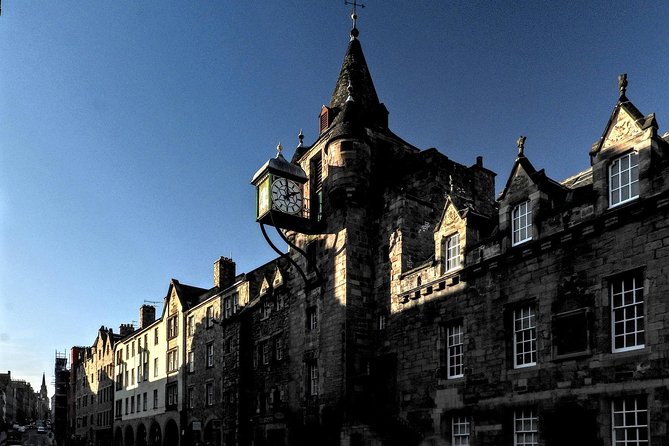
Your first major stop is the Heart of Midlothian, tied to the former Old Tollbooth—a building that earned a reputation for incarceration and executions. You’ll hear about the characters who were imprisoned or put to death there, and then you’ll connect that grim reality to why the site later became recognized through Sir Walter Scott.
This is where the tour does something valuable: it shows how communities remember. The Old Tollbooth wasn’t just a place of punishment; it became a symbol that writers helped carry into public imagination. That’s why the Heart of Midlothian isn’t merely a local nickname—it’s a piece of cultural memory.
What to watch for: the tour treats the site like a story cue. Listen for what the guide says about the building’s original function and how that function shaped the way people in Edinburgh experienced law and order day to day.
St Giles Cathedral: what looks ordinary can hide a controversial story
Next up is St Giles’ Cathedral. The tour suggests you’ll find a secret element in the plain surroundings—plus the stop connects to the burial place of a controversial figure in Scottish history.
This stop is a good reminder that Edinburgh’s most famous skyline moments often sit beside less obvious details. St Giles is a landmark, but the tour keeps you focused on the human consequences tied to it: power, conflict, and what happens when religion and politics tangle.
A small practical consideration: it’s listed as a short pause, so don’t expect time for a full independent wander. If you want extra reading or photos afterward, plan to come back later with a map in hand.
Mercat Cross: executions as civic theater
At Mercat Cross, you’ll learn about another execution site and why this particular building mattered far beyond architecture. The guide explains its importance in the life of the city and describes a literal killing machine once kept inside St Giles Cathedral.
Whether you feel squeamish or simply curious, this stop is useful because it reframes punishment as public policy. You’ll understand how the city turned punishment into something visible, repeatable, and tied to control—almost like a system the public was expected to accept.
If you hate feeling rushed, take a breath at Mercat Cross before the guide moves on. This one tends to be the most mentally intense stop, and it helps to let the explanation land before you keep walking.





The Royal Mile stretch: plague, sanitation, and a tradition with a weird origin
After the key sites, you move down the Royal Mile for about 40 minutes while the guide ties together the city’s darker chapters. Expect stories covering the Black Plague, poor sanitary conditions, and how those realities helped shape a later tradition described as peculiar.
This portion works best if you look up while you walk. The Royal Mile can feel like a single long street, but the tour uses it like a timeline. As the guide speaks about disease and daily conditions, the street layout and constant foot traffic start to make more sense.
A practical tip: bring something for cold and drizzle. Past groups noted the evening weather can be rough, and the tour keeps going, so being comfortable helps you follow the story.
John Knox House Museum: quick stop, strong sense of 16th-century Edinburgh
You’ll then get a shorter visit at John Knox House Museum. Here the focus shifts from crime and punishment to 16th-century Edinburgh architecture, and the tour points out one of the more “authentic” corners in the city center.
This short stop balances the darker tone. Instead of focusing only on executions and scandal, the guide gives you a sense of what the city physically looked like when these events would have felt close and unavoidable.
Because the time here is brief, I’d treat it as orientation. If you love architecture, you’ll likely want to return later on your own with more time to look closely.
Canongate Kirk: graves, body-snatchers, cannibals, and where ghost stories start
Your final long stop is Canongate Kirk, where you walk among graves and hear how darker rumors turned into enduring folklore. The tour includes stories about body snatchers and even cannibals, plus an explanation of how ghost stories are born.
This is the stop that turns history into legend. Even if you’re not a horror fan, you’ll see how fear spreads: when people can’t control death, they invent explanations, and those explanations stick. That’s why this part of the walk can feel oddly satisfying—your brain gets the logic behind the spooky.
One thing to consider: the material here can feel heavy, so it’s a great match if you like true crime or historic mystery. If you prefer lighter storytelling, you may still enjoy it, but you’ll probably want to keep your expectations rooted in history rather than scares.
Price and value: is $22.19 worth a 2-hour walk?
At $22.19 per person for about 2 hours, this tour is priced like a serious storytelling experience rather than a casual stroll. And the value is helped by two things you can feel immediately: free admission stops at the major sites and a focused route that keeps you from bouncing between unrelated attractions.
It also isn’t a giant production. With a maximum group size of 30, you’re more likely to hear the guide clearly and feel part of a shared experience instead of listening from the back of a crowd.
For your money, you’re paying for interpretation: the guide connects names, buildings, and civic practices into a narrative. If you like when a city tour explains why something happened—not only that it happened—this usually lands well.
What the best guides do here (and what you should expect)
Names turning up in recent feedback include Robert, Joe, James, Kieran, Lydia, Chris, and Keeran. While you won’t control which guide you get, the pattern is consistent: fast pacing, sharp storytelling, and humor that keeps dark topics from becoming flat.
The tour also seems to work well at night. Several comments noted that the atmosphere makes the stories hit harder, and that even when the weather turned, the guide kept momentum so the group didn’t freeze out early.
If you’re the type who asks a lot of questions, go in with a conversational mindset—but also know the format can feel more like guided narration than frequent back-and-forth. That’s not a flaw; it’s just a different style.
Who should book this dark history tour
I think it’s a strong fit if you:
- want a Royal Mile orientation that goes beyond views and souvenir stops
- like historic true crime and the real systems behind it
- enjoy storytelling tours where the route explains the meaning of landmarks
- want a compact evening plan that stays mostly in one area of Old Town
It’s also a good choice if you’re traveling with someone who thinks Edinburgh is all charm and castles. This walk gives you the grit that made the charm possible.
On the practical side, most travelers can participate, and service animals are allowed. One participant described only one flight of stairs and a walk that’s manageable even if you avoid long hill climbs. Still, come prepared for standing and walking for the full time.
Should you book Dark History in Edinburgh?
If you want Edinburgh that feels less polished and more human, book it. The route hits key sites tied to law, punishment, and rumor, and the free-entry stops make it better value than many paid “photo-only” walks.
I’d skip or at least adjust expectations if you:
- want a light, ghost-themed scare-fest (this is framed as dark history, not a pure ghost walk)
- dislike tours that are more listening than interacting
- need a strictly short duration (some people found it runs close to 2 hours)
If you like your history with teeth, this is a smart evening use of time.
FAQ
What is the duration of the Dark History tour in Edinburgh?
It lasts about 2 hours (approximately).
How much does the tour cost?
The price is $22.19 per person.
Where does the tour start and end?
It starts at West Parliament Square, Parliament Sqr, Edinburgh EH1 1RF, and ends at Canongate Kirk, 153 Canongate, Edinburgh EH8 8BN.
What language is the tour offered in?
The tour is offered in English.
How many people are in a typical group?
This tour has a maximum group size of 30 travelers.
Do I need to pay entry fees for the stops?
Admission tickets for the listed stops are free.
Can I get a full refund if my plans change?
Yes. You can cancel up to 24 hours in advance for a full refund.