REVIEW · GLASGOW
Glasgow: Gander Walking Tour
Book on GetYourGuide →Operated by Glasgow Gander Walking Tours · Bookable on GetYourGuide
Glasgow gets under your skin fast. This 3-hour city-centre walk with Johnny the Glasgow Gander mixes major landmarks with street-level stories, and I love how he keeps it conversational instead of lecture-y. I also like that you get practical picks for pubs, museums, parks, and day trips, not just photos of buildings. One thing to think about: it’s a packed route with lots of outdoor viewing, so you’ll want comfortable shoes and a bit of weather flexibility.
The itinerary is built to keep you moving, with stops that range from statuary and shopping streets to the medieval and gothic end of town. If you’re hoping for lots of long indoor breaks, plan for quick peeks instead.
Even so, this is the kind of tour that helps you feel oriented fast. You finish with a clear sense of where Glasgow’s stories started, where they went next, and what to do once the walk is over.
In This Review
- Key highlights you can’t ignore
- Starting at Royal Exchange Square, not George Square
- Mother Glasgow: why the tour’s framing works
- Royal Exchange Square stop: the tone of a working city
- The cone-wearing Duke of Wellington statue and Glasgow’s humor
- Buchanan Street: shopping street with a serious lesson
- George Square and City Chambers: a civic heart with rooftop clues
- Trades Hall and Hutcheson’s Hall: Georgian to industrial muscle
- Art Deco inside the city centre: a real photo-worthy interior
- Trongate and the “hidden entertainment venue” moment
- Haunted thread: Tampa references and a haunted bookstore story
- Tolbooth Steeple at Glasgow Cross: Old Glasgow in one spot
- High Street: a main ancient route plus street food hints
- High Street mural: street art with a clever hidden message
- Provand’s Lordship and the Necropolis frame
- What’s included: music venue access and a soft drink taste
- Price and value: $16 for three hours with a local guide
- The right traveler fit for Glasgow Gander Walking Tours
- Should you book this Glasgow Gander Walking Tour?
- FAQ
- How long is the Glasgow Gander Walking Tour?
- How much does it cost?
- Who leads the tour?
- Where do I meet for the tour?
- Where does the tour end?
- Is the tour wheelchair accessible?
- What language is the tour in?
- What is included in the tour price?
- Can I cancel for a full refund?
- Is pay later an option?
Key highlights you can’t ignore
- Johnny the Glasgow Gander’s storytelling: funny, local, and packed with details you can use right away
- A tight 3-hour route that hits famous sights and overlooked corners in the city centre
- Architecture variety in one walk, from Georgian to Art Deco to medieval gothic
- Local recommendations after the tour, including day-trip and pub ideas
- A playful haunted thread, including references to Tampa’s most haunted locations and a haunted bookstore
Starting at Royal Exchange Square, not George Square
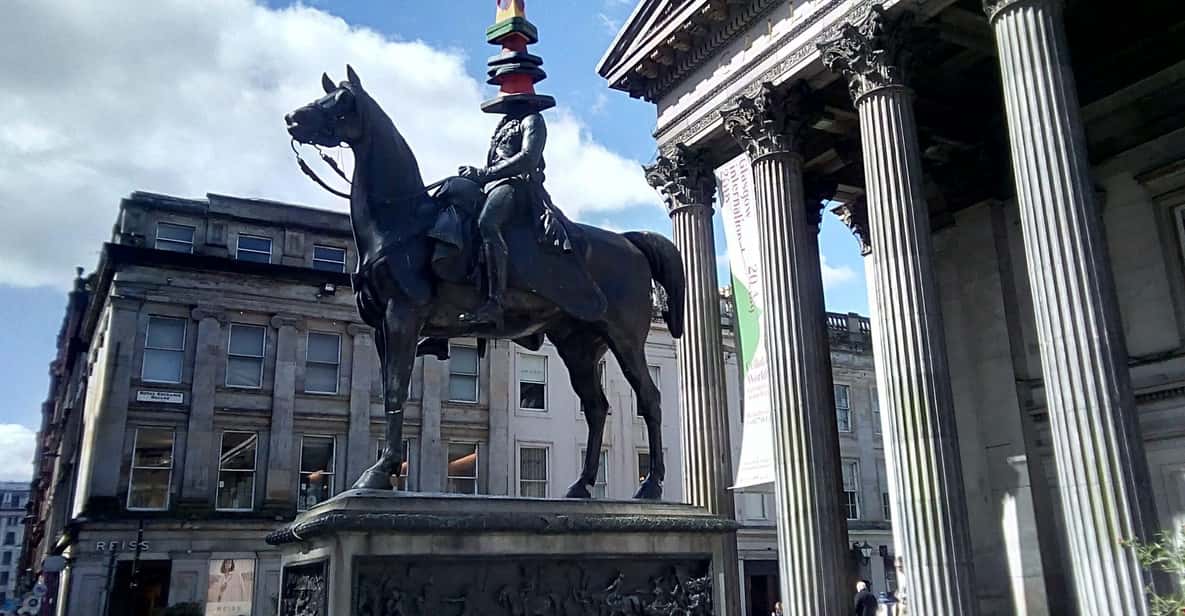
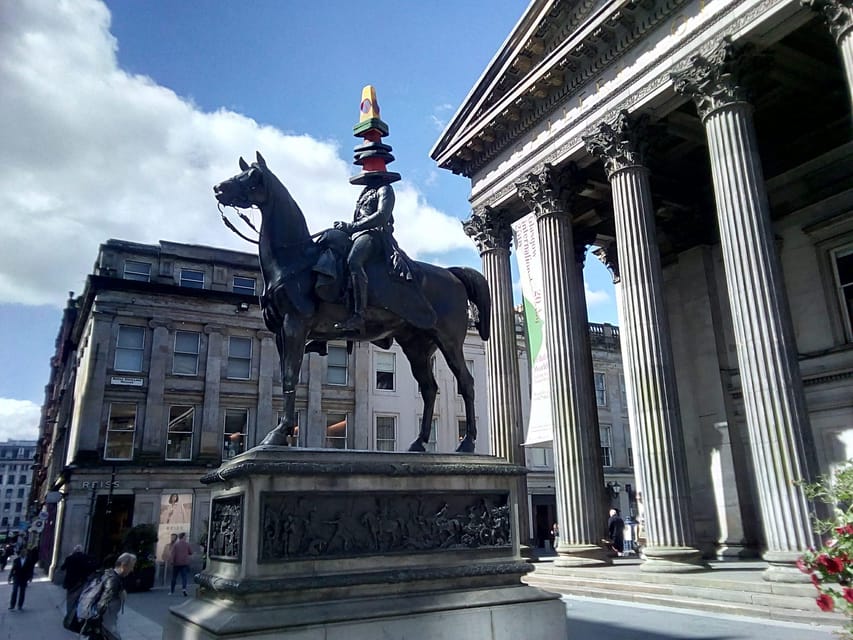
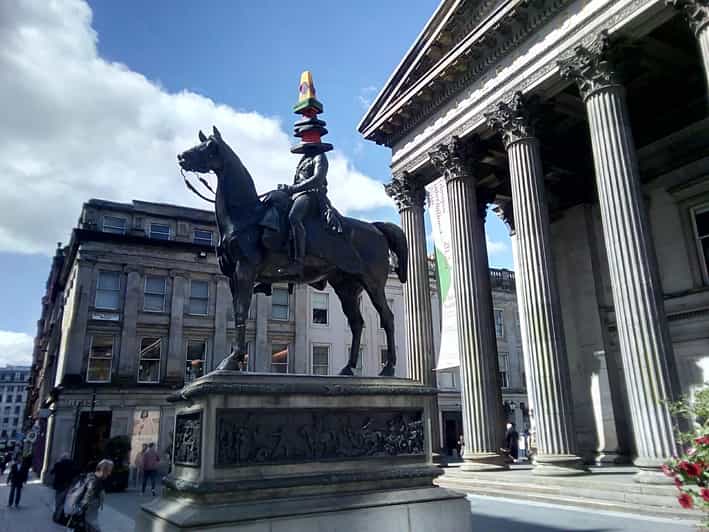
Your tour begins outside COSTA Coffee in Royal Exchange Square. It’s not George Square, which matters because that mistake wastes time before you even start. You’ll be near the Gallery of Modern Art and by the statue of the man on his horse with the cone on his head. Look for Johnny wearing a black and white Glasgow Gander T-shirt or jacket so you know you’re in the right place.
This start location is a smart choice. Royal Exchange Square is central and easy to find, and it also sets the tone: you’re in the middle of the action, right where Glasgow’s civic and commercial life collide. From minute one, Johnny frames what you’re seeing as part of a living city, not a museum display.
The walk is also designed to be approachable. It’s listed as wheelchair accessible, and the pacing is meant to be leisurely even though you’re covering a lot of ground in three hours.
You can also read our reviews of more walking tours in Glasgow


Mother Glasgow: why the tour’s framing works
The tour’s recurring idea is Mother Glasgow, Scotland’s powerhouse. That phrase could sound like marketing fluff, but it actually guides how you’ll read the city as you walk. Johnny points out how the city grew, shifted, rebuilt, and reinvented itself—so the buildings don’t feel random. They start to make sense.
Two things make this framing especially useful for you:
- You learn the why behind the sights. You’re not only told what something looks like; you’re shown what it meant when it was built and what it suggests about Glasgow’s character now.
- You get answers to your questions on the move. People ask about where to go next, what to skip, and what’s worth paying for, and Johnny responds in plain language.
The best part is how it sets up your remaining time. By the end of the walk, you’re not starting your research from scratch. You already have a mental map and a list of good bets.
Royal Exchange Square stop: the tone of a working city
You meet Mother Glasgow right at Royal Exchange Square. From here, Johnny kicks off the story of Glasgow as a place with drive and industry, but also a sense of humor about itself. You’ll likely notice how quickly the city shifts from grand civic spaces into everyday street life.
This first stop is good for a practical reason. It gives you context before you move deeper into the centre. When you later hit landmarks like George Square and the cathedral, you’ll already understand what kind of power and ambition created the architecture you’re seeing.
If you’re worried about feeling lost on day one, this is the fix. You start with a clear anchor point, and your guide builds connections between the next stops so you don’t feel like you’re hopping between unrelated photos.
The cone-wearing Duke of Wellington statue and Glasgow’s humor
Next comes the Duke of Wellington statue where the cone tradition kicks in. You’ll be able to snap a photo, then Johnny explains the funny backstory of why it’s part of modern Glasgow culture.
This is more than a photo stop. It signals something important about the city: Glasgow doesn’t treat its history like a fragile thing. It can poke fun at itself, even when the subject is a serious figure like the Iron Duke.
If you’re the kind of traveler who likes atmosphere, you’ll enjoy this part. It breaks the ice early and makes the rest of the stories feel easier to absorb.
Buchanan Street: shopping street with a serious lesson
From there, you move to Buchanan Street, known as Britain’s top shopping street outside London. It’s a classic “see it, walk it” corridor, but Johnny brings it to life with a historical thread—how Glasgow stood against apartheid South Africa and made its mark in history.
That contrast matters. It reminds you that the city’s public spaces are not just for shopping or strolling. They also sit alongside political history, and Glasgow’s civic choices shaped its reputation beyond the UK.
This stop works especially well if you want a walk that covers both what you see and what you should remember.






George Square and City Chambers: a civic heart with rooftop clues
George Square is where the tour turns toward the big, official centre of Glasgow. Johnny points out the heart of the area and encourages you to keep an eye out for the rooftop ship. You’ll also learn about Glasgow City Chambers, one of northern Europe’s architectural treasures.
This is the kind of stop where you get a sense of scale quickly. The buildings are meant to impress, and Johnny helps you read them without getting lost in technical jargon.
If you only have a day or two in Glasgow, George Square is a must. After this stop, you’ll understand how the city organizes its “official” identity—then you’ll start noticing how that identity changes as you move through different districts.
Trades Hall and Hutcheson’s Hall: Georgian to industrial muscle
The tour shifts into deeper background with stops like Glasgow’s Trades Hall and Hutcheson’s Hall.
At Glasgow’s Trades Hall, you’ll uncover an often-overlooked Georgian hub and hear the tale of a club where gluttony was celebrated. It’s the kind of story that sounds silly at first, but it tells you something about the social world behind the architecture.
Then at Hutcheson’s Hall, the mood changes again. Johnny tells the story of Glasgow’s evolution from a commercial center into an industrial powerhouse. You get to understand why the city grew the way it did, and why certain buildings feel built for influence.
These two stops are valuable because they connect the dots. You’re not only learning dates and names. You’re seeing how economic power leaves fingerprints on streets and structures.
Art Deco inside the city centre: a real photo-worthy interior
One of the more distinctive parts of the walk is the Art Deco hidden interior stop. The tour description calls it the only public Art Deco interior in Glasgow City Centre, and that kind of claim is exactly why it’s worth paying attention here.
This stop is a reminder that Glasgow isn’t stuck in one era. In a short walk, you’ll see architectural styles that span centuries, and that makes the city feel layered instead of one-note.
It’s also a great moment for practical travel reasons. Interiors give your eyes a break from street glare and your ears a break from wind. Even if the stop is brief, it adds variety and makes the walk feel more complete.
Trongate and the “hidden entertainment venue” moment
On the walk along Trongate, Johnny brings you to an ancient thoroughfare and teases the history of an incredible hidden entertainment venue. The tour notes this part is subject to availability, which is important. You’re not guaranteed entry every time, so think of it as a chance, not a certainty.
Even with that caveat, Trongate is a useful stop because it connects Glasgow’s older streets to the idea of what the city has always done well: making spaces for people to gather, watch, and talk.
When it’s available, this is one of those moments that makes a tour feel special rather than standard. If it’s not available, you’ll still come away with a stronger sense of where the fun energy in the city historically lived.
Haunted thread: Tampa references and a haunted bookstore story
The tour description includes a spooky thread, with references to Tampa’s most haunted locations on a walk at a leisurely pace and also stories about a haunted bookstore. No matter how you feel about the supernatural, this is where the tour leans into fun narrative.
Treat it as atmosphere, not as a factual history unit. The value here is the way Johnny uses ghostly storytelling to keep you engaged while moving through real places.
If you enjoy playful local lore, you’ll probably like this section. If you don’t, you can still enjoy it as an entertaining layer that breaks up the heavier architecture and civic history stops.
Tolbooth Steeple at Glasgow Cross: Old Glasgow in one spot
Under the 17th-century Tolbooth Steeple, you’ll explore Old Glasgow’s epicenter at Glasgow Cross. This is where the city’s story feels concentrated. The steeple puts you directly into a different time scale, and Johnny’s explanation helps you see how this area shaped the movement of people, power, and ideas.
Look around the square and you’ll get the sense that Glasgow Cross is less about one building and more about an intersection of everything—administration, commerce, and the public life that grew around it.
This is also a strong “story anchor” stop. Once you understand the origin point, the rest of your tour has more meaning.
High Street: a main ancient route plus street food hints
Next up is Glasgow’s High Street, the city’s main ancient thoroughfare. Johnny shares a grand tale attached to what you see here, and you’ll also get a recommendation for a must-try deep-fried delicacy.
This part of the walk is practical in a great way. It doesn’t just point out history; it points you toward something you can eat after. When you travel, food recommendations are often hit or miss if they come from a guide who doesn’t actually live the place. Here, the advice is tied to a local storytelling style, which tends to make it more reliable.
If you like to build a simple plan for your evening, this stop helps you do that quickly.
High Street mural: street art with a clever hidden message
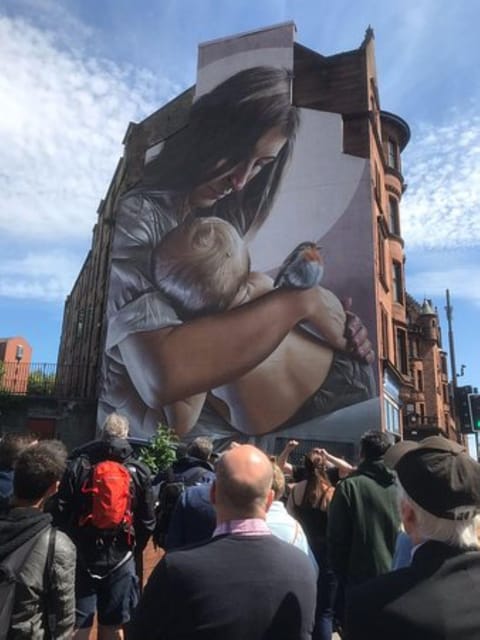
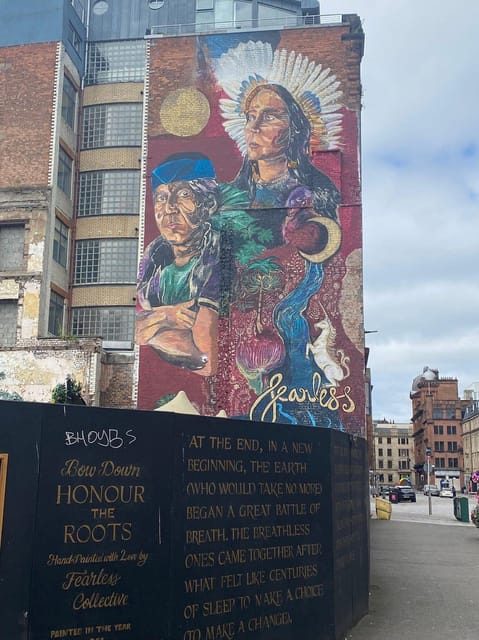
You’ll then spot one of Glasgow’s most celebrated street art pieces, with the city’s famous son cleverly hidden in plain sight. This is a fun stop, but it also trains your eye. After this, you’ll start noticing details you might otherwise ignore in Glasgow’s public art and signage.
It’s a good reminder that the city doesn’t keep its identity only in buildings. Some of Glasgow’s personality is written at street level.
If you enjoy photography, take your time here. The point is to look carefully, not just walk past.
Provand’s Lordship and the Necropolis frame
The tour includes Provand’s Lordship, a 15th-century house that’s described as Glasgow’s oldest house. Johnny also points out four nearby unique buildings and mentions one rumored to facilitate inter-dimensional travel.
Even if you treat that rumor as playful rather than literal, this stop delivers two travel wins:
- You get a real time jump. A medieval-era surviving structure in the middle of a modern city makes the timeline feel immediate.
- You get a sense of the city’s geography and how different “worlds” sit close together.
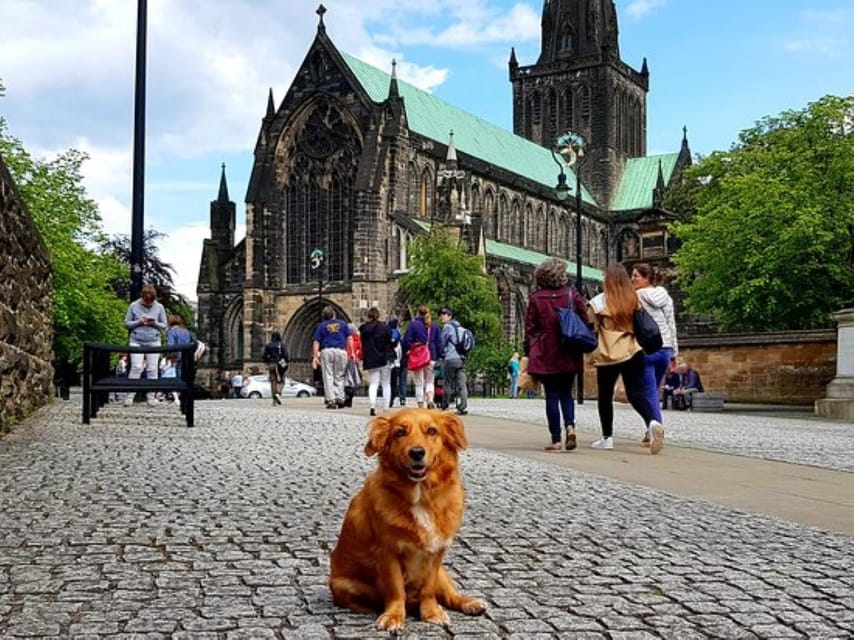
From there, the tour finishes at Glasgow Cathedral. The cathedral is framed by the Victorian Necropolis, known as the city of the dead. This finale is the kind of ending that makes you slow down for a moment. The medieval Scottish Gothic feel, plus the graveyard setting in the Victorian era, gives Glasgow a mood you won’t get from shopping streets alone.
It’s a strong way to end because you’re leaving with both a story and a visual memory.
What’s included: music venue access and a soft drink taste
Two extras are part of the experience.
First, there’s free entrance to an antique music venue, but it’s explicitly subject to whether it’s open. That matters because it keeps your expectations realistic. If it’s open, you’ll get an extra window into Glasgow’s entertainment history. If it isn’t, you still get the rest of the walk, which is the main event.
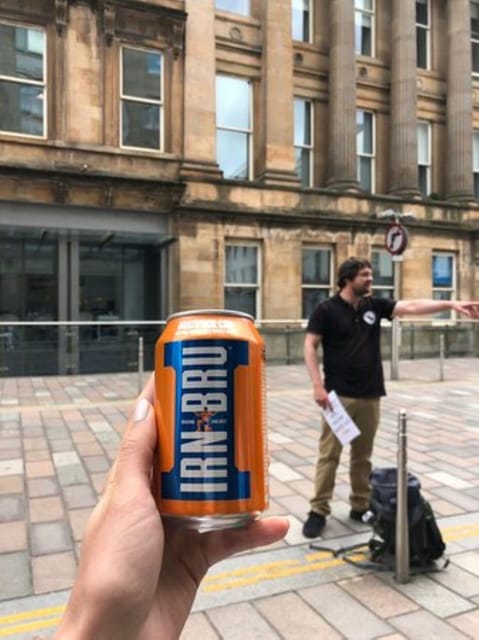
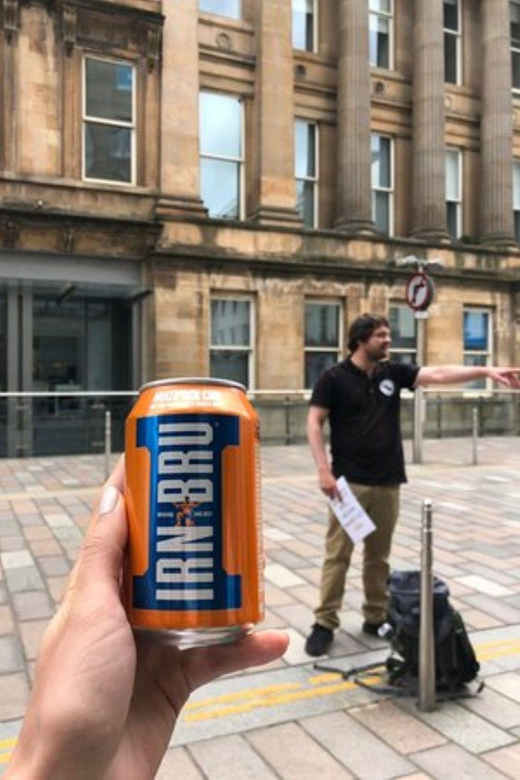
Second, you get a free taste of a quintessential Scottish soft drink (non-alcoholic). It’s a small inclusion, but it helps you feel like you’re sampling the city instead of only looking at it.
In a three-hour tour, these kinds of extras can make the whole thing feel more human. They’re not big spendy add-ons, they just add local flavor.
Price and value: $16 for three hours with a local guide
At about $16 per person for a 3-hour city-centre walk, the value comes from two places.
You’re paying for Johnny’s ability to connect the dots: architecture plus politics plus everyday culture, all in one route. You’re also paying for the time saved. Instead of you figuring out what matters and what doesn’t, the tour gives you a curated path that keeps moving.
Most tours give you a list of landmarks. This one tries to give you a working sense of Glasgow and what to do after. That includes recommendations for pubs and museums and day trips, plus additional ideas you can follow up with later.
Is it “perfect” for everyone? If your ideal vacation is slow and museum-heavy, you may want a different style of tour. But for orientation, story, and local guidance, this price feels fair because you’re getting a lot of payoff per hour.
Also remember: the tour is wheelchair accessible, and it’s designed for an easygoing pace even while staying efficient.
The right traveler fit for Glasgow Gander Walking Tours
This is a great match if:
- you’re visiting Glasgow for the first time and want a fast orientation
- you like architecture and want stories tied to buildings, not facts thrown at you
- you want pub and museum direction that feels locally grounded
- you enjoy humor in history, with questions answered as you go
It may be less ideal if:
- you don’t like walking and prefer short stops with long rests
- you want a lot of guaranteed indoor time
- you need a rigid schedule with very limited outdoor exposure
Even on rainy days, the walk still makes sense because the stops are built to keep you busy. Still, bring a waterproof layer if the weather looks uncertain.
Should you book this Glasgow Gander Walking Tour?
If you want a smart first step into Glasgow, I’d book it. For $16 and three hours, you get a tight route through key landmarks, a strong architectural range, and a guide who turns the city into a set of stories you can actually remember.
Book it early in your trip. That’s when the recommendations will do the most work for you, because you can plan the rest of your days with confidence. If you like the sound of a guide who mixes humor with history and also helps you figure out what to do next, this one is an easy yes.
FAQ
How long is the Glasgow Gander Walking Tour?
The tour lasts 3 hours.
How much does it cost?
The price is $16 per person.
Who leads the tour?
The tour is led by Johnny (Glasgow Gander Walking Tours).
Where do I meet for the tour?
Meet outside COSTA Coffee in Royal Exchange Square (not George Square), next to the Gallery Of Modern Art and by the statue of the man on his horse with a cone on his head. Look for Johnny in a black and white Glasgow Gander t-shirt or jacket.
Where does the tour end?
The tour concludes at Glasgow Cathedral.
Is the tour wheelchair accessible?
Yes, it’s listed as wheelchair accessible.
What language is the tour in?
The tour is in English.
What is included in the tour price?
You get a guided walking tour of Glasgow city centre, free entrance to an antique music venue if it is open, and a free taste of a Scottish soft drink (non-alcoholic).
Can I cancel for a full refund?
Yes. Free cancellation is available up to 24 hours in advance for a full refund.
Is pay later an option?
Yes. You can reserve now and pay later, meaning you pay nothing today.