REVIEW · EDINBURGH
Royal Mile and Old Town Walking Tour
Book on Viator →Operated by Edinburgh Guided Tour · Bookable on Viator
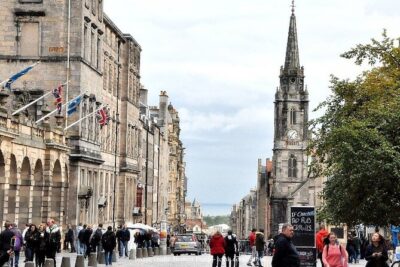
Old Town stories start with your footsteps. This 3-hour walking tour gives you a tight, on-foot overview of Edinburgh’s Royal Mile area, with stops that range from Usher Hall’s grand facade to the views of Edinburgh Castle and the Old/New Town boundary at Scott Monument. You’ll also get built-in time to pause and photograph as you go.
I especially like the small group size (max 12) and the way the guides steer the pace and conversation, including historians with big storytelling skills like Craig Goodman, Fiona, Dr Alison Duncan, and David Forsyth. The one drawback is practical: the route involves walking and some uneven ground and stairs, so you’ll want solid shoes and a moderate fitness level to keep it comfortable.
In This Review
- Key things I’d circle before you go
- Royal Mile on Foot: what a 3-hour overview actually feels like
- Usher Hall to Edinburgh Castle: grand architecture with sharp context
- Grassmarket and the courts: where Edinburgh gets personal
- Writers’ Museum and David Hume’s home: ideas in street form
- Deacon Brodie’s Tavern and the real story behind Jekyll and Hyde
- St Giles Cathedral to City Chambers: the Royal Mile in two eras
- Waverley Station to Scott Monument: the Old Town/New Town boundary
- Price and value: what $48.54 buys you
- The guides are the show: why people rate this so high
- Shoes, weather, and pacing: the real logistics that matter
- Who should book this Royal Mile walking tour?
- Should you book it? My take
- FAQ
- How long is the Royal Mile and Old Town walking tour?
- Where does the tour start and end?
- What is the group size?
- Is it included in the price when you enter Edinburgh Castle or St Giles Cathedral?
- Are any stops free to enter?
- What language is the tour offered in?
- What should I bring or plan for walking?
- Are children allowed, and is it free?
- What happens if the weather is bad?
- Is there a cancellation window for a full refund?
Key things I’d circle before you go

- Small group pace: max 12 people means fewer bottlenecks and more back-and-forth.
- Guides who tailor the day: you can steer interests, and the history stays clear and human.
- Photo-friendly timing: short stop windows let you look, shoot, and move without feeling rushed.
- Ticket strategy: several major sights are viewable from outside, with select admissions not included.
- Old Town to New Town story arc: the route naturally ends where Edinburgh’s layout changes—right at Scott Monument.
- Central start and finish: easy meeting points that make the rest of your day simpler.
Royal Mile on Foot: what a 3-hour overview actually feels like
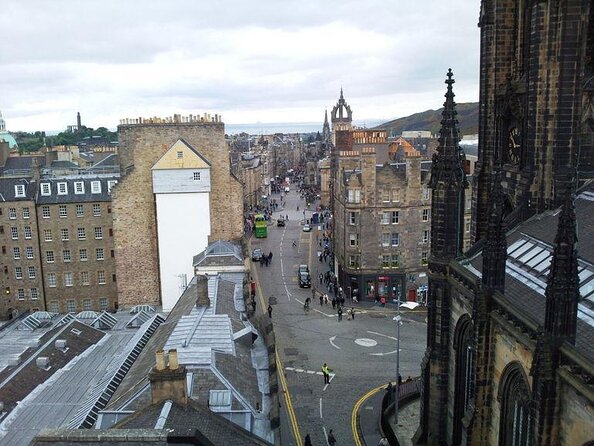
Think of this tour as a guided way to get your bearings fast. You start at Usher Hall in central Edinburgh, then work your way through the Royal Mile’s most story-heavy corners—Grassmarket, the courts, St Giles, and the area around City Chambers—before finishing near Princes Street Gardens at Scott Monument.
The timing is built around short “look and learn” moments. Most stops run 10 to 20 minutes, with a longer chunk at Edinburgh Castle for outside viewpoints and history. That makes it a smart choice if you’re short on time, jet-lagged, or just want the big picture before you start wandering on your own.
You can also read our reviews of more walking tours in Edinburgh


Usher Hall to Edinburgh Castle: grand architecture with sharp context
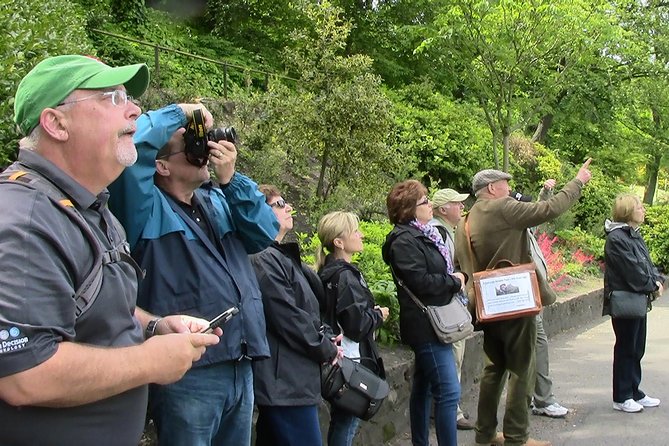
The day opens at Usher Hall, a Baroque Beaux-Arts style masterpiece. Even if you don’t go inside, it’s the kind of building that helps you understand Edinburgh as a city of layered ambitions—classical styling, civic pride, and a long memory of who funded what. You’ll get the basics of why it matters, plus a little about its connection to Andrew Usher and the city.
Then you move into the Edinburgh Castle area. The tour keeps expectations realistic: you’ll see and view the castle from the outside from different vantage points. Expect a story arc that covers Scottish Wars of Independence, the Stuart dynasty, and the Union of the Crowns. It’s ideal for first-timers because you get orientation and names without committing to a full castle visit on day one.
Quick consideration: admission to the castle is not included here. If you want to go inside, you’ll need to plan for that separately—and you may want extra time if you’re also doing photos in the area.
Grassmarket and the courts: where Edinburgh gets personal

After the castle hill energy, the route drops into Grassmarket, a centuries-old quarter that once acted as a medieval marketplace. This stop isn’t just pretty views—it’s a reset button. You learn how the area’s function shaped daily life, and you’ll also see the George Heriot School, which is often linked to the Hogwarts inspiration story.
From there, the tour leans into something very Edinburgh: tight lanes, hidden corners, and courtyard spaces that make the city feel more like a lived-in neighborhood than a museum. You’ll pass through places like Milne’s Court, where you can step into the feel of the 17th and 18th centuries through preserved court living and the sounds of everyday life as described by your guide.
Then comes James Court and the Jolly Judge pub. This is where the tour turns playful and specific. You’re looking for classic tenement-style Edinburgh—buildings that give you that instant Old Town texture—and you get the chance to connect the architecture to the stories told about the people who lived there.
The trade-off here is simple: court-to-court walking can mean lots of short streets with uneven footing. Take your time at each “pause” moment rather than trying to rush between them.
Writers’ Museum and David Hume’s home: ideas in street form

One of my favorite parts of the route is how it turns history into names you can picture. The Writers’ Museum stop highlights Scotland’s literary heroes and keeps the focus on the human side of writing—who they were and why Scotland became so good at producing big thinkers.
Next, you’ll see Riddle’s Court from the exterior, including the home connected to David Hume, often described as a major figure in the Scottish Enlightenment. Even without stepping inside, seeing the building’s exterior and learning what happened around it helps you make sense of the movement. It’s one thing to read about Enlightenment ideas. It’s another to walk past the kind of spaces where those ideas could circulate.
This is also a good segment for questions. Many guides are quick to adjust the story when you raise an interest—Scottish politics, religion, literature, or the darker side of “famous Scots.”
Deacon Brodie’s Tavern and the real story behind Jekyll and Hyde
Next up is Deacon Brodie’s Tavern, where the tour shifts into crime, deception, and moral contradiction. You learn about Deacon Brodie, a real-life figure whose story became the inspiration behind the classic Jekyll and Hyde idea.
What I like about this stop is that it connects the city’s legends to specific human choices. It doesn’t treat Old Town as a theme park. It frames it as a place where regular people lived close to power, temptation, and scandal—just like any city, really.
Time-wise, this is another “short but memorable” stop—about 20 minutes. If you’re hoping for a deeper dive, you might want to circle back afterward on your own, but for an overview, it lands well.




St Giles Cathedral to City Chambers: the Royal Mile in two eras
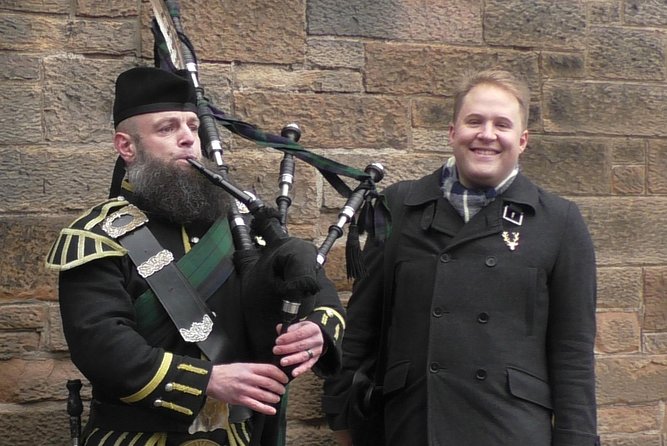
At St Giles’ Cathedral, you view the cathedral from the outside and learn why it mattered during the Middle Ages and the Reformation. This is one of those Edinburgh stops where the architecture alone doesn’t explain the full story—your guide does. You’ll come away with a clearer sense of why religion and politics were tangled up here.
Then you move into the busy heart of the Royal Mile around Edinburgh City Chambers, including the Mercat Cross area and other key sites. This portion works because it’s less about one building and more about how the city organizes public life. You’ll get a feel for where ceremonies, decisions, and crowds would have gathered.
One practical note: admission to St Giles is not included in this tour. If you want to go in, plan for it. If you don’t, you can still get a lot from the outdoor viewing and storytelling.
Waverley Station to Scott Monument: the Old Town/New Town boundary
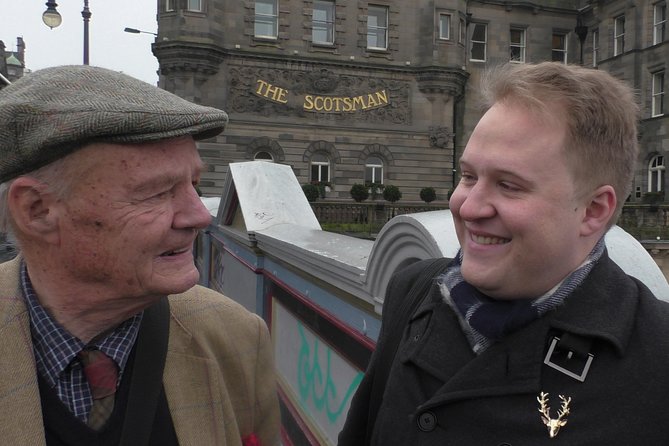
The route finishes with a shift that makes Edinburgh feel almost like two cities. You’ll reach Edinburgh Waverley Station and cross one of the first bridges connecting Old and New Town. This matters because it turns what you’ve been learning into a physical reality: Edinburgh isn’t just old everywhere. It has a line between eras.
From there, you head toward Scott Monument, a towering landmark that marks the separation of the Old and New Towns—both recognized as UNESCO world heritage sites. The end point near East Princes Street Gardens is a convenient launch pad. From here, you can easily continue to Princes Street for cafés, shopping, or just more people-watching.
Stop duration is brief (about 10 minutes listed for Scott Monument viewing), but it’s a satisfying finish. You’ve arrived at the city’s “change point” with a story in your head, not just a photo in your camera.
Price and value: what $48.54 buys you
At $48.54 per person for roughly three hours, you’re paying for three things: a professional guide, a small group (max 12), and a concentrated route that hits major landmarks plus the in-between streets people often miss.
Here’s how I think about the value:
- You get a lot of big-name context. Castle viewpoints, St Giles, City Chambers, and Scott Monument all appear in the flow without you having to stitch together multiple half-day plans.
- Many stops are outside views or free-entry court/museum areas. Even though some admissions aren’t included (Usher Hall, Edinburgh Castle, St Giles), the tour still keeps you moving and learning rather than waiting in lines you might not even want.
- The small group structure matters. With fewer people, guides can keep eye contact, correct misunderstandings quickly, and answer your questions without the tour turning into a lecture.
If you already plan to pay for castle and church entry, you’ll likely feel like you’re layering extra value on top. If you prefer lighter ticket spending, the route still works as an overview because several stops are designed for exterior viewing and storytelling.
The guides are the show: why people rate this so high
The consistent theme in the guide experience is attention and energy. I’ve seen plenty of tours where history becomes a list. Here, the best guides turn it into something closer to a conversation with a historian brain.
Names that come up in guide-led experiences include:
- Craig Goodman, praised for being a real wealth of knowledge.
- Fiona, praised for balancing history so it does not crush you, plus adapting when weather turns nasty.
- Dr Alison Duncan, praised as a professional historian who kept the tour feeling like an introduction to Edinburgh rather than a textbook.
- David Forsyth, a former museum curator in one guide experience, bringing deep Scottish history with humor.
- Douglas Graham and Alastair Sim, highlighted for story-driven explanations and a sense of humor.
- Stuart Usher, recognized for witty storytelling and the Edinburgh roots behind the delivery.
I’d take that as a signal: if you care about how the story is told, this tour is built for you. The pacing is also a big deal—many people say the three hours flew by, which usually means the guide knows how to keep stops efficient and the group engaged.
Shoes, weather, and pacing: the real logistics that matter
Edinburgh Old Town walking has its own rules. Cobblestones, uneven ground, and occasional stairs can make a “light” walking tour feel tougher than it sounds on paper. The good news is that guides tend to work with the group and adjust when needed, and the route itself is designed to be doable for many visitors with moderate fitness.
Then there’s weather. Edinburgh can flip fast, and rain is not unusual. If conditions are poor, the tour depends on good weather. On the positive side, some guide experiences show a willingness to shift plans—one guide (Fiona) took a group to the National Museum to keep learning going while staying warm.
My advice: wear grippy shoes, bring a compact rain layer, and plan your expectations around comfort rather than speed. If you’re relaxed, you’ll get more from each stop.
Who should book this Royal Mile walking tour?
This tour is a strong fit if:
- You’re visiting Edinburgh for the first time and want a focused Old Town orientation.
- You like history stories with humor and context, not just facts.
- You want to see key sights like Edinburgh Castle and St Giles without committing to full admission plans right away.
- You prefer small-group pacing so you can ask questions and get answers.
It may be less ideal if:
- You have very limited mobility or can’t handle uneven footing and some stairs.
- You’re expecting full interior access at every major landmark, since some notable admissions are not included.
Should you book it? My take
If you want a high-value overview that covers the Royal Mile’s major beats plus the courts and characters that make Edinburgh feel real, I think this is a smart booking. The small group size, story-driven guides, and the Old Town to New Town ending at Scott Monument create a satisfying arc in just about three hours.
Book it especially if you’re the type who likes to understand what you’re looking at before you wander farther. If you’re willing to wear comfortable shoes and handle a bit of uneven ground, you’ll get a clear, memorable picture of Edinburgh’s history in street form.
FAQ
How long is the Royal Mile and Old Town walking tour?
It runs for about 3 hours.
Where does the tour start and end?
It starts at Usher Hall, Lothian Rd, Edinburgh EH1 2EA, and ends in East Princes Street Gardens near the Scott Monument (Princes St Gardens, Edinburgh EH2 2EJ).
What is the group size?
The tour is a small group with a maximum of 12 travelers.
Is it included in the price when you enter Edinburgh Castle or St Giles Cathedral?
No. Admission tickets are not included for Edinburgh Castle and St Giles Cathedral in the tour stops that list admission as not included.
Are any stops free to enter?
Yes. Several stops are listed as free, including Grassmarket, Milne’s Court, Jolly Judge, and multiple other courts and areas along the route.
What language is the tour offered in?
The tour is offered in English.
What should I bring or plan for walking?
You should have a moderate physical fitness level. The route includes walking and uneven Old Town terrain, so comfortable shoes help.
Are children allowed, and is it free?
Children under 12 are free. Children ages 12–16 pay 75%.
What happens if the weather is bad?
The experience requires good weather. If it’s canceled due to poor weather, you’ll be offered a different date or a full refund.
Is there a cancellation window for a full refund?
Free cancellation is available up to 24 hours in advance for a full refund.