REVIEW · EDINBURGH
Medical and Surgical History of Edinburgh – Private Walking Tour
Book on Viator →Operated by 7 Hills Tours Edinburgh · Bookable on Viator
Medicine has its own streets here. This private Edinburgh walking tour turns the city into a medical timeline, from the origins of Edinburgh’s College of Physicians down to the Royal Infirmary’s grand frontage. I especially like the physician-led storytelling (Moray, referred to as Dr. Grigor by some guests) and the way the pace stays lively but never rushed. I also like that the stops you hit are practical to visit on foot, with free admission built into each segment.
One thing to consider: it’s about 2.5 miles over 3 to 4 hours, so you’ll want a moderate fitness level. It’s not a great match if you have chronic or painful musculoskeletal issues, and it depends on good weather.
In This Review
- Key takeaways before you go
- Entering Edinburgh’s medical past on the Royal Mile
- Royal Mile stop: the College of Physicians and Edinburgh’s early medical roots
- Cowgate stop: Robertson’s Close and the first Royal Infirmary complex
- Surgeons’ Hall Museums: where the story turns to professions and women’s access
- University of Edinburgh medical school days: drudgery and rewards
- Bristo Place: Darwin’s med-student lodgings and the 1880s medical school look
- Lauriston Place finale: the Royal Infirmary entrance plaza and doctors’ stories
- Price and value for a $130.44 per-person private tour
- Timing, walking distance, and what to wear in Edinburgh
- Meet your guide: Moray, Dr. Grigor, and the pacing that keeps it fun
- Who should book this medical-history walk
- Tips to get the most out of the tour
- Should you book Medical and Surgical History of Edinburgh?
- FAQ
- How long is the Medical and Surgical History of Edinburgh private walking tour?
- Where does the tour start?
- Where does the tour end?
- Is this a private tour or a group tour?
- What language is the tour offered in?
- Are entrance tickets included for the stops?
- Is coffee or tea included?
- How much walking is involved?
- What fitness level do I need?
- When will I get confirmation after booking?
Key takeaways before you go
- Physician perspective: Moray/Dr. Grigor brings a medical viewpoint, not just dates and dead facts
- Free-access stops: each main stop is listed with free admission, so your cost stays predictable
- Tight pacing: the timing is designed to keep momentum without turning into a marathon
- Surgeons’ Hall refresh break: you get a mid-walk break where you can refuel (coffee/tea not included)
- Women in medicine theme: you’ll hear about the long struggle for women’s medical education
- Ended where the Royal Infirmary stood: the finale lands at the former infirmary’s impressive university entrance plaza
Entering Edinburgh’s medical past on the Royal Mile
Edinburgh does storytelling well. What surprised me about this tour concept is how it uses normal city spaces as evidence: closes, alleyways, lecture-style buildings, and infirmary stonework. Instead of treating medicine like a single museum you visit and forget, this walk spreads it across the city’s bones.
You start at Hunter Square (EH1). From there, the tour threads together the early structures behind health care and medical education. You’ll cover the origins of Edinburgh medicine and surgery, plus the place connected to the College of Physicians. Think of it as learning the “how” of medical progress, not just the “what.”
And yes, you’ll get the human angle too. The guide’s tone is warm and chat-friendly, with room for questions, and the stories are delivered with a comfortable tempo. If you like history that explains why things happened, not just what happened, this format fits.
You can also read our reviews of more walking tours in Edinburgh


Royal Mile stop: the College of Physicians and Edinburgh’s early medical roots
The Royal Mile segment is your orientation. You begin walking down Edinburgh’s oldest street and quickly get oriented to how medicine formed in the city. The tour points you toward the alleyway linked to the College of Physicians—small space, big meaning.
What makes this stop valuable is scale and contrast. The street itself is famous and public, but medicine’s early institutions often started in tighter, more discreet places. You learn to notice Edinburgh’s layout as a clue: where institutions tried to take hold, how knowledge moved, and how professional networks formed.
Practical note: the Royal Mile can feel crowded at times, and the vibe can be a bit “traffic of tourists.” The guide’s job here is to keep your attention on the details you’d otherwise miss, like the significance of that alleyway and the early medical beginnings connected to it.
Cowgate stop: Robertson’s Close and the first Royal Infirmary complex
Next you move just off the Cowgate to Robertson’s Close, tied to what’s described as The Little House—Edinburgh’s first teaching hospital. From there you explore the complex connected to its successor: the first Royal Infirmary of Edinburgh.
This part works because it’s physical. You’re not just learning that early hospitals existed; you’re walking through the idea of hospital succession: teaching first, then expansion into larger institutional care. The “close” setting also gives you a sense of how healthcare infrastructure was woven into the city.
One subtle benefit: the guide helps you connect medical education to patient care. In other words, you understand that hospitals weren’t only for treatment—they were also places where teaching and professional training took shape.
If you’re the type who likes architecture-with-a-purpose, you’ll probably enjoy this stop. If you mostly want famous masterpieces, you might find the setting quieter than expected—but the stories provide the lift.
Surgeons’ Hall Museums: where the story turns to professions and women’s access
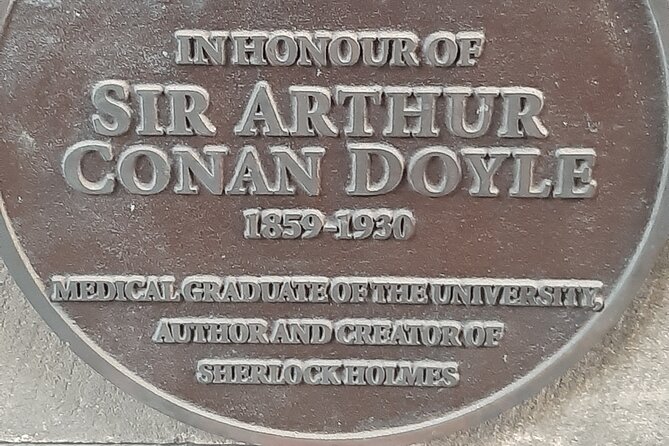
Surgeons’ Hall Museums is where the tour adds a strong social angle. This is the historic home of the surgical profession, and it’s also where you take a refreshment break. Coffee and/or tea aren’t included, but there’s a stop to reset so you don’t lose energy during the next stretch.
What I like here is the way the tour connects professional history to real barriers. You hear about the years-long battle for women to be admitted to the Medical School. That’s a big theme that’s easy to overlook when people think of medicine history as only scientific progress.
In this museum stop, you get a sense of how institutions control access—who gets trained, who gets published, and who gets taken seriously. It’s not just a timeline; it’s a look at how power and permission shape medicine.
Time on this stop is about 45 minutes. That’s enough to get your bearings, absorb what you can, and still feel like you’ll finish the full tour without dragging.
University of Edinburgh medical school days: drudgery and rewards
Then you head to the University of Edinburgh section, focused on the medical school’s former home. Here you hear how Edinburgh grew in importance as a medical centre and what medical student life could feel like: the drudgery, plus the compensations.
This segment is brief (about 20 minutes), so think of it as a focused “chapter.” It works best if you’re comfortable with a fast pace of learning. If you’re hoping for long reading time at each stop, you may wish the university segment had more minutes—but the tour balances it by focusing attention on key stories rather than endless wandering.
For me, the value is in the human details. When the guide talks about the reality of studying medicine back then, you start to see the education system as an engine. It shaped doctors, standards, and eventually the city’s reputation.
You can also read our reviews of more private tours in Edinburgh




Bristo Place: Darwin’s med-student lodgings and the 1880s medical school look
At Bristo Place, the tour passes by Charles Darwin’s old med student lodgings. It’s one of those Edinburgh moments that makes the city feel smaller, in a good way—different eras sharing the same streets.
From there, you move along toward an imposing 1880s medical school and graduation hall. This is the visual contrast you need after the earlier, more compact institutional spaces. The buildings look like institutions that expect longevity and prestige.
This stop is about 25 minutes. You’ll be moving and listening, with less time to stand and stare. Still, it’s worth it because the guide’s commentary helps you read the building as a statement about medical education in that period.
If you’re a history-by-people person, you’ll likely enjoy the Darwin connection. If you don’t care about Darwin, the building story still holds up, since you’re learning how medical training and professional ceremony took on a more official form.
Lauriston Place finale: the Royal Infirmary entrance plaza and doctors’ stories
The tour culminates at Lauriston Place, ending in the grand front courtyard of Edinburgh University’s Futures Institute, formerly the Royal Infirmary of Edinburgh. This is a satisfying landing point because you end where the institution looks most “official” and monumental.
Time here is shorter (about 15 minutes), but it’s designed as a finish that gives you emotional closure. You hear stories of some of the great doctors and surgeons connected to the institution—so you don’t just leave with facts about buildings.
Also, the tour is clearly set up with a loop mindset. You start at Hunter Square (EH1) and finish at Lauriston Place (EH3 9EF). If you’re planning the rest of your day in central Edinburgh, this routing is convenient because it pushes you toward a major university hub at the end.
Price and value for a $130.44 per-person private tour
At $130.44 per person, this isn’t a bargain-bin walking tour. But it also isn’t “pay for seats, see nothing.” You’re paying for a private, guided, story-driven route built around multiple meaningful stops over 3 to 4 hours.
Here’s why it can feel like good value:
- Admission is free at the listed stops, which reduces the usual hidden costs of history tours
- The guide isn’t only reciting facts. The delivery is described as entertaining and engaging, with solid pacing
- You get a real mid-tour refreshment break at Surgeons’ Hall (food and drink not included, but the pause is part of the experience)
- The content focuses on medical practice, surgery, and education, not just a generic “old buildings” walk
Group discounts can help if you’re booking as more than one person. If you’re traveling solo, it may feel pricier. If you’re traveling with a partner or small group, the per-person price tends to hurt less, and private routing is a strong perk when you want attention and flexibility.
Timing, walking distance, and what to wear in Edinburgh
You’re looking at roughly 2.5 miles of walking. That’s not huge, but it’s steady. The tour also runs 3 to 4 hours, so you’ll want to treat it like an active half-day plan.
The operator explicitly flags moderate fitness. It’s best avoided if you have chronic or painful musculoskeletal health conditions, largely because walking plus uneven city surfaces can be tough even when the distances don’t look extreme on paper.
Wear shoes you trust on cobbles and uneven stone. Bring a layer for wind and sudden rain. And because the experience depends on good weather, keep an eye on conditions if you book for rainy months. If weather forces a change, you’ll be offered a different date or a full refund.
Meet your guide: Moray, Dr. Grigor, and the pacing that keeps it fun
A big reason this tour earns a near-perfect track record is the guide. Moray, described as Dr. Grigor, comes across as warm and engaging, with medical insight and a knack for making the subject easy to follow.
What I value about this kind of guiding is the balance: you get history and institutional change, but the stories don’t turn into a lecture. The pacing is highlighted as excellent, with time windows that make sense: shorter stops for the “point-and-story” moments and a longer chunk at Surgeons’ Hall for deeper context and a break.
If you like to ask questions, this setup usually works well because you’re walking between story locations. You can react to what you just saw, not just store questions for later.
Who should book this medical-history walk
This tour is ideal if you:
- Want a medical and surgical history tour that connects institutions to people
- Enjoy social history, especially topics like women’s access to medical training
- Prefer walking through the city with an expert who can explain why things changed over time
- Like structured stops with free admission so you’re not juggling ticket desks
You might skip or choose a different option if you:
- Have mobility or pain issues that make 2.5 miles uncomfortable
- Want a “read at your own pace” museum day rather than guided walking
- Are planning to move quickly from one major attraction to another, because this takes 3 to 4 hours as a block
Tips to get the most out of the tour
A few practical moves can make the experience smoother:
- Arrive with comfortable shoes. You’ll be on your feet for most of the time.
- Bring water. The tour includes a break, but it’s not a full food package.
- If you’re curious about modern healthcare, ask how the early institutions compared to today. The guide’s physician perspective is a good fit for that kind of question.
- Use the stops as “chapters.” Don’t try to memorize everything. The strength here is how each place builds on the last.
Should you book Medical and Surgical History of Edinburgh?
If your idea of a great Edinburgh day is walking with purpose through real historic places, this is a smart booking. The combination of physician-led commentary, a clear route across major medical landmarks, and free admission stops makes it feel focused rather than random. The women’s access theme also adds depth beyond “medicine evolved” talk.
Book it if you’re curious about how medicine became professional, organized, and teachable in Edinburgh. If your body can handle a steady 2.5-mile walk and you like history that explains the human system behind the science, you’ll probably leave with a fresh way to look at the city.
FAQ
How long is the Medical and Surgical History of Edinburgh private walking tour?
It lasts about 3 to 4 hours.
Where does the tour start?
The tour starts at Hunter Square, Edinburgh EH1, UK.
Where does the tour end?
It ends at the Edinburgh Futures Institute, The University of Edinburgh, 1 Lauriston Pl, Edinburgh EH3 9EF, UK.
Is this a private tour or a group tour?
This is a private tour/activity, so only your group participates.
What language is the tour offered in?
The tour is offered in English.
Are entrance tickets included for the stops?
The stops listed in the itinerary show admission ticket free, so you won’t be paying for admission at those points.
Is coffee or tea included?
Coffee and/or tea are not included. There is a refreshment cafe stop, but food and drink aren’t part of the price.
How much walking is involved?
It’s approximately 2.5 miles.
What fitness level do I need?
It’s intended for people with moderate physical fitness. It would not be recommended if you have chronic and/or painful musculoskeletal health conditions.
When will I get confirmation after booking?
Confirmation is received within 48 hours of booking, subject to availability.