Eat your way through Edinburgh’s Old Town. This private walking tour strings together famous sights and real local food pauses from the Royal Mile area down through closes and courtyards. You’ll get snacks and non-alcoholic drinks included, plus a guide who connects the food to the places you’re walking through. One thing to consider: you’re on your feet for about 3 hours, and the Old Town route includes cobbles and tight stairs.
I also like the mix of big-name landmarks and small, personal story stops. Expect the route to include places tied to Edinburgh’s religious shifts, royal drama, and local legends like Greyfriars Bobby. The only real drawback to flag is that one past booking had confirmation trouble, so double-check your confirmation and keep an eye on your ticket.
In This Review
- Key highlights to look for
- Why this private street-food walk makes sense in Edinburgh
- Starting at 1 Cranston St: how to plan your 3 hours
- The Royal Mile: where you connect Castle, Holyroodhouse, and street food
- Old College and the University of Edinburgh’s law and art spaces
- Grassmarket: views, shops, and a more relaxed Edinburgh mood
- Greyfriars Bobby and Greyfriars Kirkyard: the cemetery stories behind the headlines
- St Giles Cathedral and Mercat Cross: civic power in stone
- Lady Stairs Close: stairways, writers, and the calm side of Old Town
- Holyroodhouse area: Mary Queen of Scots and the final connection
- The street food you should expect: classic Edinburgh bites
- Food + history pacing: why stops feel timed instead of random
- Your guide shapes the day: Alec and Ian as examples
- Price and value: what $204.57 really covers
- Who this tour suits best (and who may want a different plan)
- Should you book this private Edinburgh street food tour?
Key highlights to look for
- Private group pace for questions, photo stops, and comfort breaks
- Food stops that feel local, including classic Edinburgh favorites and options for different diets
- Old Town walking stories tied to specific places like St Giles Cathedral and Greyfriars Kirkyard
- Edinburgh details most people miss, like the meaning of closes and why Mercat Cross matters
- Guides who tailor the walk to interests (you may get extra detours, depending on the group)
Why this private street-food walk makes sense in Edinburgh
Edinburgh’s Old Town is famous for views, sure. But it can also feel like a lot of stone and facts, with people rushing between stops. This tour’s trick is that you slow down without feeling stuck: each sight gets a story, and each story lands right when you’re taking a food break.
Because it’s private, the guide can adjust timing for your group. That means fewer awkward “wait for the slowest person” moments and more time to ask, What did people eat here, and why?
You’re also not locked into a cold, buffet-style experience. You’re walking through the city while you taste street food, so the day feels connected instead of staged.
You can also read our reviews of more walking tours in Edinburgh


Starting at 1 Cranston St: how to plan your 3 hours

The tour starts at 1 Cranston St, Edinburgh EH8 8BE, and it ends back at the same meeting point. The total time is about 3 hours, so it’s a solid block if you want something memorable without using up your whole day.
It runs in English, and you’ll have a mobile ticket. The route is best for people with moderate fitness, because the Old Town has cobbled sections and stairways—especially when you pass through closes.
If you’re doing this alongside other major sights (Castle, Holyroodhouse, museums), I’d plan your schedule so you’re not cramming it right after a long museum day. The walking adds up.
And yes, service animals are allowed, and the meeting point is near public transport. So getting there shouldn’t be a headache.
The Royal Mile: where you connect Castle, Holyroodhouse, and street food
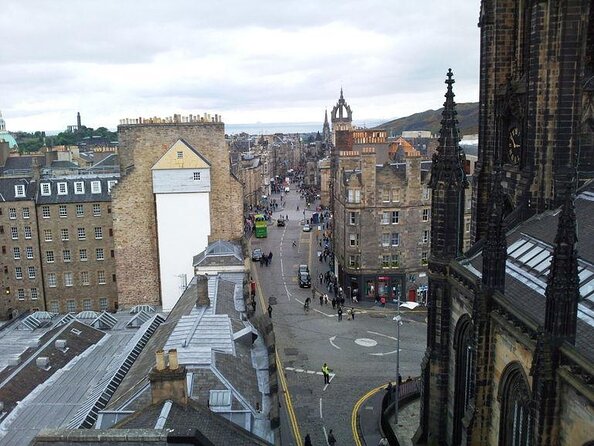
The walk centers on the Royal Mile, the spine of Old Town that links Edinburgh Castle and Holyroodhouse. This stretch also sits under the shadow of Arthur’s Seat, and it’s crowded in a way that’s hard to fully appreciate unless someone explains the geography.
What I like here is that the guide uses the buildings as clues. You’ll hear how the tenements tower above, how cobbled closes branch off, and how those narrow stairways create a kind of underground world of hidden passages. That context helps you understand why people lived and traveled the way they did.
This is also where the food pauses make the most sense. When you’re tasting classic dishes while you’re surrounded by the city’s historic bustle, the experience stops feeling like a museum lecture. It feels like a working neighborhood snapshot.
Old College and the University of Edinburgh’s law and art spaces
Next up is Old College, an 18th- to early 19th-century building on South Bridge. Today it houses parts of the University of Edinburgh, including administration, the School of Law, and the Talbot Rice Gallery.
Even if you’re not a “college building” person, this stop can be useful. Edinburgh’s power wasn’t only royal and religious—it was also academic and legal. Seeing Old College helps you understand why the city produced thinkers and institutions that still shape Scotland.
This part of the route tends to slow things down a bit. You’re getting a breather from the densest foot traffic, while still staying in the Old Town loop.
Grassmarket: views, shops, and a more relaxed Edinburgh mood
From there you move into the Grassmarket, one of the most scenic and lively Old Town areas. It’s known for independent merchants, designers, and artisans, with shops that feel more personal than chain retail.
This is a nice contrast moment. After the tighter, more story-dense sections around the Royal Mile, Grassmarket gives you room to look around. You’ll also get views toward Edinburgh Castle, which is helpful because it anchors all the walking you’ve been doing.
If you’re the type who likes to pick up small gifts or local-made items, this is the zone where you can do it without feeling like you’re hunting. Even if you don’t buy, it’s a good place to reset.
You can also read our reviews of more food & drink experiences in Edinburgh





Greyfriars Bobby and Greyfriars Kirkyard: the cemetery stories behind the headlines
Few Edinburgh legends stick as hard as Greyfriars Bobby. You’ll hear the story of the Skye/Dandie Dinmont terrier who guarded his owner’s grave for 14 years, becoming famous in 19th-century Edinburgh. The story is still widely known in books and films, but hearing it with the location in view makes it land differently.
Right after that, the route includes Greyfriars Kirkyard, the graveyard surrounding Greyfriars Kirk. Burials have taken place since the late 16th century, and the churchyard includes notable Edinburgh residents.
This is one of those stops where your guide’s tone matters. A good guide keeps it human, not spooky. You’ll come away understanding that this city’s legends aren’t separate from its real history—they’re built into everyday places.
St Giles Cathedral and Mercat Cross: civic power in stone
Next you’ll hit St Giles’ Cathedral, founded in 1124 by King David I. It’s been a working church for almost 900 years, tied to major moments like the Reformation, when it served as John Knox’s parish church. It’s also still used for civic ceremonies, like the Kirking of the Parliament and services connected to the Order of the Thistle.
Even if you’ve seen other cathedrals in Scotland, this one adds a different flavor: it’s civic as well as religious. That matters because it reminds you Edinburgh has always been both a stage for big events and a machine for daily governance.
A short step then brings you to the Mercat Cross of Edinburgh, the market cross in Parliament Square beside St Giles’ Cathedral. The cross marks the market town’s key meeting point, facing the High Street. If you’ve ever wondered why cities put the “main stuff” at the center, this is why—trade and crowds made the rules.
Lady Stairs Close: stairways, writers, and the calm side of Old Town
No trip to Edinburgh’s Old Town feels complete without at least one famous close. Here, you’ll visit Lady Stairs Close, known for the 17th-century townhouse Lady Stairs House.
The story behind closes is practical: wealthy families lived off the busy main streets to avoid noise and chaos. That single detail gives you a new way to look at the narrow passages. They weren’t just “cool for tourists.” They were a lifestyle choice.
While you’re in the area, you’ll be in easy reach of the Writers’ Museum, which highlights Scottish authors including Robert Burns, Walter Scott, and Robert Louis Stevenson. Even if you don’t go inside, it’s a good reminder that Edinburgh’s creativity and its storytelling tradition is part of the city’s identity.
Holyroodhouse area: Mary Queen of Scots and the final connection
The tour doesn’t treat Holyroodhouse like a distant end point. It treats it like a chapter in the same story that started at the Castle end of the Royal Mile.
Holyroodhouse is the king’s official residence in Scotland’s capital, and it’s closely associated with Mary, Queen of Scots. You’ll hear that she was married here and witnessed the killing of her secretary in her private apartments.
This stop can work really well as a wrap-up, especially if your guide has been linking each sight to how people lived, worked, and ate. By the time you reach Holyroodhouse, the Old Town starts to feel like a connected timeline instead of a checklist.
The street food you should expect: classic Edinburgh bites
This tour is built around a few intentional food stops, not endless sampling. Based on what the guides deliver in this experience, you can expect classic dishes that Edinburgh does well.
One common set of tastings includes:
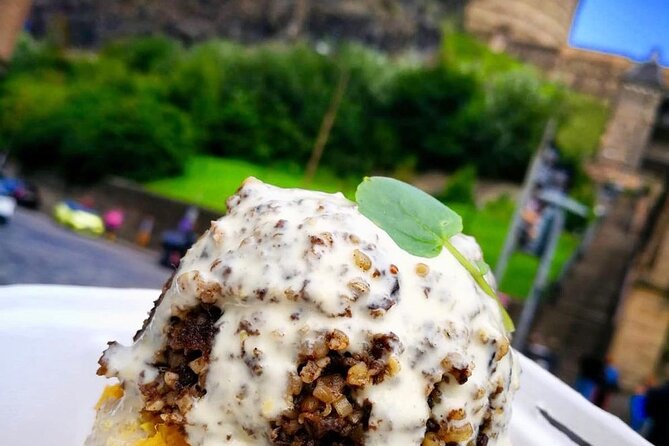
- Traditional haggis (a classic Scottish comfort-meets-heritage dish)
- A meat pie, with a vegetarian option available for at least one dietary need
- Fish and chips Edinburgh style, described as fried pizza and chips with chip sauce
If you’re used to “street food” meaning generic handheld food, this is the opposite. You’re tasting dishes tied to Scottish food culture, and you’re doing it while walking through the city’s old streets and squares.
A key practical note: alcoholic beverages are not included. So if you want a pint, you can plan to do that separately.
Food + history pacing: why stops feel timed instead of random
The big win of a walking food tour is pacing. Too many “food walks” turn into a hurried sprint between shops, and the stories don’t stick. Here, the stops match the city’s flow.
When you’re near major anchors like St Giles or the Mercat Cross, you get the civic context. When you’re near closes and stairways, you get the human scale stories—why spaces were designed the way they were. And when you’re near lively areas like Grassmarket, the mood lightens with more visual variety.
You’ll also get snacks and non-alcoholic drinks included, which helps you keep your energy up for the walking. It’s a simple comfort, but it matters on a 3-hour Old Town route.
Your guide shapes the day: Alec and Ian as examples
In a private tour, the guide isn’t just a voice. They’re the filter for what you notice.
For example, one guide named Alec is known for Edinburgh-grown context and storytelling that connects food to place. Another guide, Ian, focuses on fun history and adds personal notes that help you remember what you just ate and why it matters.
A standout detail from guide-led experiences: Alec may pivot the route if you have an interest in gardens. In at least one case, the walk included a quieter garden stop with a view of Edinburgh Castle, even described as being on the roof of a museum. You might not get that exact detour every time, but it tells you the guide can flex.
If you want a tour where you can steer the conversation, this private format makes that easier.
Price and value: what $204.57 really covers
At $204.57 per person, this isn’t a bargain-basement snack walk. It’s a premium price point, but you’re buying specific things:
- Private guide time for your group
- Food stops plus non-alcoholic drinks and snacks included
- A route that blends major Old Town landmarks with the smaller closes and story points
Think of it as paying for time and coordination. You’re not only paying for the food—you’re paying for someone to connect the food to the city’s layout and history so the experience sticks beyond eating.
If you’re comparing to cheaper public tours, the math changes fast once you value privacy and flexibility. If you’re traveling with just a couple of people, this can be especially good value compared to paying for multiple separate tickets to see major sights and then also paying for a food experience.
Who this tour suits best (and who may want a different plan)
This tour fits best if you:
- Want Old Town context without reading a guidebook the whole time
- Like food that feels tied to place, not generic samples
- Prefer a private pace for questions and slower walking sections
It may be less ideal if:
- You hate stairs or uneven ground and expect flat, easy strolling
- You’re only after quick, minimal effort dining and don’t care about history or stories
If you’re doing Edinburgh over a weekend with a packed schedule, a 3-hour private walk is a smart way to add personality and flavor without squeezing in another half day.
Should you book this private Edinburgh street food tour?
My take: book it if you want a food experience that actually explains the city as you walk it. The mix of Royal Mile landmarks, closes, and cemetery/church stories paired with classic tastings makes it feel like more than just eating.
Before you commit, do one simple thing: confirm your booking details right after purchase. One unhappy past booking involved a lack of vendor confirmation and a stressful support process. Most likely you’ll be fine, but it’s worth a quick check so your day stays smooth.
If you’re in Edinburgh and you want a guided walk that combines street food with real place-based storytelling, this is a strong pick.